Knob-and-Tube Wiring in Seattle Homes: What Buyers Should Actually Know
- Ryan Palardy,
- March 10, 2026



Seattle has a lot of older homes, and that is part of the appeal. Better millwork. More character. Real neighborhoods. More architectural variety. It also means buyers run into older-house issues that simply do not come up as often in newer construction.
One of the biggest is old wiring, especially knob-and-tube.
This is a topic that tends to get framed badly. Some people treat it like a deal killer every time. Others wave it off like it barely matters. In our experience, both reactions miss the point.
The practical answer is simpler. Knob-and-tube wiring is a real issue. It deserves respect. But it is not automatically a reason to walk away from an older Seattle house. Washington’s electrical rules still specifically address existing knob-and-tube wiring, including when loose or rolled insulation may be allowed around it under certain conditions, and Seattle’s electrical code supplement still includes Article 394 on concealed knob-and-tube wiring. (Washington State Legislature)
Knob-and-tube is an older style of electrical wiring most commonly found in homes built before the 1950s. Instead of modern bundled cable, it uses individual conductors run separately through framing members, supported by ceramic knobs and protected by ceramic tubes where they pass through wood. Seattle’s own code materials still address this wiring method in Article 394, which tells you this remains a real-world issue in older homes. (Seattle)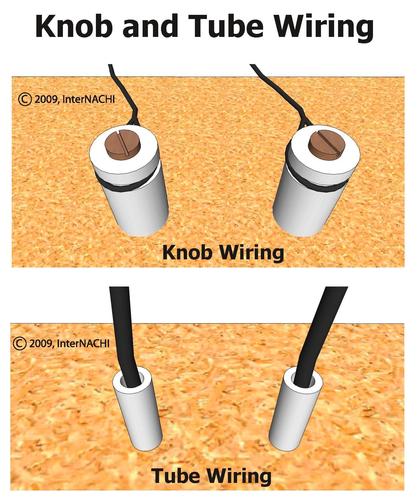
In Seattle, that means it is most likely to show up in older Craftsman, Tudor, farmhouse, and early mid-century homes that have only been partially updated over time. Your own decade-by-decade Seattle housing post already flags pre-1950 homes as a period where buyers should expect possible older electrical systems, including knob-and-tube. (gethappyathome.com)
Some homes have had all of the original wiring removed and replaced. Some have had only partial updates. Some have newer wiring in remodeled kitchens and baths, but older wiring still hiding in walls, ceilings, attics, or basement runs. That mixed condition is very common in older Seattle housing.
This is the part buyers often find frustrating.
A home inspector may be able to identify visible signs of older wiring at the panel, in unfinished basement ceilings, in attics, or around certain fixtures and junctions. That information is useful. But much of a home’s wiring is hidden behind finished walls and ceilings, which means nobody can usually tell you with complete certainty, before closing, exactly how much old wiring remains throughout the house. InterNACHI’s standards and training materials reflect that inspectors report what is readily visible and accessible rather than opening up walls to trace every concealed conductor. (InterNACHI)
That does not mean you are flying blind. It just means older homes need to be evaluated in terms of likelihood and scope, not total certainty.
In other words, the more useful questions are usually these: Is there visible active knob-and-tube? Does the panel suggest meaningful electrical updating? Do the visible conditions look orderly or improvised? Are there clues that old wiring has been abandoned, partially replaced, or patched together over time?
The biggest mistake buyers make is assuming every knob-and-tube situation is the same. It is not.
Sometimes the issue is limited. Sometimes it points to a much broader electrical story. The real concerns usually fall into a few buckets.
One is age and condition. Old wiring does not become unsafe just because it is old, but age increases the odds of brittle insulation, worn components, and outdated system design.
Another is grounding. Knob-and-tube wiring generally does not include a modern equipment grounding conductor, which can affect both safety and functionality in a house now expected to support much more technology and many more appliances than it was originally designed for. Secondary electrical-industry guidance consistently points to lack of grounding and later alterations as key practical concerns. (InterNACHI)
A third issue is modification history. In many houses, the original wiring is not the whole problem. The bigger problem is decades of additions, questionable splices, overloaded circuits, or patchwork updates done at different times by different people.
And then there is insulation. Washington specifically allows loose or rolled insulation around existing knob-and-tube only if several conditions are met, including written certification by a properly licensed electrical contractor, appropriate conductor protection, and insulation material that is not foam. Foam insulation is not allowed under that exception. Seattle’s quick reference incorporates that Washington rule as an informational note and also requires that any energized abandoned knob-and-tube wiring be removed or properly terminated. (Washington State Legislature)
Finally, insurance matters. A house can be legally occupiable and still create underwriting issues. Some carriers are more conservative about knob-and-tube than the electrical code itself.
Not automatically.
This is where people often get led astray. The electrical code does not generally function as a blanket rule that every older condition in every old house must be ripped out immediately. Washington’s code language expressly addresses existing knob-and-tube wiring rather than treating its mere existence as forbidden, and Seattle’s electrical code supplement still contains Article 394 governing concealed knob-and-tube wiring. (Washington State Legislature)
That said, replacement may still become necessary or advisable when the wiring is deteriorated, improperly modified, unsafe in context, incompatible with planned work, or problematic for insurance or financing purposes. So the practical answer is not “always replace it” or “never worry about it.” The practical answer is to evaluate the actual house.
This is where buyers most want a clean number, and it is also where honesty matters most.
There is a huge difference between correcting a few defects, rewiring several circuits, and rewiring a large finished house with difficult access.
Very small electrical fixes may cost a few hundred dollars. More meaningful targeted work can land in the low thousands. Partial rewiring can move into the several-thousand-dollar range or higher. A major rewire can become a much larger project once labor, access constraints, patching, and finish repair are all factored in.
The important takeaway is not the exact number. It is the range. Buyers should think in terms of possible bands of cost, not one magic figure pulled from the air.
If a house may have knob-and-tube or other older wiring, there are a few practical things a buyer can do before closing.
First, pay close attention to the general home inspection. An inspector may identify visible signs of older wiring, note red flags, and help you understand whether this looks like a limited old-house issue or part of a bigger electrical story. But a home inspection usually cannot tell you with certainty exactly how much old wiring remains behind finished walls and ceilings because inspectors are generally limited to readily accessible and visible conditions. (InterNACHI)
Second, if the inspection raises enough concern, bring in a licensed electrician during your inspection period for a more focused evaluation. As one licensed Seattle electrician told us, they currently charge $150 plus tax for a whole-home electrical inspection covering the service to the home, the electrical panel, and a device and visible wiring inspection. They estimate it usually lasts around two hours, depending on the size of the home.
That kind of inspection still will not tell you everything. No electrician can see through finished walls without opening them up. But it can give you a much better sense of the visible condition of the system, whether there are signs of active knob-and-tube, whether the service and panel appear meaningfully updated, and whether the home looks more like a manageable old-house issue or a larger future project.
In the right situation, that extra step can be money very well spent.
Our view is pretty simple.
Old wiring is not something to ignore. It is also not something to catastrophize.
A lot of Seattle’s older housing stock would be unfairly written off if buyers treated any evidence of knob-and-tube as an automatic no. That would be a mistake. At the same time, buyers should not talk themselves into a house by pretending old wiring is never a meaningful issue.
The better approach is to ask: based on what we can see, does this look like a limited old-house issue, or does it look like a broader electrical upgrade story that needs to affect our offer, diligence, or comfort level?
Sometimes the answer is that the house likely has some older wiring, but nothing suggests a major near-term project. Sometimes the evidence points the other direction, and the house needs to be evaluated with that reality squarely in mind.
That is not fear. That is just good buying.
If you are buying an older Seattle home, knob-and-tube wiring is something to respect, not something to automatically panic about.
It may be a manageable issue. It may be a significant future expense. It may turn out to be mostly inactive old wiring with newer systems doing most of the work. Or it may be a sign that a larger electrical update belongs in your budget and negotiations.
The goal is not to avoid every old house. The goal is to understand what you are buying.
That is how you protect yourself without passing on great older homes for the wrong reasons.
If you are looking at older homes in Seattle and want help thinking through wiring, inspection findings, or likely repair scope, reach out. We are always happy to help buyers sort real risk from old-house noise.
Is knob-and-tube wiring illegal in Seattle?
Not simply because it exists in an older home. Seattle and Washington both still address concealed knob-and-tube wiring in their electrical framework, and Washington has specific rules for existing installations. (Washington State Legislature)
Do I have to replace knob-and-tube wiring before buying or selling a house?
Not automatically. But replacement or upgrades may become advisable or necessary depending on condition, modification history, planned renovations, insurance requirements, or electrician findings. (Washington State Legislature)
Can a home inspector tell me exactly how much knob-and-tube is in the house?
Usually not. Inspectors can identify visible signs and red flags, but much of the wiring is hidden behind finished surfaces, and home inspection standards are generally limited to what is readily accessible and visible. (InterNACHI)
Is knob-and-tube always dangerous?
No. The real concerns are usually condition, lack of grounding, improper modifications, and compatibility with insulation or modern electrical demands, rather than the mere fact that the system is old. (Washington State Legislature)
Can a house with knob-and-tube still be insured?
Sometimes yes, sometimes with conditions, and sometimes it depends heavily on the carrier. This is worth checking early because insurers can be stricter than code.
What kinds of homes in Seattle are most likely to have knob-and-tube?
Generally older homes, especially those built before the 1950s that have only been partially updated over time. (Get Happy at Home)
What should I do if a house may have knob-and-tube wiring?
Treat it as a diligence issue. Review the inspection carefully, look for evidence of broader electrical updating, and decide whether additional electrician review or pricing adjustments make sense.
What if a home is advertised as fully remodeled? How can I know for certain there is no knob-and-tube?
The honest answer is that you usually cannot know with 100 percent certainty before closing unless parts of the home are opened up or there is unusually strong documentation and visibility. “Fully remodeled” does not necessarily mean every bit of old wiring was removed from every wall and ceiling cavity. Sometimes it does. Sometimes it means the kitchen, baths, panel, and visible wiring were updated, while some older wiring may still remain in less-disturbed areas of the house. Because inspectors are generally limited to visible and accessible conditions, the best practical path is to review permits and contractor history if available, study the inspection carefully, and bring in a licensed electrician during the inspection period if the house raises enough concern. (InterNACHI)
How can I reduce uncertainty before I buy?
Use the inspection period well. A general home inspection may identify visible signs and red flags. If needed, a focused electrician inspection can go deeper on the panel, service, devices, and visible wiring. That still will not eliminate all uncertainty, but it can materially improve your understanding of the likely scope of the issue.
Ryan Palardy is a Real Estate Broker & Attorney who helps buyers and sellers move through Seattle’s housing market with strategy, confidence, and a clear understanding of what truly drives value. As part of the Get Happy at Home team, he brings the weight of more than 25 years of combined experience, $600 million in closed sales, and the trust of 1,300+ clients across Seattle and the Eastside.
Ryan’s work centers on first-time buyers, out-of-area relocations, tech employees, and homeowners preparing for a pre-sale remodel. He and the Get Happy at Home team were named the Best Real Estate Team in the Seattle Times “Best in the Pacific Northwest” awards for 2025, and are known for consistently delivering top-of-market results for their sellers. The team has earned hundreds of five-star reviews across every major platform, reflecting a long-standing commitment to candor, preparation, and client advocacy.
Before real estate, Ryan practiced law in Washington after earning his J.D. from the University of Washington and receiving his WSBA license in 2018. That background shows up in the way he structures deals, spots risks early, and protects his clients’ interests. Ryan lives in Northwest Seattle with his family.
License info: Licensed Real Estate Broker in WA, License #21024995. Office: Seattle, WA.
Disclaimer: This article is provided for general informational purposes only and is not legal advice, electrical advice, code interpretation, inspection advice, insurance advice, or a substitute for professional evaluation of any particular property. Older homes vary widely, and the presence, extent, condition, legality, insurability, or cost of addressing knob-and-tube or other older wiring cannot be determined with certainty from a general article. Buyers and sellers should rely on their own licensed electrician, home inspector, insurance provider, contractor, and attorney as appropriate, and should independently verify all material information before making decisions or taking action.