
Which Northwest Seattle Neighborhood Is Appreciating the Most?
- Ryan Palardy,
- December 2, 2025



A detailed, real-world guide for Seattle buyers who care about long-term value.
Northwest Seattle is one of the most dependable regions in the entire metro area for long-term home appreciation. This area, which stretches from the streets of Ballard to the Green Lake loop, offers an unusually stable blend of walkable downtowns, family-friendly residential pockets, excellent schools, and a diverse mix of amenities close to employment centers. Despite their proximity and similarities, not all Northwest Seattle neighborhoods appreciate at the same pace, and not all homes within those neighborhoods perform the same way.
Appreciation is not a a one-size-fits-all story. It is a influenced by a combination of location, home type & layout, future development pressures, housing stock, and individual x-factors that make certain homes shine above the competition. Neighborhood desirability sets the baseline for value, but the design and condition of homes within each neighborhood determines whether maximize their potential for appreciation–consider it like an epigenetics of home valuation. In Northwest Seattle, buyers who can optimize for both neighborhood and individual factors usually end up owning the properties that outperform the broader market cycle.
This guide breaks down each major Northwest Seattle neighborhood**, explains what is driving appreciation there, and highlights the types of homes that tend to gain the most value over time. All market data referenced below comes from resale housing, not new construction. This gives a clearer picture of how real homes perform in real market conditions for real sellers, without being skewed by builder inventory.
** The Northwest Seattle Neighborhoods are Phinney Ridge, Sunset Hill, Blue Ridge, Greenwood, Crown Hill, North Beach, Ballard, Whittier Heights and Loyal Heights.
Understanding appreciation starts with understanding the forces that move values up or down. In Northwest Seattle, four factors have the greatest influence.
Neighborhoods with large amounts of incoming multifamily housing tend to appreciate more slowly. The reason is twofold. Resale homes have to compete with new construction, especially smaller townhomes and new mid-rise apartments. These new higher occupancy dwellings increase the feeling of urban density and decrease the je ne sais quoi appeal that accompanies spaced out single family lots. Conversely, neighborhoods with limited future supply often show the strongest long-term value growth. Neighborhoods where people tend to live for a long time see less turnover in existing housing stock and thus fewer opportunities to buy. In short: scarcity matters and drives appreciation.
Walkability drives value, but so does space, parking, quiet streets, and views. Some buyers will always choose Phinney Ridge or Ballard because everything is close. Others prefer Sunset Hill, Loyal Heights, or Blue Ridge because they want breathing room, privacy, and less traffic. A neighborhood with fewer shops can still outperform a walkable one if the buyers there value calm and stability more than convenience. And no matter where you are, homes with views will always be more desirable and out-appreciate their viewless neighbors. Interestingly, the buyer pool that prefers quiet streets and views to walkability skews slightly older and more affluent, creating a higher price ceiling in those neighborhoods.
Seattle neighborhoods are shaped by their street patterns. Ballard has a true downtown core with several blocks of restaurants and shops away from arterials. Greenwood’s commercial district lives almost entirely on Greenwood Avenue and is buffered by gridded residential zoning, which, for better or worse, limits its ability to feel like a walkable urban center. North Beach and Blue Ridge have winding residential streets where the street grid mirrors topography to maximize views of the Olympics and Puget Sound. Differences like these matter a great deal when it comes to long-term demand, and not necessarily in obvious ways. The physical geography of a neighborhood also determines essential qualities like commutability, which matter immensely in the Northwest Seattle context.
The home you buy influences your appreciation potential more than any other factor. This takes shape at the neighborhood level in the form of each community’s dominant housing stock. In particular, the small three-level townhomes around 1,050 to 1,150 square feet are the weakest performing type of housing in Northwest Seattle. There are too many of them, they do not live well, and they constantly compete with new versions of themselves. Larger townhomes and single family homes appreciate much more consistently, partly because supply is limited, and partly because they meet the way people actually live. Neighborhoods like Ballard Adams (downtown Ballard) contain more of the former and fewer of the latter. The opposite is true for Phinney Ridge and Sunset Hill.
With these factors in mind, here is how each Northwest Seattle neighborhood is performing today. For context, Northwest Seattle as a whole has appreciated 32% since 2020 and 5.2% in the last twelve months.

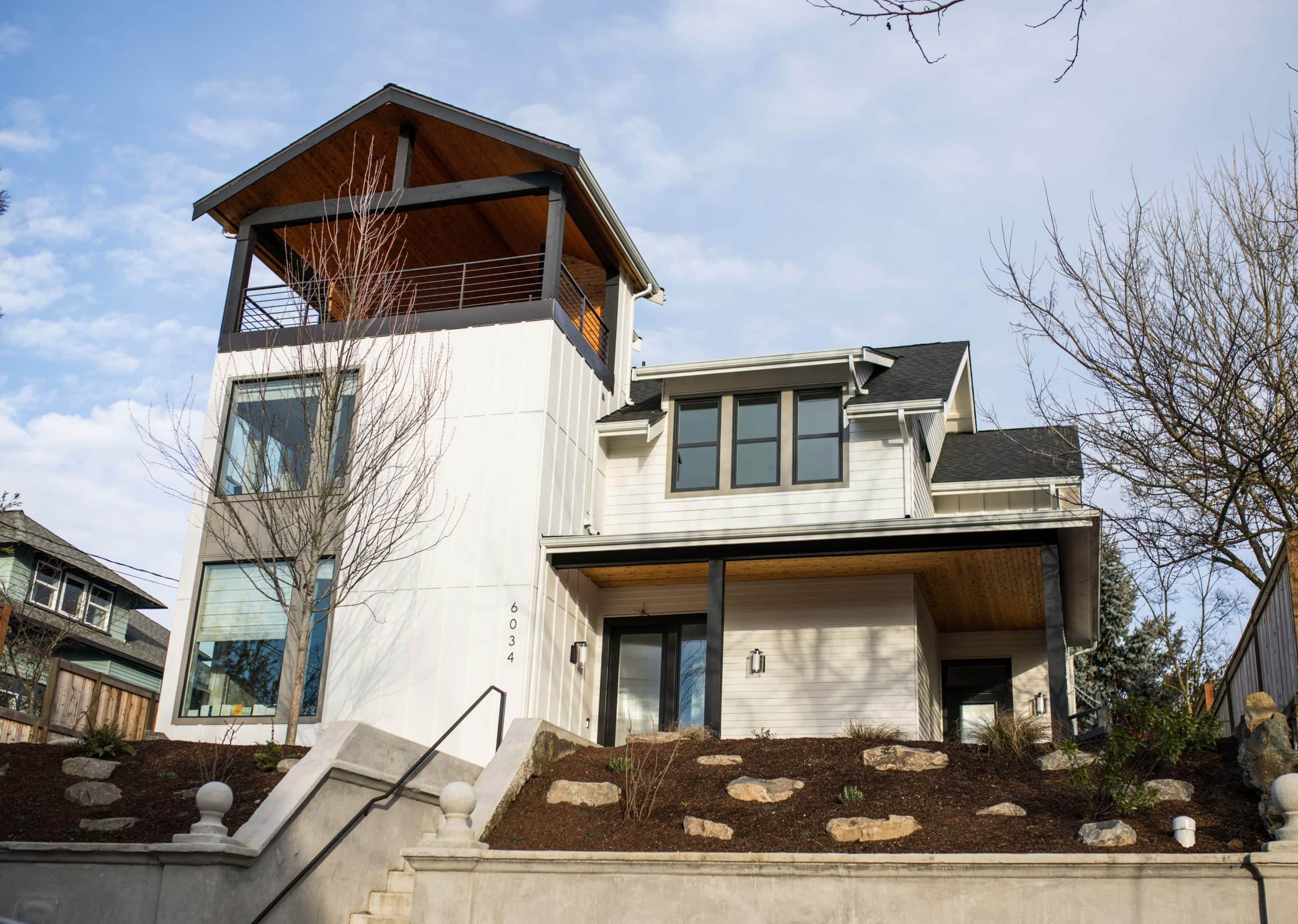
Phinney Ridge has been the strongest appreciating neighborhood in Northwest Seattle over the last year, and the reasons are straightforward. It has walkability without heavy density, access to Green Lake, Woodland Park, Fremont, and Ballard, and streets that feel classic and established. Inventory is incredibly limited, and there is very little new multifamily development is on the horizon. Full exposure views don’t hurt either–it is a ridge after all.
Demand for Phinney homes comes from buyers who want location, community, and convenience without the urban congestion of Ballard. It offers a complete aspirational package for people who care about everyday quality of life. For this reason, Phinney has appreciated over 11% in 2025 alone.
Despite recent flourishing, Phinney prices will not climb at the same pace forever. The neighborhood is approaching a natural affordability limit, and some buyers already look to Whittier Heights, Loyal Heights, and Greenwood when prices stretch too far. Even so, Phinney remains one of the safest long-term appreciation plays in the city because it is commutable to both downtown Seattle and the Eastside, has good schools, and touts a near-perfect walkable/residential balance.
Single family homes are by far the most common housing stock and the strongest price performers in Phinney. Homes with a usable layout, 2000+ square feet, a yard and views will dominate and push north of $2,000,000 here. But the majority of the good housing stock, which may lack one or two of these features, lands in the $1,300,000 to $1,700,000 range.
Phinney Ridge homes have appreciated 40% since 2020 and 11.5% in the last twelve months, cementing it as the current “it girl” of Northwest Seattle.
Sunset Hill, North Beach, and Blue Ridge divide Northwest Seattle from the waters of the Puget Sound. They sit farther from the city’s commercial core and are not built to maximize walkability. Instead, they attract buyers who want quiet streets, open sky, mature landscaping, and in many cases, views of the Sound or mountains.
These water-bound neighborhoods have a structural advantage in long-term appreciation. Very little new housing is being built here, which means resale homes face almost no competition from newer, more modern stock, and the scourge/boon (depending on who you ask) of urban density will likely never touch their shores. When a home comes on the market, the buyer pool is limited but serious, and typically affluent. Families often look here after being priced out of Phinney or Green Lake, or simply because they want more space, less noise, and a Seattle water view.
Among these neighborhoods, homes with views or even partial views consistently outperform. Larger properties on quieter blocks with southern or western exposure also tend to see higher demand over time.
This part of Northwest Seattle is a classic example of slow and steady appreciation that compounds year after year. It rarely spikes, but it also rarely dips. For many buyers, that stability is exactly what they want.
Sunset Hill, Blue Ridge, & North Beach homes have appreciated 42% since 2020 and 7.6% in the last twelve months.
Whittier Heights offers one of the most balanced appreciation profiles in Northwest Seattle. Located just below the western slope of Phinney, it is close enough to the ridge and Greenwood to benefit from their amenities, but it retains a quieter, more residential atmosphere. The housing stock here feels livable and practical, with lot sizes averaging slightly above .11 acres, nearly twice as big as the tightly packed lower Ballard lots. Whittier’s streets are generally very calm with only neighbor traffic to worry about. The neighborhood has very little future development pressure.
As a result, Whittier Heights does not experience dramatic highs or lows. It simply performs. Homes sell briskly when they are well maintained and priced correctly. Families and long-term buyers priced out of Phinney Ridge gravitate here because the location feels homey & predictable with housing stock to match. Craftsman bungalows and early mid-century/late depression era homes are the name of the game in Whittier.
Whittier is one of the most underrated long-term appreciation markets in the city right now. It lacks name recognition from many first time home buyers because it lacks a proper downtown. But long term Seattleites know it’s a high value neighborhood with lots of appreciation potential in the coming years.
Whittier Heights homes have appreciated 26% since 2020 and 5.5% in the last twelve months, locking it firmly in the middle of the pack for NW Seattle neighborhoods.
Loyal Heights softened slightly in the most recent interest rate cycle, which is normal for neighborhoods with larger lots and more detached housing. Even so, its fundamentals remain strong. It has good schools, quiet streets, and very little new supply. People buy here for stability and space, and that buyer pool is remarkably consistent.
Loyal Heights is known for medium-sized lots, rows of classic Tudor homes, and beautiful flat sidewalks lined by mature trees and luscious gardens. Slightly farther from main roads means longer commute times, but many are willing to bear this in order to have walkable local schools and that “safe” feeling. Prices are somewhat capped due to lack of views and fewer large homes compared to surrounding neighborhoods.
This neighborhood does especially well for buyers looking for single family homes. Larger townhomes with thoughtful layouts near Golden Gardens also see steady appreciation, provided they are not directly situated on 85th St. Like Whittier Heights, Loyal Heights does not experience dramatic swings. Its appeal is long-term and steady.
Loyal Heights homes have appreciated 26% since 2020 but only 2% in the last twelve months, making it one of the quieter markets for 2025.

Greenwood has become a lively and interesting neighborhood, especially around the 80th to 85th corridor. This part of Greenwood feels more like an extension of Phinney Ridge and tends to appreciate the best. It has restaurants, improved streetscape, and a much stronger sense of activity than it did a decade ago.
Most of Greenwood’s commercial activity sits directly on Greenwood Avenue, rather than being tucked into quieter blocks. That keeps the neighborhood from becoming a second Ballard. North of 85th, and especially north of 90th, lack of sidewalks and a more sloppy street feel limit long-term appreciation. Greenwood also has a significant amount of new multifamily housing in the pipeline, which increases future competition for resale homes.
Greenwood will continue to appreciate, but its ceiling is lower than Phinney, Green Lake, or the view neighborhoods to the west. Larger single family homes and spacious townhomes on quiet streets perform the best here.
Greenwood homes have appreciated 27% since 2020 and 6.6% in the last year, as it experiences a demand resurgence south of 85th st.
Ballard remains one of the most desirable neighborhoods in Seattle, but its appreciation path has become more complex. Heavy density, constant construction, difficult parking, and slow progress on the light rail extension all shape buyer behavior. Families who might once have gravitated toward Ballard sometimes choose Loyal Heights, Whittier Heights, or Sunset Hill instead.
That said, certain homes in Ballard appreciate extremely well. Larger single family homes, homes on quieter streets, and well designed townhomes with usable living spaces all hold value. It is the smaller and more generic homes that struggle against the growing backdrop of new construction.
Ballard will always be a great neighborhood to live in, but appreciation is increasingly dependent on buying the right home, not just buying in the right ZIP code. Buy in Ballard for the lifestyle or the rental cashflow, but maybe not for the long term appreciation.
Ballard had a massive run up in price between 2015 and 2019, then again during COVID. But it has been wobbly since. Prices in Ballard are up 26% since 2020 but only 3.6% in the last twelve months.
Crown Hill is in the middle of a major transformation. New apartments and townhomes are appearing all along the main corridors. In the long run, this will bring more amenities and more foot traffic, which may eventually support stronger home values. In the short term, the surge of new construction creates volatility in the resale market and overcrowding in the new construction Market.
Crown Hill is ground zero of “be careful what you wish for” over-development. Shoving density into a residential neighborhood does in fact drive down housing prices, but it also drives down property values without creating more of the types of homes that people are actually clamoring for. In short, it does nothing to alleviate high home costs in the truly “overpriced” neighborhoods.
Despite Crown Hills recent underperformance, it’s worth noting that single family homes on quieter streets away from 15th Avenue and Holman Road perform best (and in fact gained ~1.6% despite the overall decrease in neighborhood prices this past year). Larger townhomes with real floorplans can do ok. Smaller units and anything located directly on arterial roads feel the most pressure and should generally be avoided.
Crown Hill could have some long-term potential, but buyers should understand that the appreciation path may not be smooth in the near future.
Crown Hill has appreciated 22% since 2020. It is the only Northwest Seattle neighborhood that has decreased in price in 2025, dropping about 5% over 2024 prices, due largely to a building glut of clustered row-style townhouses.
The biggest appreciation mistake buyers make is assuming the neighborhood will guarantee their home’s performance. It will not. The home matters just as much, and in many cases more.
Small three-level townhomes around 1,050 to 1,150 square feet are built in large numbers across Northwest Seattle. These units are the most common underperformers in the resale market. They compete directly with new construction, they do not live comfortably, and buyers tend to outgrow them quickly. They behave more like condos than homes.
Larger townhomes with good layouts, parking, outdoor space, and natural light appreciate much more consistently. Single family homes with solid bones and good orientation are even stronger performers.
If you want the best long-term appreciation, choose the right neighborhood and choose the right house within that neighborhood.
Here is the honest ranking based on both data and on-the-ground experience.
Top performer today:
Phinney Ridge
Most supply constrained and best long-term bets:
Sunset Hill
North Beach
Blue Ridge
Whittier Heights
Most balanced markets:
Loyal Heights
Improving but capped:
Greenwood
Most product sensitive:
Ballard
Crown Hill
| Neighborhood | % Appreciation Since 2020 | % Appreciation – Last 12 Months |
|---|---|---|
| Phinney Ridge | 40% | 11.5% |
| Sunset Hill | 42% (grouped) | 7.6% (grouped) |
| North Beach | 42% (grouped) | 7.6% (grouped) |
| Blue Ridge | 42% (grouped) | 7.6% (grouped) |
| Whittier Heights | 26% | 5.5% |
| Loyal Heights | 26% | 2% |
| Greenwood | 27% | 6.6% |
| Ballard | 26% | 3.6% |
| Crown Hill | 22% | –5% |
Phinney Ridge has shown the strongest recent appreciation, supported by tight inventory and consistent demand.
Sunset Hill, North Beach, Blue Ridge, and Whittier Heights have some of the most stable long-term appreciation due to limited supply and strong buyer demand.
Greenwood, especially south of 90th, often offers better prices while still benefiting from proximity to Phinney and Ballard.
Loyal Heights, Whittier Heights, Sunset Hill, and North Beach offer quiet streets, larger lots, and dependable appreciation.
Larger townhomes with good layouts and single family homes with strong natural light and parking consistently outperform small three-level townhomes.
Ballard appreciates well for certain homes, but buyers must choose carefully because new construction creates more competition for resale homes.
Crown Hill has long-term potential but experiences more price volatility due to ongoing redevelopment. Townhomes here will likely appreciate poorly compared to the broader market.
If you want help reading the market or figuring out your best timing, Matt and I are always happy to talk through it. Reach out anytime [LINK]. We’ll help you make a smart move.
 About the Author: Ryan Palardy
Ryan Palardy is a Real Estate Broker & Attorney who helps buyers and sellers move through Seattle’s housing market with strategy, confidence, and a clear understanding of what truly drives value. As part of the Get Happy at Home team, he brings the weight of more than 25 years of combined experience, $600 million in closed sales, and the trust of 1,300+ clients across Seattle and the Eastside.
Ryan’s work centers on first-time buyers, out-of-area relocations, tech employees, and homeowners preparing for a pre-sale remodel. He and the Get Happy at Home team were named Best Real Estate Team in the Seattle Times “Best in the Pacific Northwest” awards for 2025, and are known for consistently delivering top-of-market results for their sellers. The team has earned hundreds of five-star reviews across every major platform—reflecting a long-standing commitment to candor, preparation, and client advocacy.
Before real estate, Ryan practiced law in Washington after earning his J.D. from the University of Washington and receiving his WSBA license in 2018. That background shows up in the way he structures deals, spots risks early, and protects his clients’ interests. Ryan lives in Northwest Seattle with his family.
If you’re exploring a move, planning ahead, or want a clearer read on your options, you can reach Ryan directly—or connect on LinkedIn for ongoing Seattle market insights.
License info: Licensed Real Estate Broker in WA, License #21024995. Office: Seattle, WA.