Moving to Seattle from Portland: What to Know (2026 Guide)
- Ryan Palardy,
- November 5, 2026



Same weather, same old houses, same earthquake, about 65% more money, and a very different tax bill. The median home in Portland sold for about $518k over the three months ending in September 2026, at $307 per square foot. In Seattle it was about $855k, at $540 per square foot. Oregon taxes income at up to 9.9% (plus Portland’s local taxes on higher earners), and Washington taxes wages not at all, but Oregon has no sales tax and Seattle charges 10.55%. The houses will feel familiar: Portland and Seattle both have a century of bungalows with basements, sewer problems and oil tanks. What changes is the speed. Seattle homes went pending in 19 days this summer against Portland’s 25, and the good ones go faster.
Portland transplants are the ones who tell us “this is just like home, but more.” That’s about right. In the most recent IRS migration data (tax filings from 2022 to 2023), about 2,260 people moved from the Portland area to King County, and about 1,850 went the other way. By our count of the IRS data, that makes Portland the fourth-biggest source of new King County residents after Los Angeles, New York and Phoenix, and the only one of the four that’s a three-hour drive.

Because the weather and the houses are the same, this guide spends less time on rain and more on what actually changes: what your money buys, and how Oregon’s income tax and Washington’s sales tax trade off for your household.
Coming up for a scouting trip? We’ll take you through five to eight homes across a few neighborhoods in one afternoon, with real repair costs on every house you see. It’s called a learning tour, and it’s the fastest way I know to figure out where you’d actually want to live.
| Category | Portland | Seattle |
|---|---|---|
| Median sale price, all homes, city | $518,253 (3 months ending Sept 2026) | $855,000 (3 months ending Sept 2026) |
| Median price per square foot | $307 | $540 |
| Median days on market | 25 | 19 |
| Typical rent | $1,528 average asking rent (Oct 2026) | $2,106 average asking rent (Oct 2026) |
| Effective property tax rate | About 1.07% (Multnomah County median), on an assessed value that Measure 50 caps at 3% growth a year | About 0.98% (City of Seattle median), on a new market value every year |
| Sales tax | 0% | 10.55% |
| State and local income tax | Up to 9.9% state, plus Metro and Multnomah County taxes of up to 4% on higher incomes | None for most households. 9.9% on household income over $1M starting in 2028 |
| State capital gains tax | Taxed as regular income, up to 9.9% | 7% on long-term gains over the annual deduction ($278,000 for 2025), 9.9% over $1M. Home sales are exempt |
| State estate tax | 10% to 16% on estates over $1M | 10% to 20% on estates over $3M |
| Annual rainfall | About 37 inches | About 39 inches |
Sources: home prices, price per square foot and days on market from Redfin’s Portland and Seattle housing market pages (all home types, three months ending September 2026). Rents are average apartment asking rents from Apartments.com, October 2026. Effective property tax rates from Ownwell (updated April 2026). Income and estate tax from the Tax Foundation and the City of Portland Revenue Division. Rainfall from NOAA’s 1991 to 2020 climate normals.
So the median Seattle home costs about 65% more, and about 76% more per square foot. If you’re shopping for a detached house, figure on more like $993k: that was the median for detached Seattle houses that sold from July through September (our own pull of NWMLS data, 1,162 sales). The median across all of King County was $850,000 in September, per the NWMLS. The practical version: a Laurelhurst or Irvington budget buys you a smaller house in Wallingford or Ravenna, or the same house farther north.
Rent is a gentler step. Seattle’s average asking rent is about $580 a month more than Portland’s. If you don’t know the neighborhoods yet, renting for six months before you buy is cheap, and you won’t need to wait for a winter to know what you’re in for.
The pace is the real change. Portland homes are taking about 25 days to sell and Seattle homes about 19, and that average hides the split: the right house in a good neighborhood goes in a weekend with several offers, while the rest sit. Seattle buyers have more choice than they did a year ago (King County had 31% more listings in September than the year before), but on the houses everyone wants you still get one shot. That’s a big reason we do the homework (inspection notes, repair costs, comps) before you’re standing in the living room.
This is the section that actually changes your budget, and it cuts both ways. Oregon taxes income and nothing you buy. Washington taxes what you buy and, for most people, no income. Which state is cheaper depends on how much you earn and how much you spend.
Oregon’s top rate of 9.9% starts at $125,000 of taxable income for a single filer and $250,000 for a couple, and the 8.75% bracket starts at $11,400 and $22,800, so almost everyone with a real job is paying close to the top rate on most of their income. If you live in Portland, you’ve also been paying the Metro Supportive Housing Services tax (1% on taxable income over $128,000 single or $205,000 joint in 2026) and Multnomah County’s Preschool for All tax (1.5% over $125,000 or $200,000, and another 1.5% over $250,000 or $400,000, with a scheduled increase in 2028). A Portland couple earning $450,000 is paying about 13.9% at the margin, which is California territory. All of that goes to zero on wages in Washington.
Washington isn’t free. It taxes long-term capital gains at 7% above an annual deduction ($278,000 for 2025, adjusted each year for inflation) and 9.9% on gains over $1 million. Real estate is exempt. Stock isn’t. In March 2026, Washington also passed a 9.9% tax on household income above $1 million, starting with tax year 2028, and voters kept it in November 2026 by rejecting Initiative 645. If your household earns under $1 million a year, it doesn’t touch you.
Seattle’s sales tax is 10.55%. Oregon’s is zero. For a household that spends $40,000 a year on taxable goods (cars, furniture, restaurant meals, electronics, most things that aren’t groceries, rent or services), that’s about $4,200 a year, and the year you move, with a new couch and maybe a new car, it’s more. Compare that with the income tax you’re dropping: a couple earning $200,000 in Portland pays somewhere around $15,000 to $16,000 a year in Oregon state tax before credits, so for most working households the trade still favors Washington, by a lot. For retirees drawing mostly on Roth accounts or already-taxed savings, it can go the other way, since Oregon taxes IRA, 401(k) and pension withdrawals as income. Run your own numbers; the two taxes land on very different households.
Multnomah County’s effective rate (about 1.07%) is a little higher than Seattle’s (about 0.98%), so the rate itself isn’t the problem. The problem is what it’s charged on. Oregon’s Measure 50 caps growth in your home’s assessed value at 3% a year, so if you’ve owned in Portland for a while, you’re paying tax on a number well below what the house is worth. Washington has no cap. State law requires every county to revalue every property every year, and your bill is figured on something close to market value from day one. An $855k Seattle home at 0.98% is about $8,400 a year, and a $993k detached house about $9,700. Compare that with your actual Portland bill, not the Portland rate.
Oregon’s estate tax starts at $1 million, one of the lowest thresholds in the country, with rates from 10% to 16%. Washington’s starts at $3 million: for deaths on or after July 1, 2026, the first $3 million is excluded and the rate on the rest runs from 10% to 20%. If your Portland estate plan was built around the $1 million cliff, it’s worth a fresh look when you move, because a lot of households that owed Oregon estate tax won’t owe Washington’s.
Washington has no income tax, but it does have a business and occupation (B&O) tax, charged on gross receipts rather than profit. If you’re a contractor or consultant earning $12,000 or more a year, the Department of Revenue expects you to register and file. A small business credit wipes out the tax for a lot of solo operators, but you still have to register to get it. Seattle also requires its own business license, and starting in 2026 Seattle’s own B&O tax doesn’t kick in until $2 million in revenue. If you’ve been dealing with Portland’s business license tax and the Multnomah business income tax, this will feel familiar. Worth a call to a Washington CPA early.
| If you liked | Start with | Why |
|---|---|---|
| Alberta Arts, Mississippi or Hawthorne | Capitol Hill, Fremont or Ballard | Walkable main streets with bars, music and old houses on the side streets; Capitol Hill is the densest and has the light rail station |
| Irvington, Laurelhurst or Eastmoreland | Ravenna, Wallingford or Madison Park | Established streets of 1910s and 1920s houses, big trees, close to a university or the water |
| Sellwood or St. Johns | Columbia City or West Seattle | A small-town main street inside the city, more house for the money, and a bridge or a train between you and downtown |
| The Pearl or South Waterfront | Belltown or South Lake Union | New high-rises near the water and a walk to work |
| Lake Oswego or West Linn | Mercer Island or West Bellevue | Top-rated schools, bigger lots, lake access, and the region’s highest prices |
| Beaverton or Hillsboro | Kirkland, Redmond or East Bellevue | Close to the big tech campuses the way Hillsboro is close to Intel and Nike, with newer houses and light rail into the city since March 2026 |
| Vancouver, Washington | Shoreline, Edmonds or Lynnwood | North of the city line, cheaper than Seattle proper, with 1 Line stations in Shoreline and Lynnwood since 2024 |
One warning: Seattle neighborhoods change block to block, partly because of the hills and partly because of the age of the houses. You know this from Portland, but Seattle’s hills are steeper and the water is everywhere, so a view, a bus line or a staircase can change the price of a house by a few hundred thousand dollars within the same neighborhood. That’s why we start new clients with a learning tour before anyone writes an offer.

You can skip the part of this section where I warn people about old houses. Among the detached houses that sold in Seattle from July through September 2026, the median one was built in 1945, about 39% were built before 1940, and 72% before 1960 (our NWMLS pull, 1,162 sales). That’s Portland’s housing stock, give or take, built in the same decades out of the same Douglas fir. The basements, the knob-and-tube, the clay sewer lines, the buried oil tanks, the moss: same list. (Our decade-by-decade guide to Seattle homes covers what each era tends to have, and it will read like your neighborhood.)
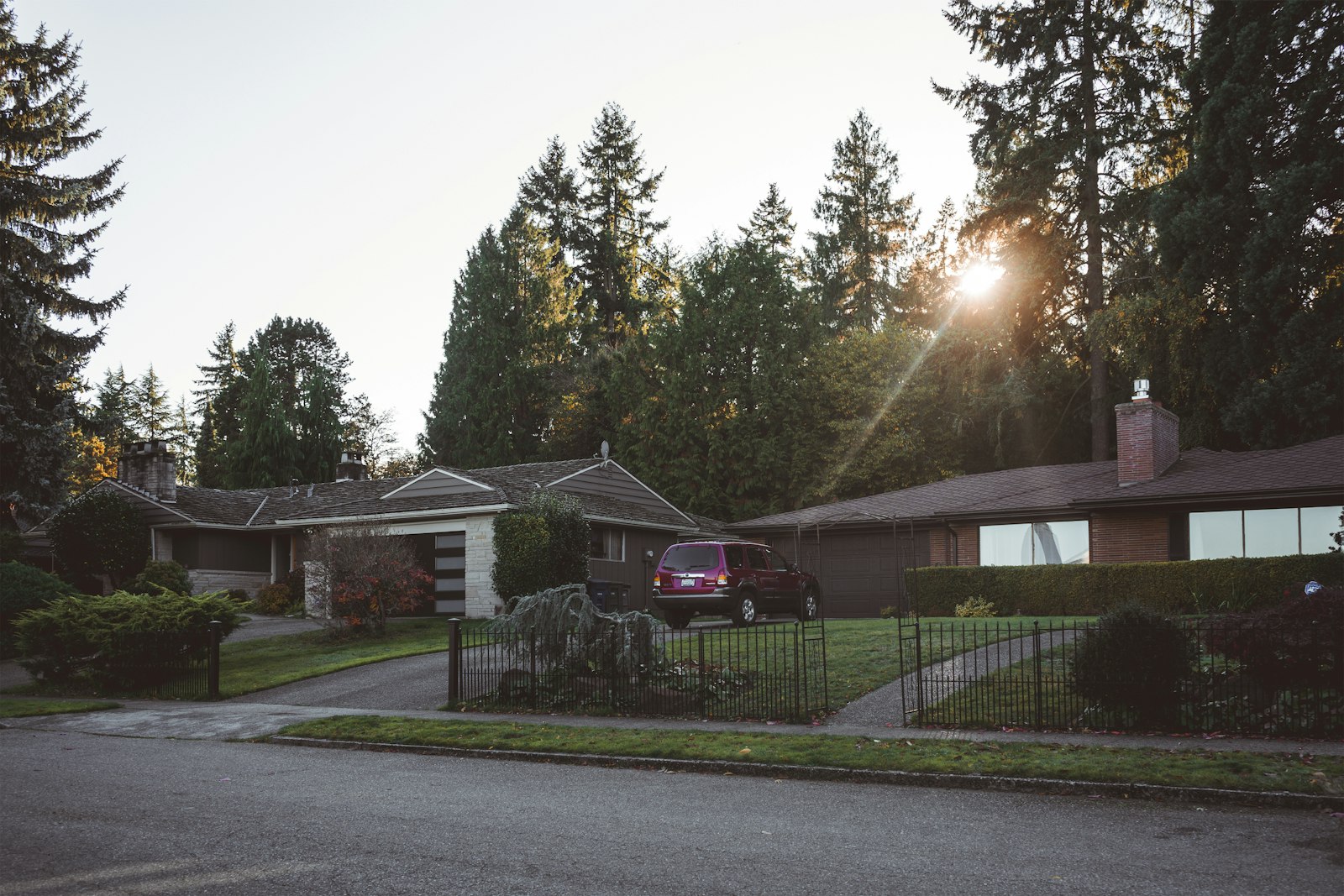
Here’s what the usual suspects cost here, from our construction company’s billed jobs where we have them and current Seattle contractor pricing where we don’t. Expect Seattle contractor pricing to run above what you paid in Portland:
| What older Seattle houses often need | What it usually costs |
|---|---|
| Side sewer (the pipe from the house to the street) | Spot repair $1.95k to $8k. Full replacement $10k to $24k (trenchless $4.25k to $15.5k) |
| Knob-and-tube wiring | Whole-house rewire $25k to $35k. Targeted replacement $4.5k to $12k |
| Buried heating oil tank | Decommission in place about $700 to $5k. Full removal $5k to $15k, before any soil cleanup |
| Earthquake retrofit (bolting and bracing a crawl space or unfinished basement) | About $5k to $12k |
| Air conditioning with a ductless heat pump | One zone $3.5k to $6k. Whole-house multi-zone systems ran about $27k and $41k on two of our remodels |
| New asphalt roof | $19k to $26k on our jobs |
| 200-amp electrical panel | $3k to $6k |
What’s different is the process. Portland buyers are used to an inspection period after mutual acceptance and a repair addendum. Seattle has the same tool, an inspection contingency (NWMLS Form 35), but on competitive houses a lot of buyers shorten it to a few days or inspect before they offer so they can write a clean one. Get the sewer scoped on video on every house. Ask whether the house ever heated with oil. A Seattle home inspection will flag most of this, and we price the big items on the spot when we tour, because that’s the number that should move your offer.
Earthquakes are the same conversation. Portland and Seattle both sit near the Cascadia Subduction Zone, and Seattle adds local faults like the Seattle Fault. Earthquake coverage is something you add to your homeowners policy or buy separately, and the deductible typically runs 10% to 25% of the coverage on the house, according to the Washington Insurance Commissioner. The paperwork will look familiar: Washington’s main seller disclosure is Form 17, and you get three business days after receiving it to rescind in writing.
This is the shortest weather section on the site, because there’s almost nothing to report.

| Normal year | Portland | Seattle |
|---|---|---|
| Rain | 36.9 inches | 39.3 inches |
| Days with measurable rain | About 157 | About 156 |
| Snow | About 4 inches | About 6 to 8 inches |
| Average July high | 81.9°F | 77.4°F |
| Average January low | 36.2°F | 37.7°F |
| Daylight on December 21, 2026 | 8 hours 46 minutes | 8 hours 26 minutes |
Sources: NOAA 1991 to 2020 climate normals (Portland International Airport, Sea-Tac Airport for Seattle). Daylight from sunrise-sunset.org.
Seattle gets two more inches of rain, one fewer rainy day, a slightly cooler summer (the water keeps the city a few degrees below Portland in July), a slightly milder winter, and twenty minutes less daylight at the solstice. You’ll notice the summer more than anything: Seattle’s heat waves are shorter and the evenings cool off faster. About 53% of Seattle-area homes had air conditioning in 2021, per the Census Bureau’s American Housing Survey, which is about the Portland pattern too. If you’ve already decided you need a heat pump, the table above has the numbers.
The average commute in the Portland metro is 25.4 minutes. In the Seattle metro it’s 30 (Census Reporter, ACS 2024). Seattle is bigger, and the water is in the way more often: two floating bridges across Lake Washington instead of a row of bridges over the Willamette, and the ship canal splitting the north end from downtown. Your commute depends more on which side of the lake you’re on than how many miles it is.
Transit is the one place Portland is ahead. MAX runs about 60 miles with 93 stations on five lines. Link light rail runs 63 miles with 51 stations on two, and since March 28, 2026 the 2 Line crosses Lake Washington to Mercer Island, Bellevue and Redmond. Link is faster where it goes (it runs underground through downtown and Capitol Hill instead of in the street), but it goes fewer places, and extensions to West Seattle and Ballard are still planned for the 2030s (we have opinions about Ballard’s). The bus network is strong, and plenty of our Capitol Hill clients use their cars less than once a week. There’s no streetcar worth planning around.
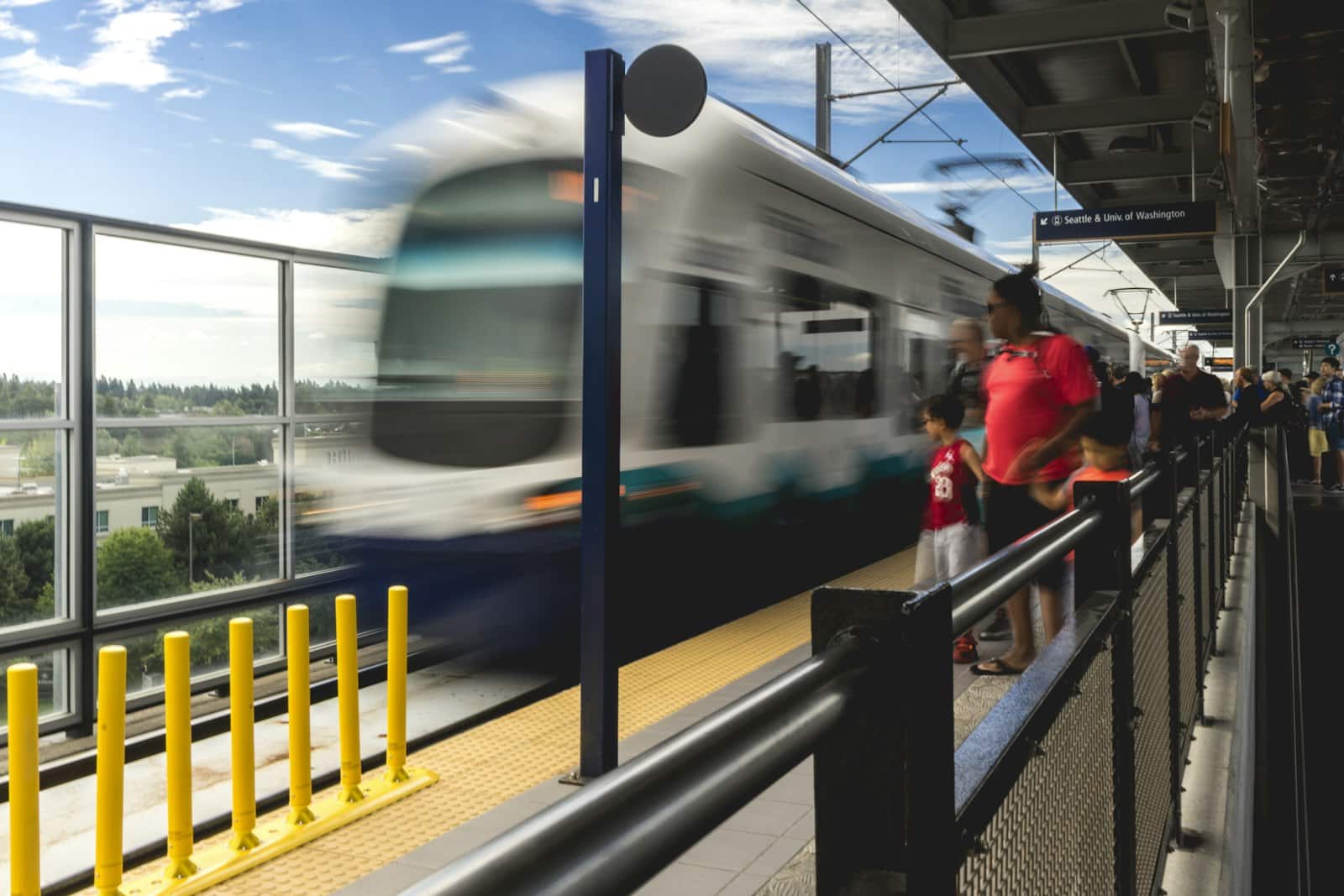
Bridges here can cost money. I-90 is free and SR 520 is tolled in both directions: as of October 2026, up to $4.90 at weekday rush hour with a Good To Go pass and $6.90 if they mail you the bill. Ferries are a real commute option here: Bainbridge Island to downtown is 35 minutes on a boat that carries cars. And Portland stays three hours down I-5, which is closer than most of our transplants can say about home.
If you’re transferring with Amazon, Microsoft or another big employer, you already know the address. If you’re moving without a job lined up, be careful. The Seattle market tilts toward a few very large tech employers, and it’s been a rough few years for them. By our count, King and Snohomish counties added about 42,000 tech jobs from late 2019 to August 2022, then lost about 29,000 of them by early 2025. (We dug into what that’s doing to Eastside home prices in this post.) Seattle doesn’t have a Nike or an Intel; it has Amazon, Microsoft and Boeing, and the rest of the economy is sized around them. If your plan is to keep a Portland job and work from here, read the Lawyer Hat Tip above and talk to a CPA. My advice either way: get the offer letter before you sign a purchase agreement.
For schools, if you’re used to Portland Public Schools’ neighborhood assignment, Seattle works the same way. Seattle Public Schools assigns by address, and the Eastside cities have their own districts (Bellevue, Lake Washington for Kirkland and Redmond, Mercer Island, Issaquah and Northshore). Boundaries don’t follow neighborhood names, so check the district’s boundary lookup for the exact address before you offer.
A lot of families moving here rule out Seattle Public Schools on reputation alone and head straight for the Eastside, the way Portland families head for Lake Oswego. I think that’s often a mistake, and we wrote about why Seattle’s schools are better than their reputation. If you’re buying for the long haul, our post on Seattle’s sleeper schools covers the ones we think will improve the most.
Driver’s license. State law gives you 30 days after you move to get a Washington driver’s license, and you need it before you can register your car here. It also tells Oregon you’ve moved, and Oregon will keep taxing you as a resident until you can show you left.
Car registration. New residents also have 30 days to register their vehicles in Washington. No emissions test: Washington ended its program in 2020 (Portland’s DEQ test won’t be missed). In King County the bill includes Sound Transit and transit fees, so expect more than Oregon charged.
Register to vote. Washington votes entirely by mail, same as Oregon, so register at your new address and the ballot comes to you. Then cancel your Oregon registration.
Move the rest of your life. Change your address with your bank, brokerage and employer, and move your doctors when you can. Tell your employer’s payroll team the move date so your Oregon withholding (and the Metro and Multnomah County withholding) stops on the right day. In the year you move, you’ll file an Oregon part-year return.
Good To Go pass. If you’ll cross SR 520 or use the express toll lanes on 405, set up a Good To Go account before your first trip. Pay-by-mail costs $2 more per crossing on 520.
Fall maintenance. Gutters and roof moss, same as home, same schedule. Gutter cleaning runs about $200 to $500 and roof moss removal about $500 to $800 from Seattle companies.
If you’ve owned in Portland for a while, Measure 50 has kept your property tax bill low, and that low bill is a big part of why the rent math works. (Unlike California’s Prop 13, Oregon’s capped assessed value stays with the house when it sells, so you’re not giving anything up by selling; you’re giving up a cheap-to-carry asset.) Portland rents are lower than Seattle’s, but so is your payment, and plenty of people in your spot keep the house for a few years to see how Seattle goes.

Before you do, here’s what keeping it means. You’ll file an Oregon nonresident return every year, because Oregon taxes rent from Oregon property no matter where you live, at the same rates you’ve been paying. You’ll be a Portland landlord under Portland’s tenant rules, which are among the stricter sets on the West Coast, from 170 miles away. And a house you rent out long enough stops being your principal residence, which can cost you the federal capital gains exclusion when you finally sell. (The general rule is that you have to have lived there two of the last five years, so you have roughly three years after moving out before that window closes.) None of that makes it a bad idea. It means you should run the numbers with a CPA before you decide.
If you sell, the timing is friendlier than it is for most transplants. Portland homes are taking about 25 days to sell and Seattle homes about 19, so the two sides can line up. Offers contingent on selling another house are still hard to win on Seattle houses that are drawing multiple offers, so most people either sell first and rent here briefly, or line up a bridge loan with a lender who does them. Condos are the exception: King County had 7 months of condo inventory in September, so a condo buyer has more room to negotiate. (Our guide to the main loan types is a decent primer before you call a lender.) Oregon has no transfer tax when you sell (Washington County excepted), so the closing costs on your Portland sale are mostly commission and title.
Buy or rent here? You know the climate and the houses, so the usual advice to rent through a winter doesn’t apply to you. If you know where you’ll work and you’ve spent a couple of weekends in the neighborhoods that fit, I think buying soon makes sense, because buyers have more room now than they did in 2025. If this is your first house, our list of first-time buyer mistakes is the place to start.
For housing, about 65%. The median home in Seattle sold for about $855,000 over the three months ending in September 2026, versus about $518,000 in Portland, and about 76% more per square foot ($540 versus $307). Rents are about $580 a month higher. Seattle also charges 10.55% sales tax, which Oregon doesn’t.
Most working households do. Oregon taxes income at up to 9.9%, plus Portland-area local taxes of up to 4% on higher earners, and Washington doesn’t tax wages at all. Washington makes some of it back with a 10.55% sales tax, a tax on large capital gains (not home sales), and a property tax on full market value every year. Retirees drawing mostly on Roth or already-taxed savings can come out behind.
Probably, even though Seattle’s rate (about 0.98%) is a little lower than Multnomah County’s (about 1.07%). Oregon’s Measure 50 caps assessed value growth at 3% a year, so long-time Portland owners pay on a number well below market. Washington revalues every property every year. An $855,000 Seattle home runs about $8,400 a year.
Barely. Seattle averages about 39 inches of rain over about 156 days; Portland about 37 inches over about 157 days. Seattle’s July is about four degrees cooler, its January about a degree and a half warmer, and its shortest day is twenty minutes shorter.
MAX has more stations (93 on five lines, about 60 miles). Link runs 63 miles with 51 stations on two lines, is faster where it goes because it runs underground through downtown, and since March 2026 connects Seattle with Bellevue and Redmond across Lake Washington.
Capitol Hill is the closest for density and nightlife, with a light rail station. Fremont and Ballard have the walkable main street and old houses with a quieter feel.
Yes. The median detached house that sold in Seattle this summer was built in 1945, and 39% were built before 1940. Same basements, sewers, oil tanks and knob-and-tube. The main differences are the price and how fast the good ones sell.
It isn’t required, it’s added to a homeowners policy or bought separately, and deductibles typically run 10% to 25% of the coverage on the house. Seattle has local faults on top of Cascadia, so get a quote before you close.
Maybe. The low Measure 50 tax bill makes the rent math work, but you’ll file an Oregon nonresident return on the rent every year at Oregon rates, you’ll be a landlord under Portland’s tenant rules, and after roughly three years as a rental you can lose the federal home sale exclusion. Run the numbers with a CPA first.
If you’re planning a scouting trip, tell us when you’ll be in town and what you’re curious about. We’ll set up a learning tour across the neighborhoods that fit, with real cost numbers on the houses you see.
Coming from somewhere else? Start with our guide to moving to Seattle, which covers who moves here and what to expect wherever you’re coming from.
Disclaimer: This article is general information, not legal, tax or financial advice. Tax rules, ballot measures and market numbers change, and costs vary by house. Talk with your own CPA, attorney, inspector and contractor before making decisions.