Moving to Seattle from Chicago: What to Know (2026 Guide)
- Ryan Palardy,
- November 10, 2026



The house costs twice as much, the property tax rate drops by about half, the state income tax goes away, and winter nights are 19 degrees warmer. The median home in Chicago sold for about $410k over the three months ending in September 2026, at $286 per square foot, and took 52 days to sell. In Seattle it was about $855k, at $540 per square foot, in 19 days. Illinois takes a flat 4.95% of your income; Washington takes nothing from wages. Chicago’s property tax rate is about 2% of market value, Seattle’s about 1%, so the bill on a Seattle house comes out close to what you pay now, on a house worth twice as much. Sales tax is almost identical (10.5% there, 10.55% here). The weather trade is snow for gray: Seattle gets a sixth of Chicago’s snow and about the same rain by the inch, spread over 30 more days, with 340 fewer hours of sun a year. The houses are about as old as a Chicago bungalow. They’re made of wood instead of brick.
You’d be joining a trade Seattle wins. In the most recent IRS migration data (tax filings from 2022 to 2023), about 1,610 people moved from the Chicago area (Cook, DuPage, Kane, Lake and Will counties) to King County, and about 1,260 went the other way. Cook County alone sent about 1,210 people north. If you’re one of them, the two numbers to hold in your head are the price per square foot, which nearly doubles, and the income tax line, which disappears. Most of what follows is about how those two balance out for you.
Coming up for a scouting trip? We’ll take you through five to eight homes across a few neighborhoods in one afternoon, with real repair costs on every house you see. It’s called a learning tour, and it’s the fastest way I know to figure out where you’d actually want to live.
| Category | Chicago | Seattle |
|---|---|---|
| Median sale price, all homes, city | $409,805 (3 months ending Sept 2026) | $854,593 (3 months ending Sept 2026) |
| Median price per square foot | $286 | $540 |
| Median days on market | 52 | 19 |
| Typical rent | $2,057 average asking rent (Oct 2026) | $2,106 average asking rent (Oct 2026) |
| Property tax | About 2% of market value before the $10,000 homeowner exemption (10% assessment level, 3.0355 equalizer, 6.619% Chicago rate for tax year 2024). Median Chicago bill $4,457 | About 0.98% of a new market value every year. About $8,400 on the typical Seattle house |
| Transfer taxes when you buy | City of Chicago $3.75 per $500 (0.75%), paid by the buyer. Sellers pay another $1.50 per $500 to the CTA, plus state and county transfer taxes | None. Washington’s real estate excise tax is paid by the seller |
| Sales tax | 10.5% | 10.55% |
| Income tax | 4.95% flat (Illinois). No city income tax | None for most households. 9.9% on household income over $1M starting in 2028 |
| Capital gains tax | Taxed as regular income at 4.95% | 7% on long-term gains over the annual deduction ($278,000 for 2025), 9.9% over $1M. Home sales are exempt |
| Estate tax | Up to about 16% on estates over $4M, and the whole estate is taxed once you cross the line | 10% to 20% on the part of an estate over $3M |
| Homeowners insurance | About $3,745 a year | About $1,690 a year |
| Snow in a normal year | About 38 inches | About 6 inches |
Sources: home prices, price per square foot and days on market from Redfin’s Chicago and Seattle housing market pages (all home types, three months ending September 2026, read November 7, 2026). Rents are average apartment asking rents from Apartments.com, October 2026. Chicago tax formula from the Cook County Assessor; 2024 Chicago tax rate and equalizer from the Cook County Clerk’s 2024 Tax Rate Report; median bill from the Cook County Treasurer’s Tax Year 2024 Bill Analysis as reported in November 2025. Seattle property tax bills from our NWMLS pull of Seattle house sales, October 2025 to September 2026 (5,717 sales). Transfer taxes from the City of Chicago Department of Finance and Chicago Title’s transfer tax list as of July 1, 2026. Income and estate tax from the Tax Foundation (2026) and Mercer Advisors on the Illinois estate tax. Sales tax from Avalara. Insurance from NerdWallet’s 2026 averages for a policy with $400,000 of dwelling coverage. Snow from NOAA’s 1991 to 2020 climate normals.
So the median Seattle home costs about 2.1 times the median Chicago home, and about 1.9 times as much per square foot. That’s the biggest price jump of any city we’ve written a guide for. It’s smaller than it looks if you’re coming from Lincoln Park, the North Shore or Oak Park, where prices already run well ahead of the city median, and bigger if you’re coming from the bungalow belt or the south suburbs. If you’re shopping for a detached house, figure on more like $993k: that was the median for detached Seattle houses that sold from July through September (our own pull of NWMLS data, 1,162 sales). The median across all of King County was $850,000 in September, per the NWMLS. A two-flat budget in Logan Square buys a Seattle house with a yard and a basement, a few miles farther from downtown than you’re used to, and the garden unit doesn’t come with it.
Rent is almost the same. Chicago’s average asking rent is about $50 a month below Seattle’s, which surprises people in both directions. It also means renting for six months to a year before you buy is cheap insurance here, and I’d do it through a winter.
The bigger shock is speed. Chicago homes are taking about 52 days to sell, and Redfin counts three offers on the average house, so you’re used to competition but also used to having time. Seattle homes are taking 19 days. On the right Seattle house you don’t get a second showing, a long think, or an attorney review period (more on that below), which is a big reason we do the homework (inspection notes, repair costs, comps) before you’re standing in the living room. That said, Seattle buyers have more choice than they did a year ago: King County had 31% more listings in September than the year before, and prices here slipped 2.7% over the past year while Chicago’s rose 7.8%.
This is a smaller tax win than Californians or New Yorkers get, but it’s real, and it comes with one line that goes the right direction for a change: property tax.
Illinois taxes wages at a flat 4.95%, and Chicago has no city income tax. Washington has no income tax on wages at all. A household with $250,000 of taxable income is paying about $12,375 a year to Springfield. In Seattle that line is zero. It isn’t the five-figure-plus windfall a Bay Area transplant gets, but it covers most of the difference in the mortgage payment on a lot of moves.
Two Washington taxes to know about. The capital gains tax is 7% on long-term gains above an annual deduction ($278,000 for 2025, adjusted each year for inflation) and 9.9% on gains over $1 million. Real estate is exempt. Stock isn’t, so if you’re sitting on a big position, talk to your CPA about timing before you establish Washington residency. And in March 2026, Washington passed a 9.9% tax on household income above $1 million, starting with tax year 2028; voters kept it in November 2026 by rejecting Initiative 645. If your household earns under $1 million a year, it doesn’t touch you.
Here’s the Cook County math you already know too well. The assessor values your house, takes 10% of it, multiplies by the state equalizer (3.0355 for tax year 2024), subtracts the $10,000 homeowner exemption, and applies the local rate, which for the City of Chicago was 6.619% in 2024, down from 6.995% the year before, according to the Cook County Clerk. Work that through and the effective rate on a house assessed at full market value is about 2%. Run it on the $410k median and you get about $7,600 a year. The median Chicago homeowner’s bill was lower than that, $4,457 for tax year 2024, partly because assessments lag sale prices, but that median jumped 16.7% in one year after the 2024 reassessment, the largest increase the Treasurer’s office has recorded in at least 30 years.
Seattle’s effective rate is about 0.98% of full market value, with no homeowner exemption, no equalizer and no triennial reassessment, because state law requires every county to revalue every property every year. The typical house that sold here over the past year carried about $8,400. So on a house that costs twice as much, you pay about what you pay now, maybe a little more. The part Chicagoans like: Washington limits how fast each taxing district’s total levy can grow, so you don’t get the reassessment-year whiplash. (There’s no cap on your individual bill, and the bill follows the market, but a 16.7% jump in a single year would be unusual here.) If you want to check an assessment once you’re here, we wrote about King County assessment errors.
Seattle’s sales tax is 10.55%. Chicago’s is 10.5%. You will not notice the difference, which makes you the rare transplant who doesn’t flinch at the register. On estates, Illinois exempts the first $4 million and taxes the whole estate at rates up to about 16% once you cross the line. Washington, for deaths on or after July 1, 2026, exempts the first $3 million and taxes only the part above it, from 10% to 20%. A lower exemption, but not a cliff. A paid-down Seattle house plus retirement accounts gets to $3 million faster than people expect, so update your estate plan when you move. On insurance, NerdWallet’s 2026 averages for a policy with $400,000 of dwelling coverage are about $3,745 a year in Chicago and about $1,690 in Seattle. Seattle houses usually need more coverage than that, and earthquake coverage is a separate policy, so budget higher than $1,690, but your insurance bill will almost certainly go down.
Washington has no income tax, but it does have a business and occupation (B&O) tax, charged on gross receipts rather than profit. If you’re a contractor or consultant earning $12,000 or more a year, the Department of Revenue expects you to register and file. A small business credit wipes out the tax for a lot of solo operators, but you still have to register to get it. Seattle also requires its own business license, and starting in 2026 Seattle’s own B&O tax doesn’t kick in until $2 million in revenue. Worth a call to a Washington CPA early.
| If you liked | Start with | Why |
|---|---|---|
| Lincoln Park or Lakeview | Capitol Hill or Queen Anne | Close to downtown, old houses on the side streets, a park and water at the edge, and the most expensive dirt in the city |
| Wicker Park, Bucktown or Logan Square | Ballard or Fremont | The neighborhoods that went from workshops to restaurants, with old houses next to new mid-rises and a Sunday market |
| Andersonville, Ravenswood or Lincoln Square | Phinney Ridge, Greenwood or Wallingford | A quiet grid of 1910s and 1920s houses with a main street you can walk to and a zoo (ours) or a brown line (yours) |
| Hyde Park | University District or Ravenna | The university neighborhood, with big old houses, bookstores and a lot of professors |
| West Loop or Fulton Market | South Lake Union | Warehouses turned into headquarters, with the city’s newest apartments and restaurants around them |
| River North, Streeterville or the Gold Coast | Belltown or downtown | High-rise living, a short walk to the office, and the water a few blocks away |
| Pilsen or Bridgeport | Beacon Hill or Georgetown | Older, closer-in, more affordable, with a food scene that got there before the developers did |
| Bronzeville | Central District | A historic neighborhood close to downtown, with deep cultural roots, that has changed fast in the last 15 years |
| Edgewater or Rogers Park | Northgate, Lake City or Shoreline | The north end of the city, on the rail line, with more house for the money and less polish |
| Oak Park | Ravenna, Bryant or Montlake | Architecture you’d cross the street to look at, good public schools, a short trip downtown |
| Evanston | Kirkland or Edmonds | A real downtown on the water, a few miles from the big city, with its own identity |
| Wilmette or Winnetka | Mercer Island or Medina | Top-rated schools, big lots near the water, and the region’s highest prices |
| Naperville or Schaumburg | Sammamish, Issaquah or Redmond | Newer houses, highly rated school districts, and a 30 to 45 minute drive to the big employers |
One warning: Seattle neighborhoods change block to block, partly because of the hills and partly because of the age of the houses. Chicago has that quality too, so you’ll recognize it. There are almost no master-planned communities inside the city, no HOA on most houses, and no guarantee the house next door was built in the same decade as yours. That’s why we start new clients with a learning tour before anyone writes an offer.

This is the section I’d read twice. Among the detached houses that sold in Seattle from July through September 2026, the median one was built in 1945, about 39% were built before 1940, and 72% before 1960 (our NWMLS pull, 1,162 sales). If you’ve owned a Chicago bungalow (the city has more than 80,000 of them, a third of its single-family stock, most built between 1910 and 1930, per the Chicago Architecture Center), you already know what a 100-year-old house asks of you: a basement that’s seen water, plumbing patched in three eras, a roof with a story. Seattle’s list rhymes with yours. (Our decade-by-decade guide to Seattle homes covers what each era tends to have.) New construction exists, but it’s mostly townhouses in the city and single-family in the far suburbs, and it carries a premium.

The differences are material, literally. Chicago is brick. Seattle is wood frame, because the trees were here and the clay wasn’t, and a wood house that’s been wet for 80 winters has its own habits: rot at the sill, moss on the roof, and a crawl space instead of a full basement under a lot of them. You can retire the word tuckpointing. The side sewer takes its place, and if a Seattle house ever heated with oil, the old tank is often buried in the yard. Here’s what the usual suspects cost, from our construction company’s billed jobs where we have them and current Seattle contractor pricing where we don’t:
| What older Seattle houses often need | What it usually costs |
|---|---|
| Side sewer (the pipe from the house to the street) | Spot repair $1.95k to $8k. Full replacement $10k to $24k (trenchless $4.25k to $15.5k) |
| Knob-and-tube wiring | Whole-house rewire $25k to $35k. Targeted replacement $4.5k to $12k |
| Buried heating oil tank | Decommission in place about $700 to $5k. Full removal $5k to $15k, before any soil cleanup |
| Earthquake retrofit (bolting and bracing a crawl space or unfinished basement) | About $5k to $12k |
| Air conditioning with a ductless heat pump | One zone $3.5k to $6k. Whole-house multi-zone systems ran about $27k and $41k on two of our remodels |
| New asphalt roof | $19k to $26k on our jobs |
| 200-amp electrical panel | $3k to $6k |
None of these is a reason to skip an old house. They’re reasons to read the inspection for dollars. Get the sewer scoped on video on every house. Ask whether the house ever heated with oil. Look at drainage around the foundation and in the crawl space, because that’s where Seattle’s rain shows up first. A Seattle home inspection will flag most of this, and we price the big items on the spot when we tour, because that’s the number that should move your offer.
Air conditioning is the one you’ll notice. About 53% of Seattle-area homes had it in 2021, per the Census Bureau’s American Housing Survey, and most of the older houses on your tour won’t. You can live without it most years, because the average July high is 77°F, the humidity is low and the nights cool off, and a ductless heat pump fixes it for the two hot weeks a year. What you can retire from the checklist: the snow-load roof, the frozen pipes, the furnace that has to carry the house through a week of single digits. Furnaces here work a lot less hard.
Earthquakes are new. Besides local faults like the Seattle Fault, the region sits near the Cascadia Subduction Zone offshore, which can produce a very large, long-shaking quake. Older houses that aren’t bolted to their foundations are the ones that slide, and the retrofit is in the table above. Earthquake coverage is something you add to your homeowners policy or buy separately, and the deductible typically runs 10% to 25% of the coverage on the house, according to the Washington Insurance Commissioner. Get the quote before you close and decide with real numbers.
Here’s the number nobody from Chicago believes: Seattle gets slightly more rain than you do. O’Hare averages about 38 inches a year, Sea-Tac about 39. The difference is how it arrives. Chicago gets it in 126 days, a good share of it in summer storms. Seattle gets it in 156, mostly as drizzle between October and May. Nobody carries an umbrella because it’s rarely raining hard enough to need one.

| Normal year | Chicago | Seattle |
|---|---|---|
| Rain | 37.9 inches | 39.3 inches |
| Days with measurable rain | About 126 | About 156 |
| Snow | 38.4 inches, on about 28 days | 6.3 inches, on about 5 days |
| Average July high | 84.5°F | 77.4°F |
| Average January low | 18.8°F | 37.7°F |
| Sunshine | About 2,510 hours a year (56% of possible) | About 2,170 hours a year (49% of possible) |
| Daylight on December 21, 2026 | 9 hours 7 minutes | 8 hours 26 minutes |
Sources: NOAA 1991 to 2020 climate normals (O’Hare, Sea-Tac Airport for Seattle). Daylight from sunrise-sunset.org.
The winter is the trade you’re making, and it’s a good one. The average January low here is 37.7 degrees, 19 degrees warmer than Chicago’s, and Seattle gets about six inches of snow in a normal year, most of it gone in two days. Because the city is built on hills, it shuts down when it does snow, which will strike you as funny. You can give away the roof rake, the snowblower and the second set of tires. Summer is cooler than yours by seven degrees at the afternoon high, with no humidity to speak of, and from July through September it almost never rains. In late June the sun doesn’t set until after 9 p.m.
The light is the real adjustment, and I won’t pretend otherwise. Seattle gets about 340 fewer hours of sun a year than Chicago, and the gap is all in the winter. Around the solstice, Seattle gets about eight and a half hours of daylight, 40 minutes less than Chicago, and plenty of those hours are gray. People who move here from the Midwest talk about the dark more than the rain. A good lamp and a winter trip somewhere sunny do a lot of work here. Rain jackets are not optional.
What you won’t miss: the Hawk coming off the lake in January, lake-effect snow, dibs, August humidity, and a car that’s a different color than you bought every March. Seattle has an allergy season too, but it’s shorter.
The average commute in the Chicago metro is 30.9 minutes. In the Seattle metro it’s 30.0 (Census Reporter, ACS 2024). Call it even. The difference is how you do it.
Be clear-eyed about rail. The CTA runs eight rail lines through 146 stations and carried about 421,000 riders on an average weekday in 2025, per CTA’s own figures, plus Metra out to the suburbs. Link light rail runs 63 miles with 51 stations and, by Sound Transit’s counts reported this fall, carries more than 160,000 boardings a day. It’s a good system that’s about two-fifths the size of the L by riders, and it doesn’t yet go to several of the neighborhoods you’d most want to live in. Since March 28, 2026 the 2 Line crosses Lake Washington, connecting Seattle with Mercer Island, Bellevue and Redmond, and extensions to West Seattle and Ballard are planned for the 2030s (we have opinions about Ballard’s). Sounder commuter rail is the Metra analog, with a fraction of the service. If living car-free matters to you, the honest advice is to buy within a 15-minute walk of a Link station: Capitol Hill, the U District, Roosevelt, Northgate, Columbia City, Beacon Hill or downtown Bellevue and Redmond on the Eastside. The bus network does more of the work here than it does in Chicago, and plenty of our Capitol Hill clients use their cars less than once a week. Outside those corridors, you’ll want a car, and most households here have one.
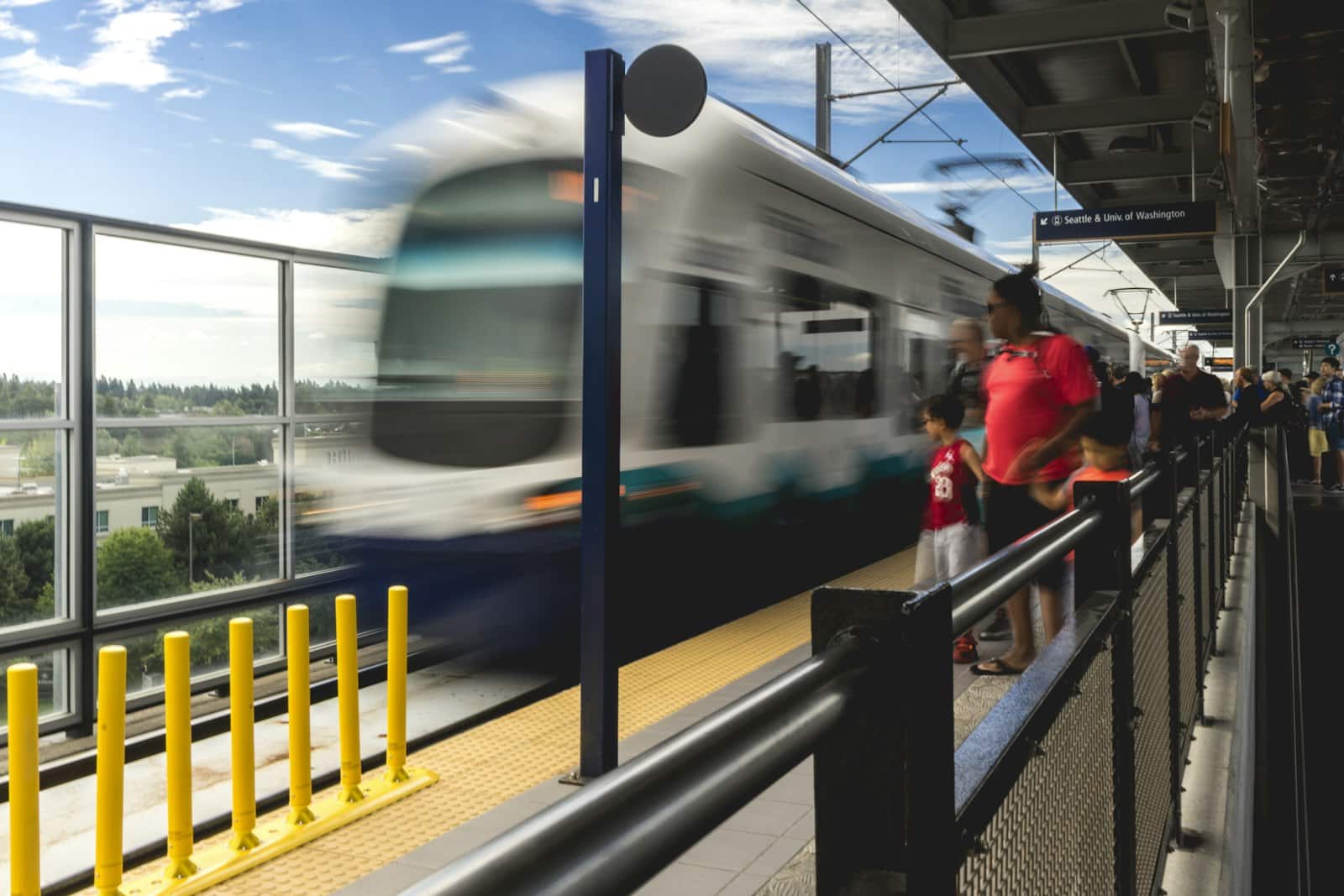
Driving is the other adjustment. Chicago is flat and gridded, with two or three ways to get anywhere. Seattle has water on both sides, two freeways, and two bridges across the lake, so one stalled car on I-5 is everyone’s problem. I-90 across the lake is free and SR 520 is tolled in both directions: as of October 2026, up to $4.90 at weekday rush hour with a Good To Go pass and $6.90 if they mail you the bill. Your I-PASS doesn’t work here. Good To Go is the Washington equivalent, and it also covers the SR 99 tunnel under downtown and the express lanes on I-405. Biking is hillier and wetter but year-round. One more thing: you’re two hours behind Chicago now, so the family call moves, and the markets open at 6:30 a.m.
If you’re transferring with Amazon or Microsoft, both of which have Chicago offices, you already know the address. If you’re coming without a job, here’s the straight version. Chicago’s economy is broad: finance and trading, consulting, corporate headquarters, logistics, hospitals and universities. Seattle’s tilts hard toward a few very large tech employers that have had a rough few years of their own. By our count, King and Snohomish counties added about 42,000 tech jobs from late 2019 to August 2022, then lost about 29,000 of them by early 2025. (We dug into what that’s doing to Eastside home prices in this post.) Where Chicago experience lands here: the big tech companies’ finance, legal and operations teams, Boeing and the aerospace suppliers, the health systems and research institutes, the Gates Foundation and the nonprofits around it, and the port and logistics cluster in the south end. If you’re in finance or trading, be honest with yourself that Seattle is not a finance town. My advice: get the offer letter before you sign a purchase agreement, and if you’re consulting, read the B&O paragraph above twice.
For schools, if you’re used to selective enrollment, the lottery, and the suburbs being the whole reason a house costs what it does, Seattle is a little less stark. Seattle Public Schools assigns by address, and the Eastside cities have their own districts (Bellevue, Lake Washington for Kirkland and Redmond, Mercer Island, Issaquah and Northshore). Boundaries don’t follow neighborhood names, so check the district’s boundary lookup for the exact address before you offer.
A lot of families moving here rule out Seattle Public Schools on reputation alone and head straight for the Eastside, the way Chicago families head for the North Shore. I think that’s often a mistake, and we wrote about why Seattle’s schools are better than their reputation. If you’re buying for the long haul, our post on Seattle’s sleeper schools covers the ones we think will improve the most.
Driver’s license. State law gives you 30 days after you move to get a Washington driver’s license, and you need it before you can register your car here.
Car registration. New residents also have 30 days to register their vehicles in Washington. No emissions test and no safety inspection: Washington ended its emissions program in 2020. In King County the bill includes Sound Transit and transit fees, so expect more than you’re used to paying. No city sticker, either.
Register to vote. Washington votes entirely by mail, so register at your new address and the ballot comes to you. Then cancel your Illinois registration.
Move the rest of your life. Change your address with your bank, brokerage and employer, and move your doctors when you can. Tell your employer’s payroll team the move date so your Illinois withholding stops. You’ll file a part-year Illinois return for the year you move.
Good To Go pass. If you’ll cross SR 520, use the SR 99 tunnel or the express toll lanes on 405, set up a Good To Go account before your first trip. Pay-by-mail costs $2 more per crossing on 520.
Fall maintenance. Gutters and roof moss are an annual thing here, the way salt and ice dams were there. Gutter cleaning runs about $200 to $500 and roof moss removal about $500 to $800 from Seattle companies. Leaf season is the same as yours, just wetter.
Chicago is a landlord’s market with a lot of rules. Rents are close to Seattle’s on a house that cost half as much, so the yield can look good on paper, and if you bought before 2022 your mortgage rate is an asset. Plenty of people in your spot keep the place, especially a two-flat that already has a tenant in it.
Before you do, here’s what keeping it means. The homeowner exemption ends when the house stops being your principal residence, which costs about $660 a year at Chicago’s 2024 rate ($10,000 of equalized value times 6.619%), and the next triennial reassessment will reprice the whole building whether you’re there or not. The house you moved out of is covered by the Chicago Residential Landlord and Tenant Ordinance (the owner-occupied exemption for buildings of six units or fewer no longer applies once you don’t live there), so you’ll attach the RLTO summary to every lease, hold any security deposit in a federally insured interest-bearing account at an Illinois bank, pay the city’s posted interest on it (0.01% for 2026), return it within 45 days with an itemized statement, and follow the notice and access rules to the letter. The penalty for getting the deposit rules wrong is two times the deposit. You’ll file a nonresident Illinois return on the rent. The bigger issue is the federal capital gains exclusion on your home sale: a house you rent out long enough stops being your principal residence. The general rule is that you have to have lived there two of the last five years, so you have roughly three years after moving out before that window closes. And you’ll be managing a property from 2,000 miles away in a market where homes take about 52 days to sell, so if you ever need to get out quickly, you won’t. None of that makes it a bad idea. It means you should run the numbers with a CPA before you decide.
If you sell, the seller’s side of Chicago’s transfer taxes runs about 0.45% all in: $1.50 per $500 to the CTA, $1 per $1,000 to the state and $0.25 per $500 to Cook County, so about $1,850 on a $410k sale, while your buyer pays the city’s $3.75 per $500. Timing: Chicago homes are taking about 52 days to sell and Seattle homes about 19, so your Chicago sale will almost certainly take longer than your Seattle purchase. Offers contingent on selling another house are hard to win on Seattle houses that are drawing multiple offers. Most people in your spot either sell first and rent here for a bit, or line up a bridge loan with a lender who does them. Condos are the exception: King County had 7 months of condo inventory in September, so a condo buyer has more room to negotiate. (Our guide to the main loan types is a decent primer before you call a lender.) One small bonus on the Washington side: the transfer tax here (the real estate excise tax) is paid by the seller, so as a buyer you pay nothing like the $3.75 per $500 you paid in Chicago.
Buy or rent here? If you know where you’ll work and you’ve spent real time in a couple of neighborhoods, I think buying soon makes sense, because buyers have more room now than they did in 2025. If you don’t know the neighborhoods yet, or you don’t know whether the job is permanent, rent for six months to a year, through a winter, and see whether the dark bothers you before you commit. Our list of first-time buyer mistakes is worth a read even if it isn’t your first house.
For housing, a lot. The median home in Seattle sold for about $855,000 over the three months ending in September 2026, versus about $410,000 in Chicago, and Seattle costs about 1.9 times as much per square foot ($540 versus $286). Rents are nearly the same, about $50 a month higher in Seattle. Washington has no income tax on wages, which claws back about $12,000 a year for a household with $250,000 of taxable income.
Illinois taxes wages at a flat 4.95%, so a household with $250,000 of taxable income pays about $12,375 a year. Washington has no income tax on wages. Washington does tax long-term capital gains over $278,000 a year at 7%, with real estate exempt, and a 9.9% tax on household income over $1 million starts in 2028.
The rate is higher in Chicago, about 2% of market value before the homeowner exemption, against about 0.98% in Seattle. The bills end up close, because the typical Seattle house costs about twice as much. The median Chicago homeowner paid $4,457 for tax year 2024; the typical Seattle house pays about $8,400, and a Chicago house at the $410,000 median would pay about $7,600 if the assessor valued it at the sale price. Washington revalues every property every year, so there’s no triennial reassessment jump.
A little. Sea-Tac averages about 6 inches a year on about five days, against about 38 inches at O’Hare. Seattle’s average January low is 37.7°F, 19 degrees warmer than Chicago’s. The trade is sun: Seattle gets about 2,170 hours a year to Chicago’s 2,510, and the gap is all in winter.
No. The CTA has 146 rail stations and about 421,000 weekday rail riders; Link light rail has 51 stations and more than 160,000 daily boardings. Link is good where it goes, and since March 2026 it crosses Lake Washington to Bellevue and Redmond. If you want to live car-free, buy within a 15-minute walk of a Link station.
Ballard or Fremont: older houses next to new mid-rises, breweries, a Sunday market, and a commercial strip that filled in over the last 15 years. If you liked Lincoln Park or Lakeview, start with Capitol Hill or Queen Anne instead.
No. Washington has no attorney review period, and closings are handled by escrow and title companies rather than lawyers. Buyers get a statutory seller disclosure (Form 17, RCW 64.06.020) with three business days to rescind under RCW 64.06.030, plus whatever inspection contingency they negotiate in the offer. The contract you sign is the contract you get, so the review happens before you offer.
About half do, and most older houses don’t. Seattle’s average July high is 77°F with low humidity, so most years you won’t miss it. A ductless heat pump adds it for $3,500 to $6,000 per zone.
Maybe. Rents are close to Seattle’s on a cheaper building, but you’ll lose the homeowner exemption (about $660 a year), the building falls under the Chicago RLTO once you don’t live there, Illinois taxes the rent, and after roughly three years as a rental you can lose the federal home sale exclusion. Run the numbers with a CPA first.
If you’re planning a scouting trip, tell us when you’ll be in town and what you’re curious about. We’ll set up a learning tour across the neighborhoods that fit, with real cost numbers on the houses you see.
Coming from somewhere else? Start with our guide to moving to Seattle, which covers who moves here and what to expect wherever you’re coming from.
Disclaimer: This article is general information, not legal, tax or financial advice. Tax rules, ballot measures and market numbers change, and costs vary by house. Talk with your own CPA, attorney, inspector and contractor before making decisions.