Moving to Seattle from Sacramento: What to Know (2026 Guide)
- Ryan Palardy,
- November 29, 2026



The house costs about 70% more, rent runs about a third higher, the income tax goes from as high as 13.3% to zero, California stops taxing your pension the day you become a Washington resident, and July is 15 degrees cooler. The median home in Sacramento sold for about $505k over the three months ending in October 2026, at $318 per square foot, and took 26 days to sell. In Seattle it was about $864k, at $539 per square foot, in 19 days. Average asking rent is $1,574 in Sacramento and $2,086 in Seattle. California taxes wages at 1% to 13.3%; Washington doesn’t tax them at all. What goes the other way: Prop 13 doesn’t come with you, so the property tax bill on a Seattle house is about $8,400 and it moves with the market every year; sales tax goes from 8.75% to 10.55%; and Washington has an estate tax that starts at $3 million, which California doesn’t. The weather trade is heat for gray: Seattle’s average July high is 77 against Sacramento’s 93, and it gets about 1,440 fewer hours of sun a year. The summers are just as dry. The houses are older, most don’t have air conditioning, and flood insurance mostly drops off the list.
This guide covers the whole Sacramento area: the city, Elk Grove and Folsom, Roseville and Rocklin in Placer County, Davis and West Sacramento in Yolo, and El Dorado Hills. In the most recent IRS migration data (tax filings from 2022 to 2023), about 770 people moved from Sacramento, Placer, Yolo and El Dorado counties to King County, and about 590 went the other way. Sacramento County alone sent 484 people here and took 377 back; Placer County was dead even, 119 to 120. Redfin’s search data shows the same tie from your side: Seattle is the sixth biggest source of out-of-town buyers looking at Sacramento, behind San Francisco, Los Angeles, Washington, Chicago and San Diego. If you’re one of the 770, you’re probably moving for a job in tech or health care, to be near family, or because you’re retiring from the state and want out of the heat. This guide is for you.
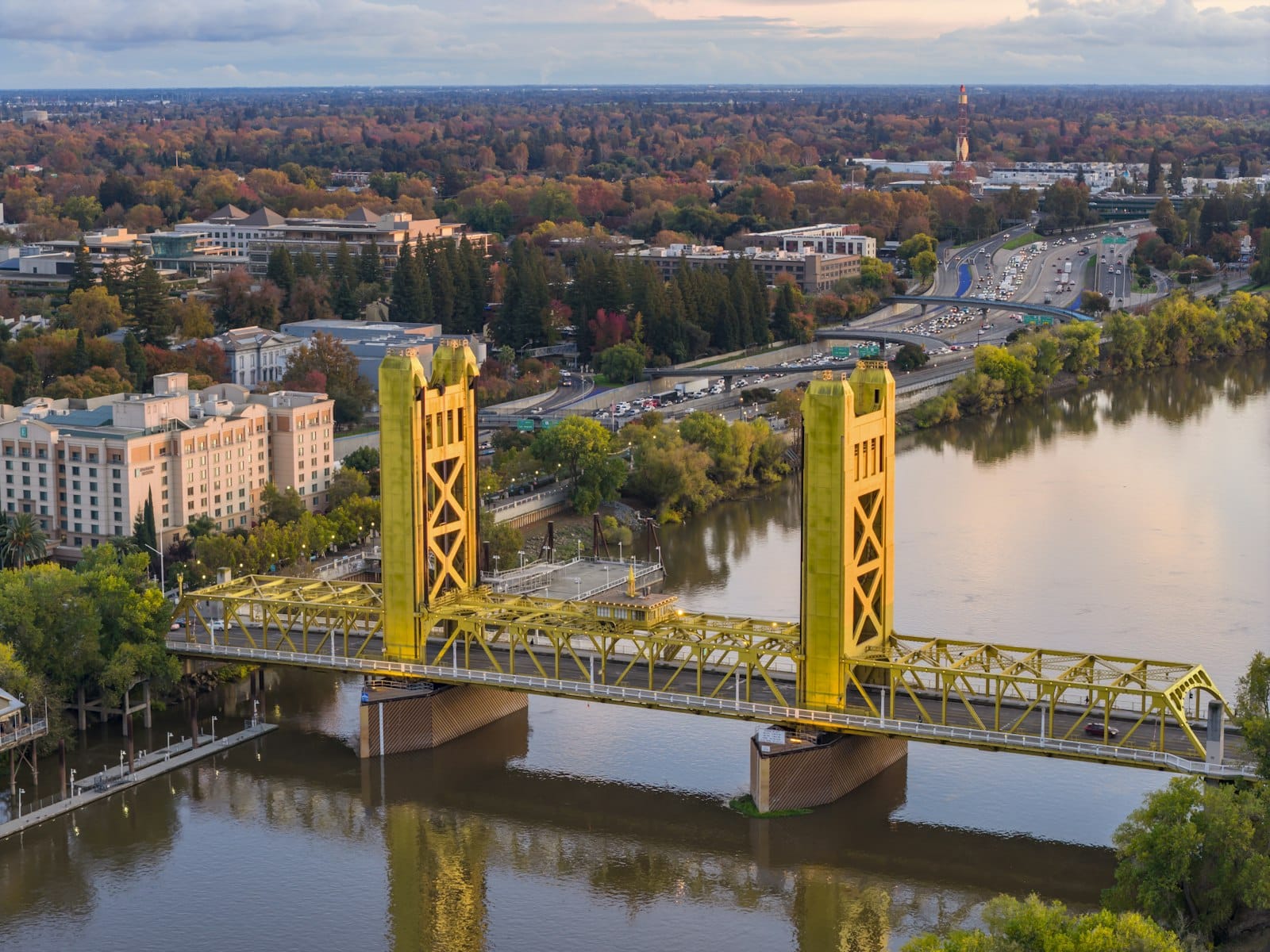
Coming up for a scouting trip? We’ll take you through five to eight homes across a few neighborhoods in one afternoon, with real repair costs on every house you see. It’s called a learning tour, and it’s the fastest way I know to figure out where you’d actually want to live.
| Category | Sacramento | Seattle |
|---|---|---|
| Median sale price, all homes, city | $504,649 (3 months ending Oct 2026) | $864,399 (3 months ending Oct 2026) |
| Median price per square foot | $318 | $539 |
| Median days on market | 26 | 19 |
| Typical rent | $1,574 average asking rent (Nov 2026) | $2,086 average asking rent (Nov 2026) |
| Property tax | 1% of what you paid plus local bonds, rising at most 2% a year (Prop 13). Median effective rate about 1.20%; about $6,100 a year on a house bought at today’s median | About 0.98% of a new market value every year. About $8,400 on the typical Seattle house |
| Transfer taxes | County 0.11%, plus 0.275% inside Sacramento city limits; who pays is negotiated | Real estate excise tax, graduated from 1.1%, paid by the seller |
| Sales tax | 8.75% | 10.55% |
| State income tax | 1% to 13.3% | None for most households. 9.9% on household income over $1M starting in 2028 |
| State capital gains tax | Taxed as ordinary income, up to 13.3% | 7% on long-term gains over the annual deduction ($278,000 for 2025), 9.9% over $1M. Home sales are exempt |
| State estate tax | None | 10% to 20% on the part of an estate over $3M |
| Homeowners insurance | About $1,820 a year statewide | About $1,690 a year |
| Annual precipitation | About 18 inches | About 39 inches, including about 6 inches of snow |
Sources: home prices, price per square foot and days on market from Redfin’s Sacramento and Seattle housing market pages (all home types, three months ending October 2026, read November 28, 2026). Rents are average apartment asking rents from Apartments.com, November 2026. Effective property tax rate from Ownwell. Seattle property tax bills from our NWMLS pull of Seattle house sales, October 2025 to September 2026 (5,717 sales). Transfer taxes from Sacramento County and the City of Sacramento. Insurance from NerdWallet’s 2026 averages for a policy with $400,000 of dwelling coverage (statewide for California, city for Seattle). Income and estate tax from the Tax Foundation. Precipitation and snow from NOAA’s 1991 to 2020 climate normals.
So the median Seattle home costs about 70% more than the median Sacramento home, and about 70% more per square foot too. If you’re shopping for a detached house, figure on more like $993k: that was the median for detached Seattle houses that sold from July through September (our own pull of NWMLS data, 1,162 sales). The median across all of King County was $851,250 in October, per the NWMLS. A budget that buys a 2,000-square-foot house with a pool in Elk Grove or Natomas buys about 1,200 square feet here, built before 1950, with no pool and no garage you can park in. The gap is smaller if you’re coming from East Sacramento, Land Park, Davis or El Dorado Hills, where prices already run well above the city median, and bigger if you’re coming from South Sacramento, Rancho Cordova or Citrus Heights.
Rent lands the same way. Seattle’s average asking rent is about $500 a month more than Sacramento’s, roughly a third. If you don’t know the neighborhoods yet, renting for six months to a year before you buy is still cheap insurance compared with buying the wrong house, and I’d do it through a winter. The summers here will sell themselves. The winters are what you need to test.
Speed will feel familiar. Sacramento homes are taking about 26 days to sell and Redfin counts two offers on the average one; Seattle homes are taking 19 with the same two offers. Both cities rate “very competitive” on Redfin right now. On the right Seattle house you usually don’t get a long inspection contingency, which is a big reason we do the homework (inspection notes, repair costs, comps) before you’re standing in the living room. That said, Seattle buyers have more choice than they did a year ago: King County had 33% more listings in October than the year before, and Seattle prices are down 2.3% over the past year. Sacramento prices are up 3.0%, which helps if you’re selling.
This section has the same fine print as our Bay Area and Los Angeles guides, because it’s the same state. The headline is real: Washington doesn’t tax wages, and California taxes them at up to 13.3%. Four things to understand before the moving truck shows up, and a fifth, on pensions, in the Lawyer Hat Tip.
Under Prop 13, your property tax is based on what you paid, and the assessed value can only rise by inflation or 2% a year, whichever is less, until the house sells. Washington works the other way. State law requires every county to revalue every property every year, so your Seattle bill is figured on something close to current market value, every year, for as long as you own the house. (Washington limits how fast each taxing district’s total levy can grow, so bills don’t track values one for one. But nothing like Prop 13 freezes your house’s number.) If you bought in Land Park in 2012 for $350k, your bill is a lot lower than the headline rate suggests. Ownwell puts the median Sacramento tax bill at about $3,642, which reflects a lot of long-held houses, while someone buying at today’s $505k median pays about $6,100. Buy an $864k Seattle home at 0.98% and the bill is about $8,400 a year, starting year one. Compare that with your current bill, not with the rate. California’s Prop 19, which lets some homeowners carry their old tax base to a new home, only works for a new home inside California. One line does get simpler: if your house is in one of the newer tracts in Natomas, Elk Grove, Folsom or Roseville that carry a Mello-Roos tax, that kind of special district is rare here. Our Inland Empire guide explains what replaces it.
If you have RSUs or stock options that were granted while you lived in California, moving doesn’t wipe the slate clean. The Franchise Tax Board’s guidance on equity compensation allocates that income by workdays: California days divided by total days, from grant to vest for RSUs, or from grant to exercise for options. So if a grant vests a year after you move and you spent about half the vesting period working in California, expect California to tax roughly half of it. Once you’re a nonresident, California doesn’t tax the later gain when you sell the shares. On the Washington side, the capital gains tax is 7% on long-term gains above an annual deduction ($278,000 for 2025, adjusted each year for inflation) and 9.9% on gains over $1 million. Real estate is exempt. Stock isn’t. Talk to your CPA about the timing of any big sale before you move, not after.
California decides whether you’re still a resident by looking at your whole life. The FTB’s residency guidelines look at where your home and family are, where you’re registered to vote and licensed to drive, where your bank accounts and doctors are, and how much time you spend in each state. If you keep the Sacramento house, the Sacramento dentist and a lot of long weekends in Sacramento, you’re making it easy to argue you never left. In the year you move, you’ll file a part-year resident return (Form 540NR) that splits your income between the two states.
In March 2026, Washington passed a 9.9% tax on household income above $1 million, starting with tax year 2028, and voters kept it in November 2026 by rejecting Initiative 645. If your household earns under $1 million a year, it doesn’t touch you. Washington also has its own estate tax, which California doesn’t. For deaths on or after July 1, 2026, the first $3 million is excluded and the rate on the rest runs from 10% to 20%. A paid-down Seattle house plus retirement accounts gets to $3 million faster than people expect, so update your estate plan when you move. Sales tax is the one line that goes the wrong way: 10.55% in Seattle versus 8.75% in Sacramento. You’ll notice it on the car, the furniture and the appliances, which is to say right after you move. Neither state taxes groceries.
Washington has no income tax, but it does have a business and occupation (B&O) tax, charged on gross receipts rather than profit. If you’re a contractor or consultant earning $12,000 or more a year, the Department of Revenue expects you to register and file. A small business credit wipes out the tax for a lot of solo operators, but you still have to register to get it. Seattle also requires its own business license, and starting in 2026 Seattle’s own B&O tax doesn’t kick in until $2 million in revenue. Worth a call to a Washington CPA early.
| If you liked | Start with | Why |
|---|---|---|
| East Sacramento | Madison Park or Montlake | Tudors and brick houses from the 1920s and 1930s on tree-lined streets, a small commercial strip, and prices to match |
| Midtown | Capitol Hill | Dense, walkable, a mix of old houses and new apartments, and the bars and restaurants the rest of the city drives to |
| Land Park or Curtis Park | Wallingford or Phinney Ridge | Bungalows from the 1910s to 1930s, a big park and a zoo nearby, and a main street you can walk to |
| Oak Park | Columbia City or Beacon Hill | Old houses at prices below the city median, a few blocks of restaurants and a theater, and light rail downtown |
| Downtown or the R Street corridor | Belltown or South Lake Union | Condos and lofts next to the office towers, a short walk to the arena |
| Tahoe Park or Elmhurst | Greenwood | Smaller houses from the 1940s and 1950s, quiet streets, and prices a step below the neighborhoods next door |
| The Pocket | Shoreline or Lake Forest Park | Houses from the 1960s to 1980s on curving streets, close to the water, a short freeway hop from downtown |
| West Sacramento | West Seattle | Across the bridge from downtown, with its own main street and new townhouses going up next to older houses |
| Davis | Ravenna or the U District | Next to the university, bikes everywhere, a farmers market, and houses from the 1920s to the 1950s |
| Natomas | Bothell or Renton | Newer subdivisions close to the freeway and the airport, with more house for the money than the city |
| Elk Grove | Kent or Maple Valley | A big, newer suburb at the south end of the commute, with parks and cul-de-sacs |
| Folsom | Issaquah or Sammamish | Highly rated schools, trails and a lake, newer houses, and employers of its own |
| El Dorado Hills or Granite Bay | Sammamish or Medina | Large houses on large lots in the hills, with the region’s highest suburban prices |
| Roseville or Rocklin | Bothell or Mill Creek | Planned communities from the 1990s on, a regional mall, and a commute that depends on one freeway |
| Carmichael or Fair Oaks | Kenmore or Burien | Postwar ranch houses on big lots under mature trees, close to the water |
| Auburn or Placerville | Snohomish or North Bend | An old town in the foothills, half an hour past the last suburb, with the mountains right behind it |
One warning: Seattle neighborhoods change block to block, partly because of the hills and partly because of the age of the houses. You know a version of that from the grid, where a 1910 bungalow and a 1950s duplex can share a block. Here it’s the norm everywhere, and the grid itself breaks and turns at every hill and every body of water. Sacramento is flat and its lettered and numbered streets go where they say they go; Seattle is neither. There is no HOA on most houses. That’s why we start new clients with a learning tour before anyone writes an offer.
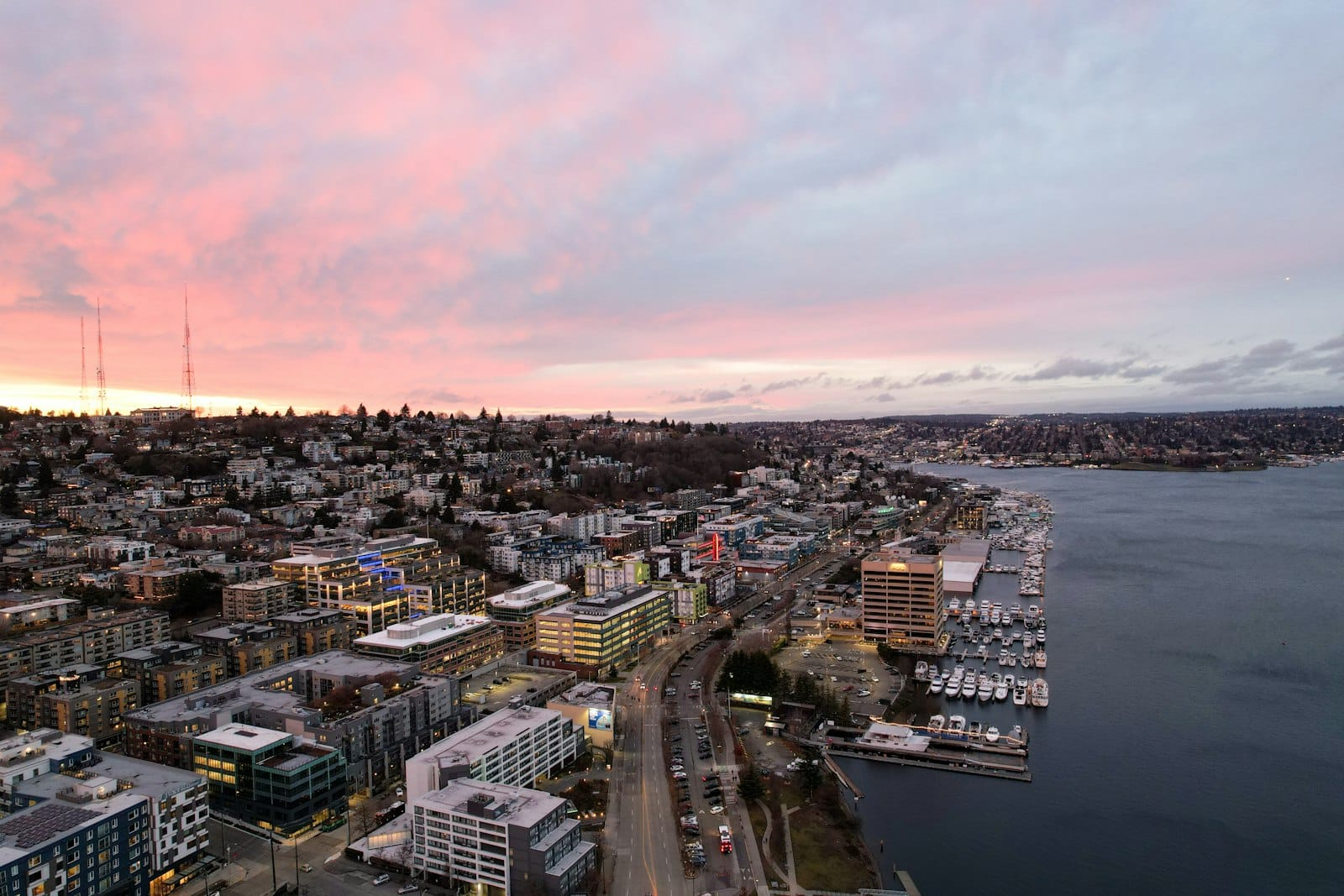
This is the section I’d read twice. The median home in Sacramento was built in 1978 and Seattle’s in 1981, per the Census Bureau’s 2024 American Community Survey, which makes the two cities sound alike. They aren’t, because Seattle’s number is pulled forward by new apartments. Among the detached houses that sold in Seattle from July through September 2026, the median one was built in 1945, about 39% were built before 1940, and 72% before 1960 (our NWMLS pull, 1,162 sales). If you’ve owned in East Sacramento, Land Park or Curtis Park, you already know this kind of house: raised foundation, plaster walls, old wiring, and a sewer line nobody has looked at in decades. If you’re coming from a slab-on-grade stucco house with central air in Elk Grove, Natomas or Roseville, the typical Seattle house is a different animal: wood siding, a crawl space or a basement, a furnace and no air conditioner, on a lot half the size. (Our decade-by-decade guide to Seattle homes covers what each era tends to have.) New construction exists, but it’s mostly townhouses in the city and single-family in the far suburbs, and it carries a premium.
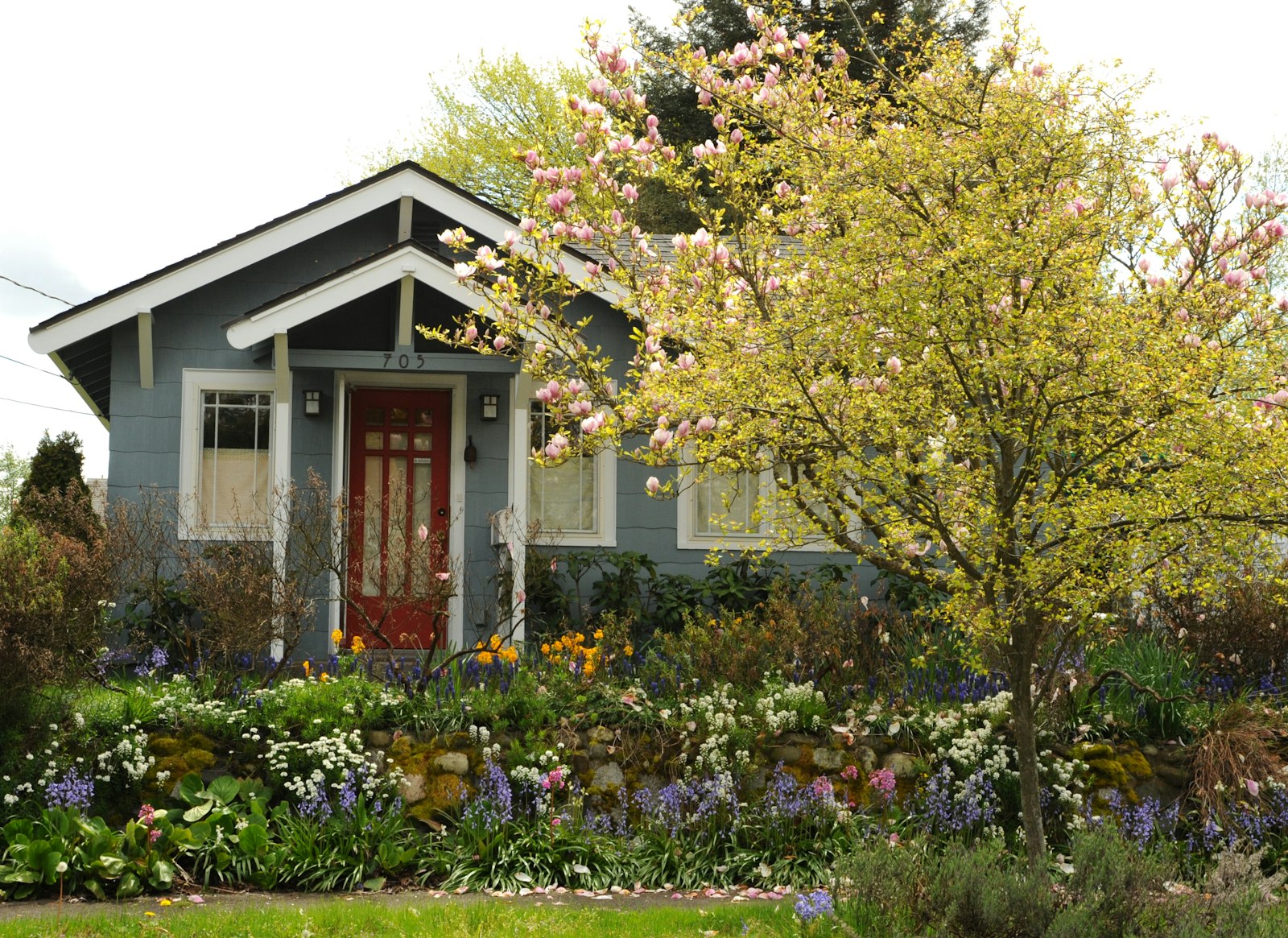
The problems come from water, not heat. In Sacramento the house fights sun and summer: the AC that runs from May to October, the roof that bakes, and for a lot of neighborhoods the river behind the levee. Here the house fights damp for nine months: rot at the sill, moss on the roof, a wet crawl space, drainage that counts for more than insulation, and a side sewer line that’s older than Interstate 5. Here’s what the usual suspects cost, from our construction company’s billed jobs where we have them and current Seattle contractor pricing where we don’t:
| What older Seattle houses often need | What it usually costs |
|---|---|
| Side sewer (the pipe from the house to the street) | Spot repair $1.95k to $8k. Full replacement $10k to $24k (trenchless $4.25k to $15.5k) |
| Knob-and-tube wiring | Whole-house rewire $25k to $35k. Targeted replacement $4.5k to $12k |
| Buried heating oil tank | Decommission in place about $700 to $5k. Full removal $5k to $15k, before any soil cleanup |
| Earthquake retrofit (bolting and bracing a crawl space or unfinished basement) | About $5k to $12k |
| Air conditioning with a ductless heat pump | One zone $3.5k to $6k. Whole-house multi-zone systems ran about $27k and $41k on two of our remodels |
| New asphalt roof | $19k to $26k on our jobs |
| 200-amp electrical panel | $3k to $6k |
None of these is a reason to skip an old house. They’re reasons to read the inspection for dollars. Get the sewer scoped on video on every house. Ask whether the house ever heated with oil, which will be a new question for you. Look at drainage around the foundation and in the crawl space, because that’s where Seattle’s rain shows up first. A Seattle home inspection will flag most of this, and we price the big items on the spot when we tour, because that’s the number that should move your offer.
Air conditioning is the first thing Sacramento buyers ask about, and you’ll need it less than you’d think. About 53% of Seattle-area homes had it in 2021, per the Census Bureau’s American Housing Survey, and most of the older houses on your tour won’t. You can live without it most years, because the average July high is 77°F, the nights cool off the way a Delta breeze night does, and a ductless heat pump fixes it for the two hot weeks a year. What you get to stop doing: running the AC for five months, shading the west windows, and maintaining a pool. Homeowners insurance is about a wash on paper, about $1,690 a year in Seattle against about $1,820 statewide in California, and inside the city wildfire isn’t usually part of the quote.
Flood insurance mostly comes off your list. The Army Corps of Engineers, a partner in a roughly $1.5 billion program of levee and weir work around the city, calls Sacramento “one of the most at-risk regions in the nation for catastrophic flooding,” and if you’ve owned behind a levee you may already carry a flood policy. Seattle is built on hills. Flood insurance here is mostly a conversation for houses near the water or along the Duwamish and the river valleys south of the city. The water problem on a Seattle hill is drainage and the occasional slide, and that shows up in the inspection, not on a flood map.
Earthquakes are the risk that goes up. Besides local faults like the Seattle Fault, the region sits near the Cascadia Subduction Zone offshore, which can produce a very large, long-shaking quake. Seattle’s older wood houses often aren’t bolted to their foundations, and the retrofit is in the table above. Earthquake coverage is something you add to your homeowners policy or buy separately, and the deductible typically runs 10% to 25% of the coverage on the house, according to the Washington Insurance Commissioner. Get the quote before you close and decide with real numbers.
Here’s the number nobody from Sacramento believes: Seattle’s average July high is 77 degrees. Yours is 93, and by one count Sacramento has 76 days a year at 90 or above and 14 at 100 or above. The other half of the trade is the one you already suspect. Sea-Tac averages about 39 inches of precipitation a year on 156 days; Sacramento averages about 18 inches on 58. Seattle rain is rarely hard. It’s a light, steady drizzle, and nobody carries an umbrella. And like Sacramento’s, almost none of it falls in summer.

| Normal year | Sacramento | Seattle |
|---|---|---|
| Precipitation | 18.1 inches | 39.3 inches |
| Days with measurable precipitation | About 58 | About 156 |
| Snow | None | About 6 inches |
| Average July high | 92.6°F | 77.4°F |
| Average January high / low | 56.0°F / 39.2°F | 47.9°F / 37.7°F |
| Sunshine | About 3,610 hours a year (81% of possible) | About 2,170 hours a year (49% of possible) |
| Daylight on December 21, 2026 | 9 hours 28 minutes | 8 hours 26 minutes |
Sources: NOAA 1991 to 2020 climate normals (Sacramento Executive Airport; Sea-Tac Airport for Seattle; sunshine tables are NOAA’s 1961 to 1990 series). Counts of 90- and 100-degree days as summarized on Wikipedia’s Sacramento climate page. Daylight from sunrise-sunset.org.
Summer is the reason people from the Valley make this move. The average July high here is 15 degrees cooler than Sacramento’s, the humidity is low, and from July through September it almost never rains, same as home. The difference is that you can be outside at 3 in the afternoon. In late June the sun doesn’t set until after 9 p.m., about half an hour later than in Sacramento, and the yard stays green into July without a sprinkler schedule. Everyone here lives outside from June to September, on the water and in the mountains. The thing we watch in late summer is wildfire smoke drifting in from the Cascades or British Columbia, which gives us a bad week or two in some years and none in others. You know those weeks better than we do.
Winter is the adjustment. The temperatures won’t bother you: Seattle’s average January low is 38 degrees and Sacramento’s is 39, and the afternoons run about 8 degrees cooler here. It rarely freezes hard, and the 6 inches of snow we get in a normal year melts in a day or two, though the city shuts down when it comes, because it’s built on hills. What’s different is the light. Sacramento gets about 3,610 hours of sun a year, 81% of what’s possible. Seattle gets about 2,170, and most of the missing 1,440 hours are in winter, when it drizzles on and off under a lid of cloud from November to March and the shortest day is an hour shorter than yours. If you’ve lived through a week of tule fog in January, you’ve had a preview: gray, damp, 45 degrees, and no shadows. Here that’s the season, not the week. A good lamp, a vitamin D habit and a February trip somewhere sunny do a lot of work. Rain jackets are not optional, and you’ll stop carrying an umbrella within a month.
What you won’t miss: August, the power bill in August, the smoke season, and the drive to anywhere cool. What you will: the sun in January, a real tomato in July, and winter mornings when the fog burns off by noon.
The average commute in the Sacramento metro is 27.7 minutes. In the Seattle metro it’s 30.0 (Census Reporter, ACS 2024). Two minutes longer, and it feels like more, because of the map. Sacramento is flat with freeways in every direction, and when 50 is jammed you have 80, 5 and 99. Seattle is squeezed between Puget Sound and Lake Washington, with two freeways running north and south and two bridges across the lake, so one stalled car on I-5 is everyone’s problem. Think of every trip as a Causeway trip.
Transit is where Seattle pulls ahead. SacRT’s light rail is a real system on paper, 43 miles and 54 stations on three lines, but it carried about 22,900 riders on an average weekday this spring and it doesn’t reach the airport. Link light rail runs 63 miles with 51 stations and, by Sound Transit’s counts reported this fall, carries more than 160,000 boardings a day, about seven times as many. Link runs from downtown to Sea-Tac Airport. Since March 28, 2026 the 2 Line crosses Lake Washington, connecting Seattle with Mercer Island, Bellevue and Redmond, and extensions to West Seattle and Ballard are planned for the 2030s (we have opinions about Ballard’s). If you’ve never lived without a car and want to try, buy within a 15-minute walk of a Link station: Capitol Hill, the U District, Roosevelt, Northgate, Columbia City, Beacon Hill or downtown Bellevue and Redmond on the Eastside. Plenty of our Capitol Hill clients use their cars less than once a week. Outside those corridors, you’ll want a car, and most households here have one. Bike commuting is strong here, though if you learned in Davis, the hills will be a surprise.
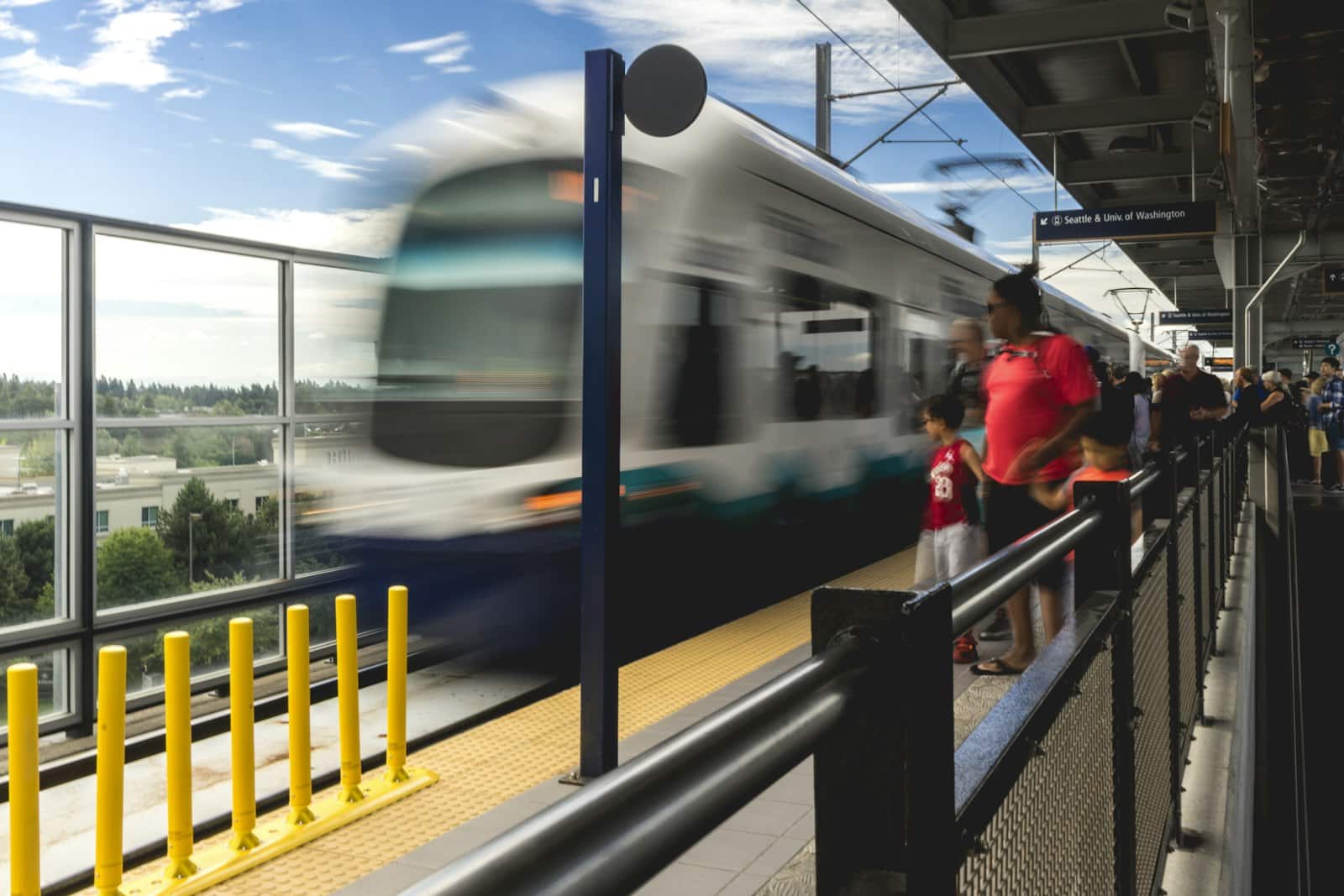
If you’ll drive across the lake, I-90 is free and SR 520 is tolled in both directions: as of October 2026, up to $4.90 at weekday rush hour with a Good To Go pass and $6.90 if they mail you the bill. Your FasTrak won’t work here. Good To Go is Washington’s toll pass, and it also covers the SR 99 tunnel under downtown and the express lanes on I-405. There’s no time change, which makes this one of the easier moves for anyone keeping a California job or a California family.
If you’re transferring with Amazon, Microsoft, Boeing, Kaiser or another big employer, you already know the address. If you’re coming without a job, here’s the straight version. Seattle’s job market is almost twice the size of Sacramento’s (about 2.1 million jobs to 1.1 million) and built on different things. Sacramento runs on government and health care: government is 24% of the metro’s jobs against about 13% here, and education and health care is 20% against 15%. Seattle runs on software. Information is 0.7% of Sacramento jobs and 6.0% of Seattle’s (Bureau of Labor Statistics, October 2026, preliminary). One thing state workers should know before they look: Washington’s capital is Olympia, 60 miles south, and that’s where most of the state agency jobs are. Seattle’s government jobs are mostly the city, King County, the port, the University of Washington and the federal offices. Seattle’s private side tilts hard toward a few very large tech employers that have had a rough few years. By our count, King and Snohomish counties added about 42,000 tech jobs from late 2019 to August 2022, then lost about 29,000 of them by early 2025. (We dug into what that’s doing to Eastside home prices in this post.) Where Sacramento experience lands here: health care (UW Medicine, Swedish, Providence, Kaiser Permanente and Seattle Children’s, which will look familiar after Sutter, Dignity and UC Davis Health), public agencies, construction and engineering, and the professional firms that serve all of it. The unemployment rate in September was 5.0% in Sacramento and 4.8% in Seattle. My advice for everyone else is the same: get the offer letter before you sign a purchase agreement, and if you’re consulting, read the B&O paragraph above twice.
For schools, if you’re used to Sacramento City Unified plus a ring of suburban districts (San Juan, Elk Grove, Folsom Cordova, Roseville, Davis), Seattle is similar in shape. Seattle Public Schools assigns by address, and the Eastside cities have their own districts (Bellevue, Lake Washington for Kirkland and Redmond, Mercer Island, Issaquah and Northshore). Boundaries don’t follow neighborhood names, so check the district’s boundary lookup for the exact address before you offer.
A lot of families moving here rule out Seattle Public Schools on reputation alone and head straight for the Eastside, the way Sacramento families head for Folsom or Davis. I think that’s often a mistake, and we wrote about why Seattle’s schools are better than their reputation. If you’re buying for the long haul, our post on Seattle’s sleeper schools covers the ones we think will improve the most.
Driver’s license. State law gives you 30 days after you move to get a Washington driver’s license, and you need it before you can register your car here.
Car registration. New residents also have 30 days to register their vehicles in Washington. No smog check: Washington ended its emissions program in 2020, so the biennial test you’re used to is behind you. In King County the bill includes Sound Transit and transit fees, so expect a number that looks a lot like the DMV’s.
Register to vote. Washington votes entirely by mail, so register at your new address and the ballot comes to you. Then cancel your California registration.
Tell California you left. Change your address with your bank, brokerage, employer and CalPERS or CalSTRS, stop California withholding, and start a file of the dates and documents that show you moved. If the FTB ever asks, that file is your answer.
Good To Go pass. If you’ll cross SR 520, use the SR 99 tunnel or the express toll lanes on 405, set up a Good To Go account before your first trip. Pay-by-mail costs $2 more per crossing on 520.
Fall maintenance. Gutters and roof moss are an annual thing here, the way the AC tune-up and the pool service were there. Gutter cleaning runs about $200 to $500 and roof moss removal about $500 to $800 from Seattle companies.
Sacramento prices are up 3.0% on the year, homes are selling in under a month, and if you bought before 2022 your mortgage rate is probably low enough that the rent covers the payment. Plenty of people in your spot keep the house, especially the ones who think they might come back.
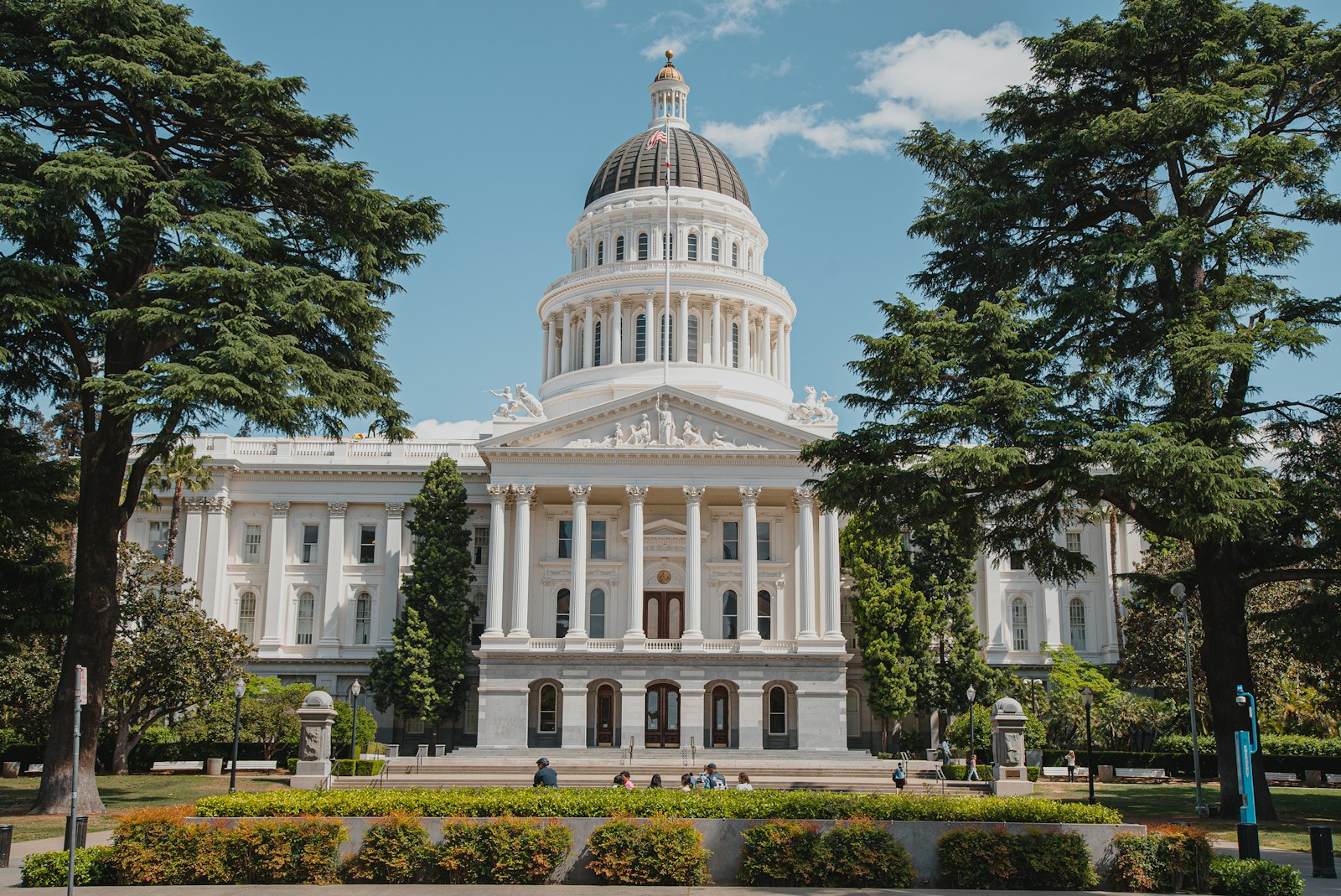
Before you do, here’s what keeping it means. Prop 13 stays with the house, which is the good part: your assessed value keeps rising at 2% a year whether you live there or not. The bad part is California. Rent from a California house is California-source income, so you’ll file a nonresident California return every year even after you’re a Washington resident, and when you eventually sell, the escrow company withholds 3 1/3% of the price for the FTB (Form 593) unless you qualify for an exemption. If the house is behind a levee, the flood policy stays on your books, and so does any Mello-Roos tax. Then the federal piece: the capital gains exclusion on your home sale requires that you lived there two of the last five years, so you have roughly three years after moving out before that window closes. And you’ll be managing a property from 750 miles away, though in a market where homes sell in 26 days, getting out later is easier than it is for most long-distance landlords. None of that makes it a bad idea. It means you should run the numbers with a CPA before you decide.
If you sell, timing is easier than for most of our readers. Sacramento homes are taking about 26 days to sell and Seattle homes about 19, so you can run the two almost in parallel. Offers contingent on selling another house are still hard to win on Seattle houses that are drawing multiple offers. Most people in your spot either sell first and rent here for a bit, or line up a bridge loan with a lender who does them. Condos are the exception: King County had 7 months of condo inventory in October, so a condo buyer has more room to negotiate. (Our guide to the main loan types is a decent primer before you call a lender.) One difference at the closing table: in Sacramento the county and city transfer taxes go to whichever side the contract says, and in Washington the real estate excise tax is the seller’s, so it won’t come up when you buy here.
Buy or rent here? If you know where you’ll work and you’ve spent real time in a couple of neighborhoods, I think buying soon makes sense, because buyers have more room now than they did in 2025. If you don’t know the neighborhoods yet, rent for six months to a year, through a winter, and see whether the gray bothers you before you commit. If this is your first old house, our list of first-time buyer mistakes is worth a read even if it isn’t your first house.
Yes. The median home in Seattle sold for about $864,000 over the three months ending in October 2026, versus about $505,000 in Sacramento, about 70% more, and Seattle costs $539 per square foot against $318. Rents are about $500 a month higher. Washington has no income tax, which offsets some of it for working households.
Not on wages. California taxes them at 1% to 13.3%. Washington does tax long-term capital gains over $278,000 a year at 7%, with real estate exempt, and a 9.9% tax on household income over $1 million starts in 2028. Washington also has an estate tax that starts at $3 million; California has none.
No. Federal law, 4 U.S.C. 114, bars a state from taxing the retirement income of someone who isn’t a resident, and the Franchise Tax Board’s Publication 1005 says the same. Pension payments you receive after you become a Washington resident aren’t taxed by California, and Washington has no income tax. Wages for California work, including a final paycheck paid after you move, are still California’s.
The rate is lower in Seattle and the bill is usually higher. Sacramento’s median effective rate is about 1.20% of a Prop 13 assessed value, about $6,100 a year on a house bought at today’s median and much less for long-time owners. Seattle’s is about 0.98% of current market value, reassessed every year, and the typical house pays about $8,400.
It rains often, not hard. Seattle averages about 39 inches a year on about 156 days, most of it light drizzle from October through May; Sacramento averages about 18 inches on 58 days. Both cities have dry summers. The adjustment is the gray: about 2,170 hours of sun a year against Sacramento’s roughly 3,610.
The average July high in Seattle is 77°F, against 93°F in Sacramento. About 53% of Seattle-area homes had air conditioning in 2021, and most older houses don’t. Most years you can live without it. A one-zone ductless heat pump runs about $3,500 to $6,000 if you want it for the hot weeks.
For East Sacramento, start with Madison Park or Montlake: 1920s and 1930s houses on tree-lined streets with a small commercial strip. For Midtown, look at Capitol Hill, which is dense and walkable with a mix of old houses and new apartments and most of the city’s nightlife.
Busier, and it goes to the airport. SacRT light rail runs 43 miles with 54 stations and about 22,900 weekday riders. Link light rail runs 63 miles with 51 stations, carries more than 160,000 boardings a day, serves Sea-Tac, and since March 2026 crosses Lake Washington to Bellevue and Redmond. Commutes average 30 minutes here against 28 in Sacramento.
Maybe. Prop 13 keeps the tax bill low and homes there sell quickly if you change your mind. But California taxes the rent every year, withholds 3 1/3% of the price when a nonresident sells, and after roughly three years as a rental you can lose the federal home sale exclusion. Run the numbers with a CPA first.
If you’re planning a scouting trip, tell us when you’ll be in town and what you’re curious about. We’ll set up a learning tour across the neighborhoods that fit, with real cost numbers on the houses you see.
Coming from somewhere else? Start with our guide to moving to Seattle, which covers who moves here and what to expect wherever you’re coming from.
Disclaimer: This article is general information, not legal, tax or financial advice. Tax rules, ballot measures and market numbers change, and costs vary by house. Talk with your own CPA, attorney, inspector and contractor before making decisions.