Moving to Seattle from Las Vegas: What to Know (2026 Guide)
- Ryan Palardy,
- November 12, 2026



The house costs almost twice as much, the property tax cap goes away, the income tax stays at zero, and July is 27 degrees cooler. The median home in Las Vegas sold for about $448k over the three months ending in October 2026, at $254 per square foot, and took 59 days to sell. In Seattle it was about $864k, at $539 per square foot, in 19 days. Average asking rent is $1,245 in Las Vegas and $2,094 in Seattle. Nevada and Washington both skip the income tax on wages, so that line doesn’t change. What does: Washington has no 3% cap on your property tax bill, sales tax goes from 8.375% to 10.55%, and the state taxes big capital gains and large estates, which Nevada doesn’t. The weather trade is sun for water. Seattle gets about nine times the rain Las Vegas gets, on six times as many days, and about 1,650 fewer hours of sun a year. In exchange, nobody here has ever checked the forecast for 115. The houses are twice the age of yours, made of wood instead of stucco, and most of them don’t have an HOA.
Here’s an honest place to start: more people make this move the other way. In the most recent IRS migration data (tax filings from 2022 to 2023), about 840 people moved from Clark County to King County, and about 1,010 went from King County to Clark County. Las Vegas is one of the few places on our list that takes more people from Seattle than it sends. Redfin’s search data says the same thing, with Seattle the third most common metro looking to move into Las Vegas, behind only Los Angeles and San Francisco. So if you’re going against traffic, you probably have a specific reason: a job, a family, or a summer you’ve decided you’re done with. This guide is for the 840.
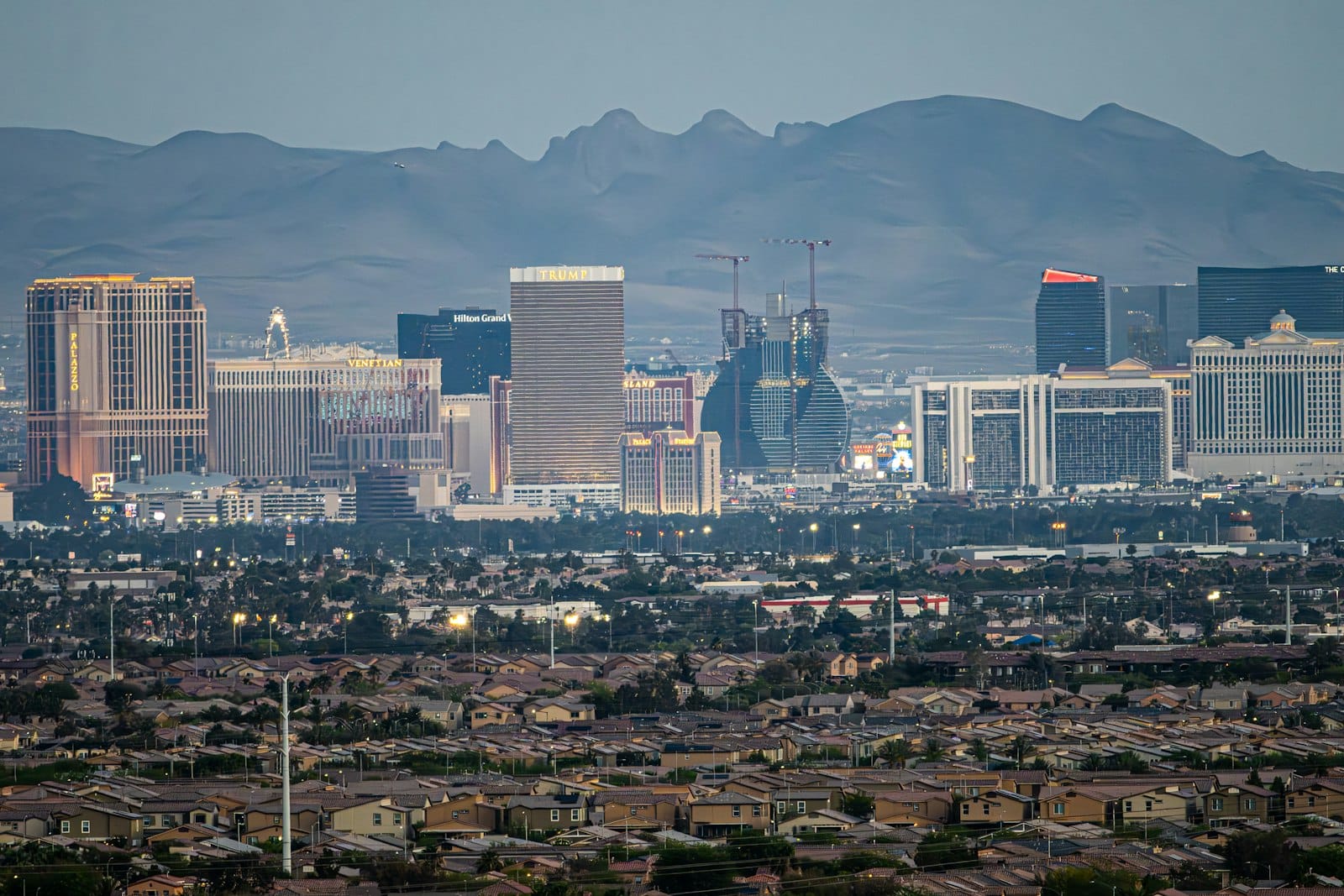
Coming up for a scouting trip? We’ll take you through five to eight homes across a few neighborhoods in one afternoon, with real repair costs on every house you see. It’s called a learning tour, and it’s the fastest way I know to figure out where you’d actually want to live.
| Category | Las Vegas | Seattle |
|---|---|---|
| Median sale price, all homes, city | $448,188 (3 months ending Oct 2026) | $864,399 (3 months ending Oct 2026) |
| Median price per square foot | $254 | $539 |
| Median days on market | 59 | 19 |
| Typical rent | $1,245 average asking rent (Nov 2026) | $2,094 average asking rent (Nov 2026) |
| Property tax | Rate of $3.28 per $100 of assessed value in the City of Las Vegas, on 35% of a taxable value that runs below market, with the bill on your own home capped at 3% growth a year. Most owners pay well under 1% of what the house would sell for | About 0.98% of a new market value every year, no cap. About $8,400 on the typical Seattle house |
| Transfer taxes | $2.55 per $500 (0.51%), usually paid by the seller | Real estate excise tax, graduated, paid by the seller |
| Sales tax | 8.375% | 10.55% |
| State income tax | None | None for most households. 9.9% on household income over $1M starting in 2028 |
| State capital gains tax | None | 7% on long-term gains over the annual deduction ($278,000 for 2025), 9.9% over $1M. Home sales are exempt |
| State estate tax | None | 10% to 20% on the part of an estate over $3M |
| Homeowners insurance | About $1,635 a year (Nevada statewide average) | About $1,690 a year |
| Annual rainfall | About 4 inches | About 39 inches |
Sources: home prices, price per square foot and days on market from Redfin’s Las Vegas and Seattle housing market pages (all home types, three months ending October 2026, read November 11, 2026). Rents are average apartment asking rents from Apartments.com, November 2026. Las Vegas tax rate from the Nevada Department of Taxation’s certified rates for fiscal 2026-27 (tax district 200); the 35% ratio, depreciation rule and 3% cap are in NRS 361.225, 361.227 and 361.4723. Seattle property tax bills from our NWMLS pull of Seattle house sales, October 2025 to September 2026 (5,717 sales). Transfer tax from the Nevada Department of Taxation. Insurance from NerdWallet’s 2026 averages for a policy with $400,000 of dwelling coverage (NerdWallet publishes a statewide figure for Nevada and a city figure for Seattle). Income, capital gains and estate tax from the Tax Foundation. Rainfall from NOAA’s 1991 to 2020 climate normals.
So the median Seattle home costs about 1.9 times the median Las Vegas home, and a little more than twice as much per square foot. If you’re shopping for a detached house, figure on more like $993k: that was the median for detached Seattle houses that sold from July through September (our own pull of NWMLS data, 1,162 sales). The median across all of King County was $851,250 in October, per the NWMLS. A Las Vegas budget that bought 2,400 square feet in Summerlin with a pool buys about 1,100 here, with a basement and a yard that needs mowing. The gap is smaller if you’re coming from Summerlin, Henderson’s newer hills or Southern Highlands, where prices already run well ahead of the city median, and bigger if you’re coming from the older parts of the valley.
Rent is the softer landing. Seattle’s average asking rent is about $850 a month more than Las Vegas’s. That’s a 68% jump, which stings, but it’s a much smaller gap than the house prices. If you don’t know the neighborhoods yet, renting for six months to a year before you buy is cheap insurance, and I’d do it through a winter, for reasons that will be obvious by the weather section.
The bigger shock is speed. Las Vegas homes are taking about 59 days to sell, and Redfin counts two offers on the average home. Seattle homes are taking 19 days. You’re used to a market where you can go back for a second look and negotiate repairs after the inspection. On the right Seattle house you usually don’t get that, which is a big reason we do the homework (inspection notes, repair costs, comps) before you’re standing in the living room. That said, Seattle buyers have more choice than they did a year ago: King County had 33% more listings in October than the year before, and Seattle prices are down 2.3% over the past year while Las Vegas’s are up slightly.
If you picked Nevada for the taxes, the news here is mixed. The big one, no income tax on wages, is the same in both states. Almost everything else gets a little worse. Here’s the honest version.
Nevada’s system is unusual, and most people who live under it don’t realize how good they have it. The assessor values your house at 35% of a “taxable value” that is the land at market plus the house at replacement cost minus 1.5% a year of depreciation, so the number is usually well below what the house would sell for. On top of that, NRS 361.4723 caps the tax bill on an owner-occupied home at 3% growth a year, and the cap is figured against the previous year’s bill on the property, not on the owner, so a sale doesn’t reset the bill to market the way it does in California. The City of Las Vegas rate is $3.28 per $100 of assessed value for fiscal 2026-27, which pencils to about 1.15% of taxable value, but what people actually pay runs well under that: Ownwell puts the median effective rate in Las Vegas at about 0.79%. On a $448k house that’s somewhere between about $3,500 and $5,100 a year, depending on the house’s taxable value and how long the cap has been running on it.
Washington has none of that machinery. State law requires every county to revalue every property every year at full market value, there’s no homeowner cap, and Seattle’s effective rate is about 0.98%. The typical Seattle house that sold over the past year carried a bill of about $8,400. (Washington limits how fast each taxing district’s total levy can grow, so bills don’t track values one for one, but there’s no cap on your house’s number.) So the rate is about the same as Nevada’s on paper, the bill is roughly double, and it moves with the market. If you want to check an assessment once you’re here, we wrote about King County assessment errors.
Nevada taxes none of these. Washington taxes long-term capital gains at 7% above an annual deduction ($278,000 for 2025, adjusted each year for inflation), and 9.9% on gains over $1 million. Real estate is exempt. Stock isn’t, so if you’re sitting on a big position, talk to your CPA about timing before you establish Washington residency, not after. In March 2026, Washington also passed a 9.9% tax on household income above $1 million, starting with tax year 2028, and voters kept it in November 2026 by rejecting Initiative 645. If your household earns under $1 million a year, it doesn’t touch you. The estate tax is the one that catches people. For deaths on or after July 1, 2026, the first $3 million is excluded and the rate on the rest runs from 10% to 20%. A paid-down Seattle house plus retirement accounts gets to $3 million faster than people expect, so update your estate plan when you move.
Seattle’s sales tax is 10.55%, against 8.375% in Las Vegas, and you’ll notice it on the car, the furniture and the appliances, which is to say right after you move. Washington has no sales tax on groceries, same as Nevada.
Washington has no income tax, but it does have a business and occupation (B&O) tax, charged on gross receipts rather than profit. If you’re a contractor or consultant earning $12,000 or more a year, the Department of Revenue expects you to register and file. A small business credit wipes out the tax for a lot of solo operators, but you still have to register to get it. Seattle also requires its own business license, and starting in 2026 Seattle’s own B&O tax doesn’t kick in until $2 million in revenue. Worth a call to a Washington CPA early.
| If you liked | Start with | Why |
|---|---|---|
| Summerlin | Issaquah Highlands or Sammamish | Master-planned, trails designed in, highly rated schools, newer houses, and a 30 to 40 minute drive to the big employers |
| Henderson or Green Valley | Bellevue or Kirkland | A separate city with its own downtown, top-rated schools, newer houses on bigger lots, and the region’s highest suburban prices |
| Downtown or the Arts District | Capitol Hill or Pioneer Square | Old brick buildings, bars and galleries, a light rail station, and a lot of new apartments going up around the old ones |
| A high-rise near the Strip | Belltown or South Lake Union | Condos and apartments in towers, nightlife downstairs, and the office towers a short walk away |
| Spring Valley or Chinatown | Beacon Hill, the International District or Edmonds | Some of the best food in the region in unflashy strip malls, with houses from the 1950s to the 1980s behind them |
| Near UNLV | University District | A university next door, apartments and older houses, cheap food, and a train downtown |
| Southern Highlands or Anthem | Snoqualmie Ridge or Redmond Ridge | Newer houses in the hills, a community center, and a real commute |
| Centennial Hills or Aliante | Mill Creek or Bothell | Subdivisions from the 2000s with good schools, north of the city, at prices below the Eastside’s |
| Mountain’s Edge or Rhodes Ranch | Maple Valley or Covington | More house for the money at the edge of the metro, with the trade-off of a long drive |
| The Lakes or Desert Shores | Lake Forest Park or Kenmore | Water you can see from the house, trees, and a quieter stretch of the metro |
| Boulder City | Snohomish or Bainbridge Island | A small town with its own main street, an hour or less from the city, that feels a lot farther |
| Huntridge or John S. Park | Ravenna or Wallingford | Older houses on tree-lined streets close to the center, bought by people who like the older houses |
One warning: Seattle neighborhoods change block to block, partly because of the hills and partly because of the age of the houses. You’ve seen a little of that in the older parts of the valley. Outside them you haven’t. There are almost no master-planned communities inside the city, no HOA on most houses, and no guarantee the house next door was built in the same decade as yours. That’s why we start new clients with a learning tour before anyone writes an offer.
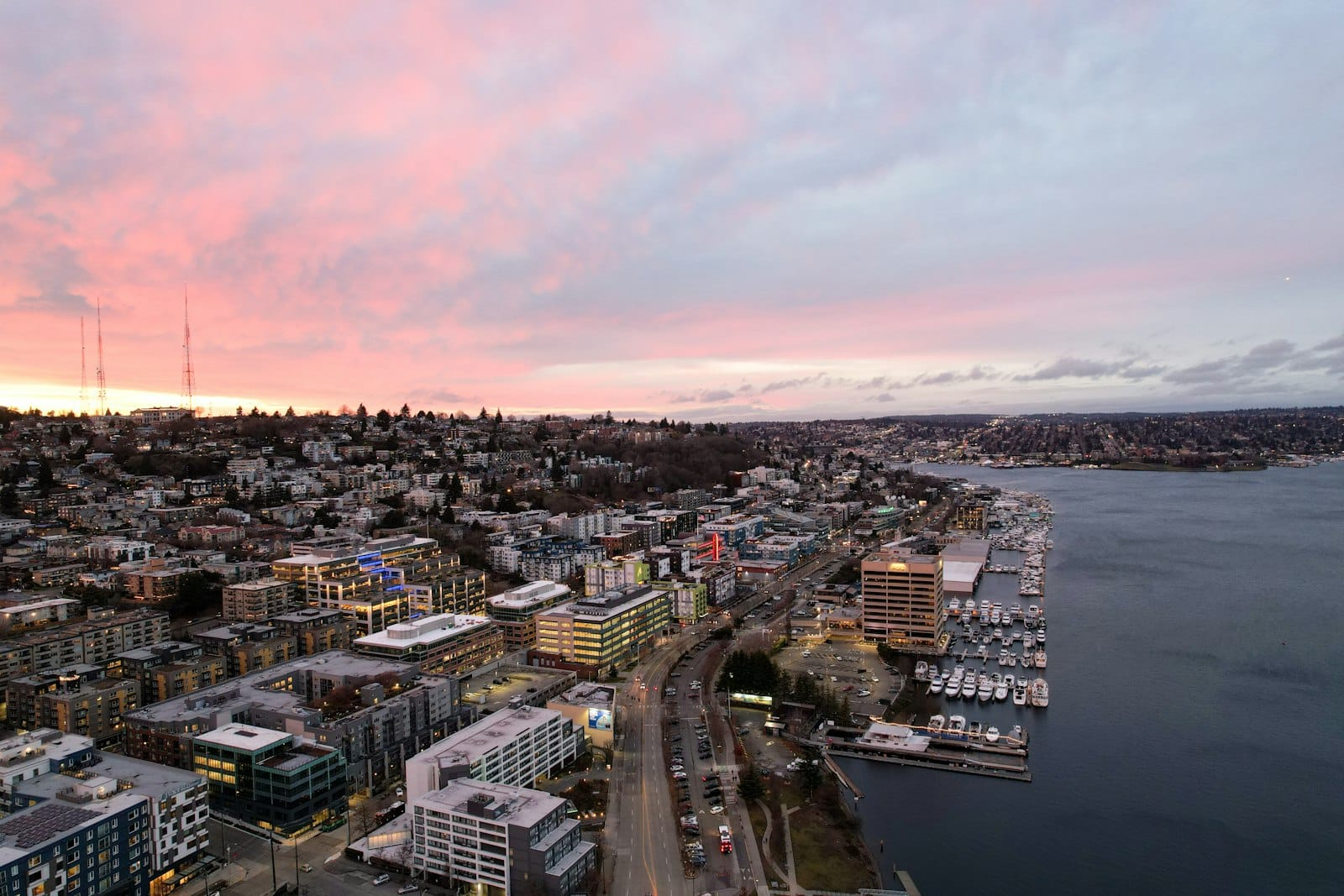
This is the section I’d read twice. The median home in Las Vegas was built in 1995, per the Census Bureau’s 2024 American Community Survey. Among the detached houses that sold in Seattle from July through September 2026, the median one was built in 1945, about 39% were built before 1940, and 72% before 1960 (our NWMLS pull, 1,162 sales). If your Las Vegas house is stucco over a wood frame on a slab, with a tile roof, central air and a water softener, almost everything about a Seattle house will be new to you: a basement or a crawl space, wood siding, a wood frame that’s been wet for 80 winters, galvanized or clay pipes, and in some houses the oil tank that used to heat the place, buried in the yard. (Our decade-by-decade guide to Seattle homes covers what each era tends to have.) New construction exists, but it’s mostly townhouses in the city and single-family in the far suburbs, and it carries a premium.

The problems come from the water. In the desert you worry about the roof baking, the stucco cracking, the AC compressor dying in August and the pool pump. Here the house fights damp: rot at the sill, moss on the roof, a wet crawl space, drainage that counts for more than insulation, and a side sewer line that’s older than the Interstate system. Here’s what the usual suspects cost, from our construction company’s billed jobs where we have them and current Seattle contractor pricing where we don’t:
| What older Seattle houses often need | What it usually costs |
|---|---|
| Side sewer (the pipe from the house to the street) | Spot repair $1.95k to $8k. Full replacement $10k to $24k (trenchless $4.25k to $15.5k) |
| Knob-and-tube wiring | Whole-house rewire $25k to $35k. Targeted replacement $4.5k to $12k |
| Buried heating oil tank | Decommission in place about $700 to $5k. Full removal $5k to $15k, before any soil cleanup |
| Earthquake retrofit (bolting and bracing a crawl space or unfinished basement) | About $5k to $12k |
| Air conditioning with a ductless heat pump | One zone $3.5k to $6k. Whole-house multi-zone systems ran about $27k and $41k on two of our remodels |
| New asphalt roof | $19k to $26k on our jobs |
| 200-amp electrical panel | $3k to $6k |
None of these is a reason to skip an old house. They’re reasons to read the inspection for dollars. Get the sewer scoped on video on every house. Ask whether the house ever heated with oil. Look at drainage around the foundation and in the crawl space, because that’s where Seattle’s rain shows up first. A Seattle home inspection will flag most of this, and we price the big items on the spot when we tour, because that’s the number that should move your offer.
Air conditioning is the one you’ll notice, because in Las Vegas it’s life support. About 53% of Seattle-area homes had it in 2021, per the Census Bureau’s American Housing Survey, and most of the older houses on your tour won’t. You can live without it most years, because the average July high is 77°F, the humidity is low and the nights cool off, and a ductless heat pump fixes it for the two hot weeks a year. Pools are rare here, and the ones that exist are a maintenance project with a three-month season. What you get to stop doing: replacing the AC every 12 years, re-sealing the roof, and watching the water bill. Your Seattle yard waters itself nine months of the year.
Earthquakes are a bigger deal here. Besides local faults like the Seattle Fault, the region sits near the Cascadia Subduction Zone offshore, which can produce a very large, long-shaking quake. Older houses that aren’t bolted to their foundations are the ones that slide, and the retrofit is in the table above. Earthquake coverage is something you add to your homeowners policy or buy separately, and the deductible typically runs 10% to 25% of the coverage on the house, according to the Washington Insurance Commissioner. Get the quote before you close and decide with real numbers.
Here’s the number nobody from Las Vegas believes: January in Seattle is almost the same temperature as January in Las Vegas. The average January low at Sea-Tac is 37.7 degrees; at Harry Reid it’s 40.5. Three degrees. What’s different is everything else. Las Vegas averages about 4 inches of rain a year on 26 days. Seattle averages about 39 inches on 156 days, mostly as drizzle between October and May. Nobody carries an umbrella because it’s rarely raining hard enough to need one, and almost none of it falls in summer.

| Normal year | Las Vegas | Seattle |
|---|---|---|
| Rain | 4.2 inches | 39.3 inches |
| Days with measurable rain | About 26 | About 156 |
| Days at 100°F or above | About 78 | Almost none |
| Average July high | 104.5°F | 77.4°F |
| Average January low | 40.5°F | 37.7°F |
| Sunshine | About 3,830 hours a year (86% of possible) | About 2,170 hours a year (49% of possible) |
| Daylight on December 21, 2026 | 9 hours 41 minutes | 8 hours 26 minutes |
Sources: NOAA 1991 to 2020 climate normals (Harry Reid International Airport, Sea-Tac Airport for Seattle; sunshine tables are NOAA’s 1961 to 1990 series). Daylight from sunrise-sunset.org.
Summer is the trade you’re making, and it’s a good one. The average July high here is 77 degrees, 27 degrees cooler than Las Vegas’s, with low humidity, and from July through September it almost never rains. Las Vegas spends about 137 days a year at 90 or above and 78 at 100 or above. In a normal year Seattle doesn’t hit 100 at all, and the few times it has, the whole city talked about it for a week. In late June the sun here doesn’t set until after 9 p.m. You can walk the dog at noon in August. Your yard is green without a drip system, and if the lawn goes brown in late summer, it comes back with the October rain. Your HOA’s lawn, by the way, is on a deadline: Southern Nevada’s nonfunctional-grass law requires decorative turf at HOAs, commercial and multifamily properties to be gone by the end of 2026. Nobody here has ever heard of a turf rebate.
Winter is the adjustment, and it’s the biggest one on this list. Seattle gets about 1,650 fewer hours of sun a year than Las Vegas. Around the solstice, Seattle gets about eight and a half hours of daylight, an hour and a quarter less than Las Vegas, and plenty of those hours are gray. The cold isn’t the problem; the dark is. Seattle also gets a few inches of snow most winters, and because the city is built on hills it shuts down for a day or two when it does. A good lamp, a vitamin D habit and a winter trip somewhere sunny do a lot of work here. Rain jackets are not optional, and you’ll stop carrying an umbrella within a month.
What you won’t miss: July, August, September, the first half of October, and running the AC in March. What you might: a sunny day in January, and being able to plan anything outdoors more than two days out.
The average commute in the Las Vegas metro is 25.9 minutes. In the Seattle metro it’s 30.0 (Census Reporter, ACS 2024). About four minutes longer, and the map is why. Las Vegas is a flat grid with a beltway. Seattle is squeezed between Puget Sound and Lake Washington, with two freeways running north and south and two bridges across the lake, so one stalled car on I-5 is everyone’s problem, and there’s no beltway to bail out onto.
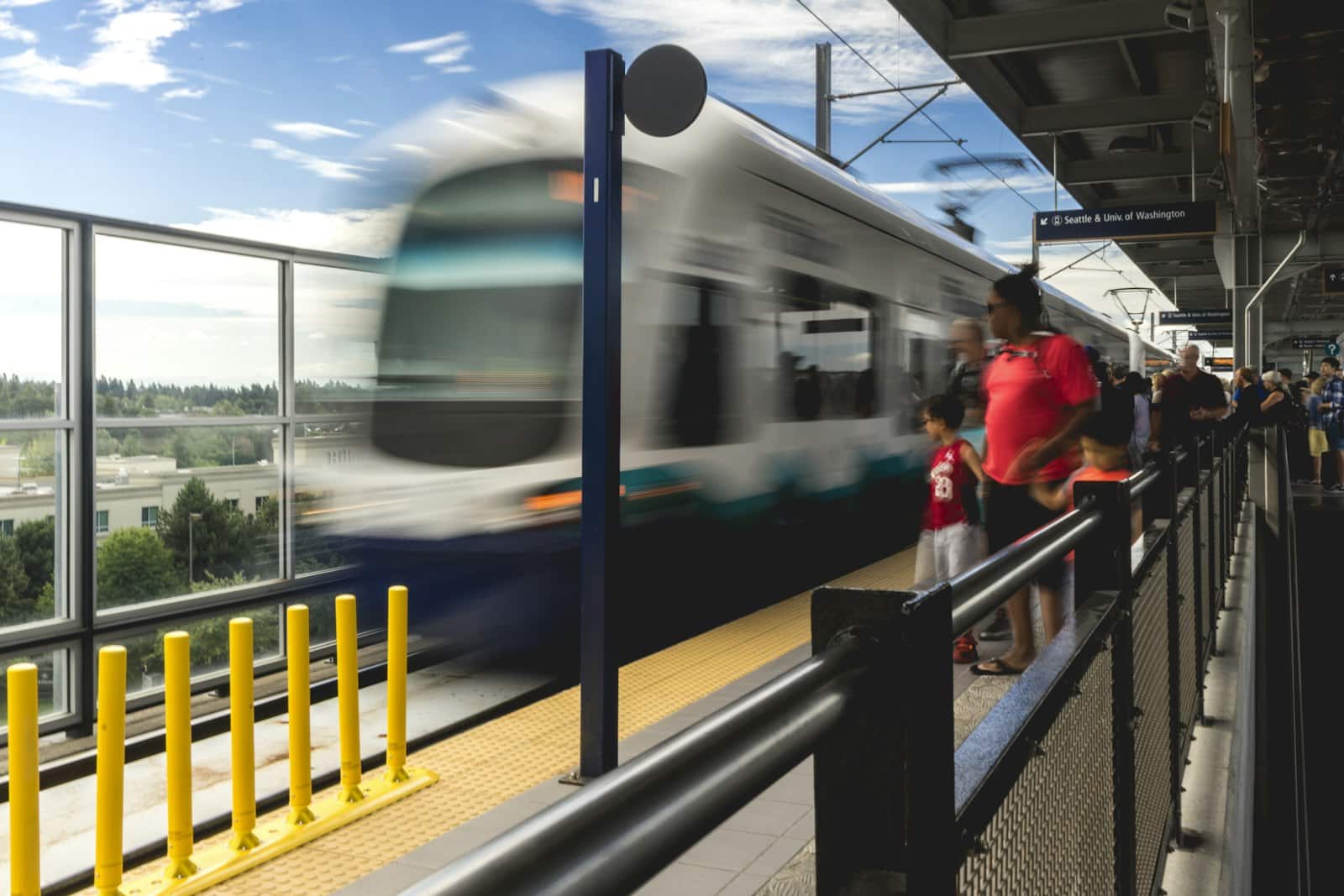
Transit is where Seattle pulls ahead. Las Vegas has a good bus system (the RTC carries about 173,000 riders a weekday) and a 3.9-mile monorail with seven stations behind the Strip hotels, which the convention authority bought out of bankruptcy. Link light rail runs 63 miles with 51 stations and, by Sound Transit’s counts reported this fall, carries more than 160,000 boardings a day. Since March 28, 2026 the 2 Line crosses Lake Washington, connecting Seattle with Mercer Island, Bellevue and Redmond, and extensions to West Seattle and Ballard are planned for the 2030s (we have opinions about Ballard’s). Link also runs from downtown to Sea-Tac Airport, which will feel like science fiction after the cab line at Harry Reid. If you’ve never lived without a car and want to try, buy within a 15-minute walk of a Link station: Capitol Hill, the U District, Roosevelt, Northgate, Columbia City, Beacon Hill or downtown Bellevue and Redmond on the Eastside. Plenty of our Capitol Hill clients use their cars less than once a week. Outside those corridors, you’ll want a car, and most households here have one.
If you’ll drive across the lake, I-90 is free and SR 520 is tolled in both directions: as of October 2026, up to $4.90 at weekday rush hour with a Good To Go pass and $6.90 if they mail you the bill. Nevada has no toll roads, so this part is new. Good To Go is Washington’s toll pass, and it also covers the SR 99 tunnel under downtown and the express lanes on I-405. One thing stays the same: you’re still on Pacific time, so nothing about your calendar changes.
If you’re transferring with Amazon, Microsoft, Boeing or another big employer, you already know the address. If you’re coming without a job, here’s the straight version. Las Vegas runs on hospitality: about one job in four in the metro is in leisure and hospitality (302,800 of 1,190,500 in September, per the Bureau of Labor Statistics). In Seattle it’s about one in ten, and the hotels, restaurants and arenas that exist are a fraction of the size. If your career is on the Strip, line up the next job before you move, because there’s no Strip here. Seattle’s job market tilts hard toward a few very large tech employers that have had a rough few years of their own. By our count, King and Snohomish counties added about 42,000 tech jobs from late 2019 to August 2022, then lost about 29,000 of them by early 2025. (We dug into what that’s doing to Eastside home prices in this post.) Where Las Vegas experience lands here: healthcare (UW Medicine, Swedish, Providence, Seattle Children’s and the big hospital systems), construction and the trades, aerospace (Boeing, Blue Origin in Kent), and logistics in the south end. My advice for everyone else is the same: get the offer letter before you sign a purchase agreement, and if you’re consulting, read the B&O paragraph above twice.
For schools, if you’re used to one giant district (Clark County’s) with magnet schools and a zoning map, Seattle is smaller and more fragmented. Seattle Public Schools assigns by address, and the Eastside cities have their own districts (Bellevue, Lake Washington for Kirkland and Redmond, Mercer Island, Issaquah and Northshore). Boundaries don’t follow neighborhood names, so check the district’s boundary lookup for the exact address before you offer.
A lot of families moving here rule out Seattle Public Schools on reputation alone and head straight for the Eastside, the way Las Vegas families head for Summerlin or Henderson. I think that’s often a mistake, and we wrote about why Seattle’s schools are better than their reputation. If you’re buying for the long haul, our post on Seattle’s sleeper schools covers the ones we think will improve the most.
Driver’s license. State law gives you 30 days after you move to get a Washington driver’s license, and you need it before you can register your car here.
Car registration. New residents also have 30 days to register their vehicles in Washington. No smog check: Washington ended its emissions program in 2020, so the annual test the Las Vegas Valley requires is behind you. In King County the bill includes Sound Transit and transit fees, so expect a number that looks a lot like Nevada’s governmental services tax.
Register to vote. Washington votes entirely by mail, so register at your new address and the ballot comes to you. Then cancel your Nevada registration.
Move the rest of your life. Change your address with your bank, brokerage and employer, and move your doctors when you can. There’s no state income tax withholding to start or stop in either state, which is one less form than most transplants file.
Good To Go pass. If you’ll cross SR 520, use the SR 99 tunnel or the express toll lanes on 405, set up a Good To Go account before your first trip. Pay-by-mail costs $2 more per crossing on 520.
Fall maintenance. Gutters and roof moss are an annual thing here, the way the AC tune-up and the pool service were there. Gutter cleaning runs about $200 to $500 and roof moss removal about $500 to $800 from Seattle companies.
Nevada is a landlord-friendly place to own a rental, there’s no state income tax on the rent, and if you bought before 2022 your mortgage rate is probably low enough that the rent covers the payment. Plenty of people in your spot keep the house, especially the ones who think they might come back.
Before you do, here’s what keeping it means. The first thing you lose is the 3% cap. A recorded ownership document isn’t the only thing that removes the owner-occupied abatement; moving out does too, and a house that isn’t your primary residence falls under the general cap of up to 8% a year. Over a few years that gap compounds. Your HOA’s CC&Rs may limit rentals, so read them before you count on the rent. Insurance on a rental is its own policy. Then the federal piece: the capital gains exclusion on your home sale requires that you lived there two of the last five years, so you have roughly three years after moving out before that window closes. And you’ll be managing a property from 1,100 miles away in a market where homes are taking 59 days to sell, so if you ever need to get out quickly, you won’t. None of that makes it a bad idea. It means you should run the numbers with a CPA before you decide.
If you sell, timing matters. Las Vegas homes are taking about 59 days to sell and Seattle homes about 19, so your Las Vegas sale will almost certainly take longer than your Seattle purchase. Offers contingent on selling another house are hard to win on Seattle houses that are drawing multiple offers. Most people in your spot either sell first and rent here for a bit, or line up a bridge loan with a lender who does them. Condos are the exception: King County had 7 months of condo inventory in October, so a condo buyer has more room to negotiate. (Our guide to the main loan types is a decent primer before you call a lender.) The transfer tax works the same direction in both states: Clark County’s $2.55 per $500 is usually paid by the seller, and so is Washington’s real estate excise tax, so it won’t come up when you buy here.
Buy or rent here? If you know where you’ll work and you’ve spent real time in a couple of neighborhoods, I think buying soon makes sense, because buyers have more room now than they did in 2025. If you don’t know the neighborhoods yet, rent for six months to a year, through a winter, and see whether the dark bothers you before you commit. That advice goes double coming from a place that gets 86% of its possible sunshine. If this is your first old house, our list of first-time buyer mistakes is worth a read even if it isn’t your first house.
For housing, much more. The median home in Seattle sold for about $864,000 over the three months ending in October 2026, versus about $448,000 in Las Vegas, and Seattle costs a little more than twice as much per square foot ($539 versus $254). Rents are about $850 a month higher in Seattle. Neither state taxes wages. Sales tax is higher in Seattle, and property tax bills are roughly double because there’s no cap and the house costs more.
Not on wages, the same as Nevada. Washington does tax long-term capital gains over $278,000 a year at 7%, with real estate exempt, and a 9.9% tax on household income over $1 million starts in 2028. It also has an estate tax on estates over $3 million, which Nevada doesn’t.
Seattle, mostly because the house costs more and the bill follows the market. Nevada caps the tax bill on your own home at 3% growth a year and values houses at depreciated replacement cost, so most Las Vegas owners pay well under 1% of market value. Seattle’s effective rate is about 0.98% of full market value with no cap, and the typical house pays about $8,400 a year.
It rains often, not hard. Seattle averages about 39 inches a year on about 156 days, most of it light drizzle from October through May; Las Vegas averages about 4 inches on 26 days. Seattle’s summers are dry, with an average July high of 77°F. The bigger adjustment is sun: about 2,170 hours a year against Las Vegas’s roughly 3,830.
Not very. The average July high is 77°F, and a normal year has no 100-degree days at all. Las Vegas averages about 78 days a year at 100 or above. About half of Seattle-area homes have air conditioning, and a ductless heat pump adds it for $3,500 to $6,000 per zone.
For Summerlin, start with Issaquah Highlands or Sammamish: master-planned, trails, highly rated schools, newer houses, and a commute. For Henderson or Green Valley, look at Bellevue or Kirkland, separate cities with their own downtowns and the region’s highest suburban prices.
Most detached houses don’t. Condos and townhouses do, and Washington gives buyers a resale certificate with five business days to cancel (RCW 64.90.640), similar to Nevada’s resale package under NRS 116.4109. For houses, zoning takes the HOA’s place, and since January 21, 2026, Seattle allows up to four homes on a typical lot.
Yes, by a lot. Las Vegas has buses and a 3.9-mile monorail behind the Strip. Link light rail runs 63 miles with 51 stations, carries more than 160,000 boardings a day, goes to the airport, and since March 2026 crosses Lake Washington to Bellevue and Redmond. If you want to live car-free, buy within a 15-minute walk of a Link station.
Maybe. Nevada doesn’t tax the rent, but a house that isn’t your primary residence loses the 3% tax cap and falls under the general cap of up to 8% a year, your HOA may restrict rentals, and after roughly three years as a rental you can lose the federal home sale exclusion. Run the numbers with a CPA first.
If you’re planning a scouting trip, tell us when you’ll be in town and what you’re curious about. We’ll set up a learning tour across the neighborhoods that fit, with real cost numbers on the houses you see.
Coming from somewhere else? Start with our guide to moving to Seattle, which covers who moves here and what to expect wherever you’re coming from.
Disclaimer: This article is general information, not legal, tax or financial advice. Tax rules, ballot measures and market numbers change, and costs vary by house. Talk with your own CPA, attorney, inspector and contractor before making decisions.