Moving to Seattle from Minneapolis: What to Know (2026 Guide)
- Ryan Palardy,
- November 17, 2026



The house costs about two and a half times as much, the income tax goes from as high as 9.85% to zero, the property tax bill nearly doubles, and January is 29 degrees warmer. The median home in Minneapolis sold for about $360k over the three months ending in October 2026, at $227 per square foot, and took 27 days to sell. In Seattle it was about $864k, at $539 per square foot, in 19 days. Average asking rent is $1,409 in Minneapolis and $2,090 in Seattle. Minnesota taxes wages at 5.35% to 9.85%; Washington doesn’t tax them at all. What goes the other way: the property tax bill on a Seattle house is about $8,400 against about $4,700 on the Minneapolis median, sales tax goes from 9.025% to 10.55%, and Washington taxes big capital gains, though Minnesota taxes them harder. Both states tax estates over $3 million. The weather trade is snow and real cold for rain and gray: Seattle gets about an eighth of your snow, and the average January low is 38 instead of 9. The houses are a similar age to yours, built for rain instead of frost, and almost none of them are Torrens.
This guide covers the whole Twin Cities area. In the most recent IRS migration data (tax filings from 2022 to 2023), about 790 people moved from Hennepin, Ramsey, Dakota, Anoka and Washington counties to King County, and about 670 went the other way. Hennepin alone sent 468 people here and took 426 back; Ramsey sent 165 and took 105. Redfin’s search data says the same thing from your side: Seattle is the fourth biggest source of people looking to move into Minneapolis, behind Chicago, Washington and San Francisco, so this is a well-worn path in both directions. If you’re one of the 790, you’re probably moving for a job in tech or health care, for family, or because you’ve done enough Januaries. This guide is for you.

Coming up for a scouting trip? We’ll take you through five to eight homes across a few neighborhoods in one afternoon, with real repair costs on every house you see. It’s called a learning tour, and it’s the fastest way I know to figure out where you’d actually want to live.
| Category | Minneapolis | Seattle |
|---|---|---|
| Median sale price, all homes, city | $359,750 (3 months ending Oct 2026) | $864,399 (3 months ending Oct 2026) |
| Median price per square foot | $227 | $539 |
| Median days on market | 27 | 19 |
| Typical rent | $1,409 average asking rent (Nov 2026) | $2,090 average asking rent (Nov 2026) |
| Property tax | Median effective rate about 1.30%, after the homestead market value exclusion. About $4,700 a year on the median house | About 0.98% of a new market value every year, no exclusion. About $8,400 on the typical Seattle house |
| Transfer taxes | Deed tax 0.34% in Hennepin and Ramsey (0.33% elsewhere), usually paid by the seller; a mortgage registry tax on the loan | Real estate excise tax, graduated, paid by the seller. No tax on the loan |
| Sales tax | 9.025% (clothing and most groceries exempt) | 10.55% (groceries exempt, clothing taxed) |
| State income tax | 5.35% to 9.85% | None for most households. 9.9% on household income over $1M starting in 2028 |
| State capital gains tax | Taxed as ordinary income, up to 9.85%, plus 1% on net investment income over $1M | 7% on long-term gains over the annual deduction ($278,000 for 2025), 9.9% over $1M. Home sales are exempt |
| State estate tax | 13% to 16% on the part of an estate over $3M | 10% to 20% on the part of an estate over $3M |
| Homeowners insurance | About $4,540 a year | About $1,690 a year |
| Annual precipitation | About 32 inches, including about 51 inches of snow | About 39 inches, including about 6 inches of snow |
Sources: home prices, price per square foot and days on market from Redfin’s Minneapolis and Seattle housing market pages (all home types, three months ending October 2026, read November 17, 2026). Rents are average apartment asking rents from Apartments.com, November 2026. Effective property tax rate from Ownwell (April 2026); homestead exclusion from the League of Minnesota Cities. Seattle property tax bills from our NWMLS pull of Seattle house sales, October 2025 to September 2026 (5,717 sales). Deed tax from the Minnesota Department of Revenue; income tax brackets from the Department’s 2026 table. Insurance from NerdWallet’s 2026 averages for a policy with $400,000 of dwelling coverage (city figures for both). Estate tax from the Tax Foundation. Precipitation and snow from NOAA’s 1991 to 2020 climate normals.
So the median Seattle home costs about two and a half times the median Minneapolis home, and a little under two and a half times as much per square foot. If you’re shopping for a detached house, figure on more like $993k: that was the median for detached Seattle houses that sold from July through September (our own pull of NWMLS data, 1,162 sales). The median across all of King County was $851,250 in October, per the NWMLS. A budget that bought a 2,000-square-foot 1920s bungalow in Linden Hills with a finished attic and a detached garage buys about 1,000 square feet here, built in the same decade, with an unfinished basement and street parking. The gap is smaller if you’re coming from Edina, Wayzata or the Lake of the Isles side of Uptown, where prices already run well above the city median, and bigger if you’re coming from Powderhorn, Northeast or St. Paul’s East Side.
Rent lands harder than usual too. Seattle’s average asking rent is about $700 a month more than Minneapolis’s, roughly 50%. If you don’t know the neighborhoods yet, renting for six months to a year before you buy is still cheap insurance compared with buying the wrong house, and I’d do it through a winter, though you of all people won’t be scared off by one.
Speed will feel familiar. Minneapolis homes are taking about 27 days to sell and Redfin counts two offers on the average one; Seattle homes are taking 19 with the same two offers. You’re used to a market where the inspection contingency is still normal and a ten-day window is enough. On the right Seattle house you usually don’t get that, which is a big reason we do the homework (inspection notes, repair costs, comps) before you’re standing in the living room. That said, Seattle buyers have more choice than they did a year ago: King County had 33% more listings in October than the year before, and Seattle prices are down 2.3% over the past year. Minneapolis prices are up 2.8%, which helps if you’re selling.
Minnesota is a high-income-tax state with a lot of moving parts, and Washington is a no-income-tax state with different moving parts. For most working households the move is a clear win on taxes. Here are the pieces.
Minnesota’s 2026 brackets run from 5.35% to 9.85%, with the top rate starting at $337,930 of taxable income for a married couple and $203,150 for a single filer. On $200,000 of taxable income, a married couple pays roughly $13,000. Washington has no tax on wages, so that line goes to zero the day you become a resident. In the year you move you’ll file a part-year Minnesota return that covers the income you earned while you lived there, and after that, nothing, unless you keep Minnesota-source income like rent from a house you held onto. If you keep a Twin Cities employer and work remotely from here, make sure payroll codes you as a Washington employee, or Minnesota tax keeps coming out and you file to get it back. Confirm the details with your CPA.
Minnesota’s homestead market value exclusion knocks 40% off the first $95,000 of a home’s value, up to $38,000, and then shrinks by 9 cents for every dollar of value above that until it disappears at $517,200. On the $360k median house that’s about $14,000 of value you don’t pay on, and Ownwell puts Minneapolis’s median effective rate at about 1.30%, which works out to about $4,700 a year. Washington has no exclusion. State law requires every county to revalue every property every year at full market value, and Seattle’s effective rate is about 0.98%. The rate is lower; the bill isn’t, because the house costs two and a half times as much. The typical Seattle house that sold over the past year carried a bill of about $8,400. (Washington limits how fast each taxing district’s total levy can grow, so bills don’t track values one for one.) Minnesota’s property tax refund for homeowners has no counterpart here either. If you want to check an assessment once you’re here, we wrote about King County assessment errors.
Minnesota taxes capital gains as ordinary income, up to 9.85%, and since 2024 adds 1% on net investment income over $1 million. Washington taxes long-term capital gains at 7% above an annual deduction ($278,000 for 2025, adjusted each year for inflation), and 9.9% on gains over $1 million. Real estate is exempt. Stock isn’t, so if you’re sitting on a big position, talk to your CPA about timing before you establish Washington residency, not after. In March 2026, Washington also passed a 9.9% tax on household income above $1 million, starting with tax year 2028, and voters kept it in November 2026 by rejecting Initiative 645. If your household earns under $1 million a year, it doesn’t touch you. Estate tax is the one place the two states look alike. Minnesota exempts $3 million and taxes the rest at 13% to 16%. Washington, for deaths on or after July 1, 2026, excludes the first $3 million and taxes the rest at 10% to 20%. If your estate plan was built around the Minnesota number, it needs a read-through here, not a rewrite.
Seattle’s sales tax is 10.55%, against 9.025% in Minneapolis, and you’ll notice it on the car, the furniture and the appliances, which is to say right after you move. The line Minnesotans feel most: Washington taxes clothing. Neither state taxes groceries.
Washington has no income tax, but it does have a business and occupation (B&O) tax, charged on gross receipts rather than profit. If you’re a contractor or consultant earning $12,000 or more a year, the Department of Revenue expects you to register and file. A small business credit wipes out the tax for a lot of solo operators, but you still have to register to get it. Seattle also requires its own business license, and starting in 2026 Seattle’s own B&O tax doesn’t kick in until $2 million in revenue. Worth a call to a Washington CPA early.
| If you liked | Start with | Why |
|---|---|---|
| Linden Hills or Fulton | Madison Park or Montlake | Old houses a short walk from a lake and a small village of shops, with prices to match |
| Uptown (Lowry Hill East) | Capitol Hill | Dense, walkable, a mix of old houses and new apartments, and the bars and restaurants the rest of the city drives to |
| North Loop | Belltown or South Lake Union | Converted warehouses and new towers next to downtown, a short walk to the stadiums |
| Northeast | Ballard or Fremont | A working neighborhood turned destination, breweries in the old industrial buildings, and small houses on the side streets |
| Longfellow or Seward | Wallingford or Greenwood | Bungalows from the 1910s to 1930s, a bike path, and a main street you can walk to |
| Kingfield or Tangletown | Phinney Ridge | A small commercial corner with a coffee shop and a bakery, surrounded by old houses on tree-lined streets |
| Powderhorn | Columbia City or Beacon Hill | A park at the center, old houses at prices below the city median, and a fast ride downtown |
| Mac-Groveland or Highland Park (St. Paul) | Ravenna or Wedgwood | Quiet, established, a college nearby, and houses from the 1920s to the 1950s |
| Cathedral Hill or Summit Avenue | Queen Anne | Big old houses on the hill above downtown, with the views to match |
| Edina | Mercer Island or Bellevue | The suburb everyone names first, highly rated schools, 1950s to 1990s houses on good lots, and the region’s highest suburban prices |
| Wayzata or Minnetonka | Kirkland or Medina | A lakefront town with an old main street, big houses on the water, and a commute into the city |
| Eagan or Woodbury | Issaquah or Sammamish | Newer suburbs with highly rated schools, 1990s to 2010s houses, and a real commute |
| Maple Grove or Plymouth | Bothell or Redmond Ridge | Newer suburbs with trails and a town center, and the employers are out there too |
| St. Louis Park | Shoreline | The first suburb over the city line, postwar houses, and prices a step below the city’s best neighborhoods |
| Richfield or Bloomington | Burien or Tukwila | Postwar houses near the airport at prices well below the city, with the flight path as the trade |
| Stillwater | Snohomish | A historic river town 30 miles out with antique shops and a long, pretty drive |
One warning: Seattle neighborhoods change block to block, partly because of the hills and partly because of the age of the houses. You know a version of that from South Minneapolis, where a 1910 foursquare and a 1950s rambler can share a street. Here it’s the norm everywhere, and there’s no grid to orient by. Minneapolis is a grid with numbered streets and avenues that mostly go where they say they go; Seattle’s grid breaks and turns at every hill and every body of water. There is no HOA on most houses. That’s why we start new clients with a learning tour before anyone writes an offer.

This is the section I’d read twice, though you’ll have a head start on it. The median home in Minneapolis was built in 1954, per the Census Bureau’s 2024 American Community Survey, one of the oldest housing stocks of any city we’ve written a guide for. Among the detached houses that sold in Seattle from July through September 2026, the median one was built in 1945, about 39% were built before 1940, and 72% before 1960 (our NWMLS pull, 1,162 sales). If you’ve owned in South Minneapolis or St. Paul, you already know old houses: knob-and-tube, a boiler and radiators, a sewer line that predates your grandparents, and a basement you’ve thought hard about. The construction is familiar too: wood frame, often stucco, sometimes brick on the older ones. What changes is what the house was built to fight. Yours was built for frost: deep footings below the frost line, a dry basement because the ground is frozen half the year, storm windows and a furnace that runs seven months. Seattle’s were built for rain: shallower foundations, crawl spaces under a lot of them, wide eaves, and heating systems that were never asked to do much. (Our decade-by-decade guide to Seattle homes covers what each era tends to have.) New construction exists, but it’s mostly townhouses in the city and single-family in the far suburbs, and it carries a premium.

The problems come from the water. In Minneapolis you worry about ice dams, frozen pipes, the boiler, foundation cracks from frost heave and the spring thaw in the basement. Here the house fights damp for nine months: rot at the sill, moss on the roof, a wet crawl space, drainage that counts for more than insulation, and a side sewer line that’s older than the Interstate system. Here’s what the usual suspects cost, from our construction company’s billed jobs where we have them and current Seattle contractor pricing where we don’t:
| What older Seattle houses often need | What it usually costs |
|---|---|
| Side sewer (the pipe from the house to the street) | Spot repair $1.95k to $8k. Full replacement $10k to $24k (trenchless $4.25k to $15.5k) |
| Knob-and-tube wiring | Whole-house rewire $25k to $35k. Targeted replacement $4.5k to $12k |
| Buried heating oil tank | Decommission in place about $700 to $5k. Full removal $5k to $15k, before any soil cleanup |
| Earthquake retrofit (bolting and bracing a crawl space or unfinished basement) | About $5k to $12k |
| Air conditioning with a ductless heat pump | One zone $3.5k to $6k. Whole-house multi-zone systems ran about $27k and $41k on two of our remodels |
| New asphalt roof | $19k to $26k on our jobs |
| 200-amp electrical panel | $3k to $6k |
None of these is a reason to skip an old house. They’re reasons to read the inspection for dollars. Get the sewer scoped on video on every house. Ask whether the house ever heated with oil, which is more common here than it was in the Twin Cities. Look at drainage around the foundation and in the crawl space, because that’s where Seattle’s rain shows up first. A Seattle home inspection will flag most of this, and we price the big items on the spot when we tour, because that’s the number that should move your offer.
Air conditioning matters less than you’d think, and you’re used to a hotter summer than we have. About 53% of Seattle-area homes had it in 2021, per the Census Bureau’s American Housing Survey, and most of the older houses on your tour won’t. You can live without it most years, because the average July high is 77°F, the humidity is low and the nights cool off, and a ductless heat pump fixes it for the two hot weeks a year. What you get to stop doing: the furnace tune-up, the gutter heat cables, the roof rake, and the snowblower. What you’ll miss on the house side: the basement. A dry, finished Minneapolis basement is normal; a Seattle one is low, often damp and usually unfinished, and finishing it starts with drainage. Homeowners insurance here averages about $1,690 a year against Minneapolis’s $4,540, because nobody here is pricing in hail.
Earthquakes are the trade for tornado sirens. Besides local faults like the Seattle Fault, the region sits near the Cascadia Subduction Zone offshore, which can produce a very large, long-shaking quake. Seattle’s older wood houses often aren’t bolted to their foundations, and the retrofit is in the table above. Earthquake coverage is something you add to your homeowners policy or buy separately, and the deductible typically runs 10% to 25% of the coverage on the house, according to the Washington Insurance Commissioner. Get the quote before you close and decide with real numbers.
Here’s the number nobody from Minneapolis believes: Seattle gets more rain than Minneapolis, and it’s still the easier winter by a mile. Sea-Tac averages about 39 inches of precipitation a year; Minneapolis-St. Paul International averages about 32, and 51 of its inches are snow. Seattle gets about 6 inches of snow a year, and the city shuts down for a day or two when it comes, because it’s built on hills and nobody owns a roof rake. The average January low here is 37.7 degrees. Yours is 8.8. Nobody carries an umbrella because it’s rarely raining hard enough to need one, and almost none of it falls in summer.

| Normal year | Minneapolis | Seattle |
|---|---|---|
| Precipitation | 31.6 inches | 39.3 inches |
| Days with measurable precipitation | About 119 | About 156 |
| Snow | About 51 inches | About 6 inches |
| Average July high | 83.4°F | 77.4°F |
| Average January low | 8.8°F | 37.7°F |
| Sunshine | About 2,710 hours a year (59% of possible) | About 2,170 hours a year (49% of possible) |
| Daylight on December 21, 2026 | 8 hours 46 minutes | 8 hours 26 minutes |
Sources: NOAA 1991 to 2020 climate normals (Minneapolis-St. Paul International Airport; Sea-Tac Airport for Seattle; sunshine tables are NOAA’s 1961 to 1990 series). Daylight from sunrise-sunset.org.
Summer is a smaller trade than for most of our readers, and still a good one. The average July high here is 77 degrees, 6 degrees cooler than yours, with low humidity, no mosquitoes to speak of, and from July through September it almost never rains. In late June the sun doesn’t set until after 9 p.m., which you’ll recognize; Seattle is a bit farther north than Minneapolis, so our summer evenings are a few minutes longer than yours and our December days are only 20 minutes shorter. Your yard is green without a sprinkler system, and if the lawn goes brown in late summer, it comes back with the October rain. The thing we watch in late summer is wildfire smoke drifting in from the Cascades or British Columbia, which gives us a bad week or two in some years and none in others. You’ve had those weeks too.
Winter is the adjustment, and it’s a different one than you’re bracing for. You’re used to cold and bright: 10 below, blue sky, snow that stays. Seattle’s winter is mild and gray. It rarely freezes hard, the snow melts in a day, and nothing you own needs a block heater. What it does is drizzle, on about 156 days a year, under a lid of cloud from November to March. Seattle gets about 540 fewer hours of sun a year than Minneapolis, and most of the missing hours are winter hours. Minnesotans tend to do better with this than Californians do; you already know how to live indoors in December. A good lamp, a vitamin D habit and a winter trip somewhere sunny do a lot of work here. Rain jackets are not optional, and you’ll stop carrying an umbrella within a month.
What you won’t miss: January, the roof rake, the windshield scraper, the mosquitoes, and the week in July when it’s 95 and humid. What you will: the sun in February, lakes you can skate on, and snow that looks like snow.
The average commute in the Twin Cities metro is 24.1 minutes. In the Seattle metro it’s 30.0 (Census Reporter, ACS 2024). Six minutes longer, and the map is why. The Twin Cities have a freeway loop and a grid, and a stalled car on 35W has 94 and 494 as alternatives. Seattle is squeezed between Puget Sound and Lake Washington, with two freeways running north and south and two bridges across the lake, so one stalled car on I-5 is everyone’s problem, and there’s no loop. There are also no skyways; you walk outside in the rain, which is the point.
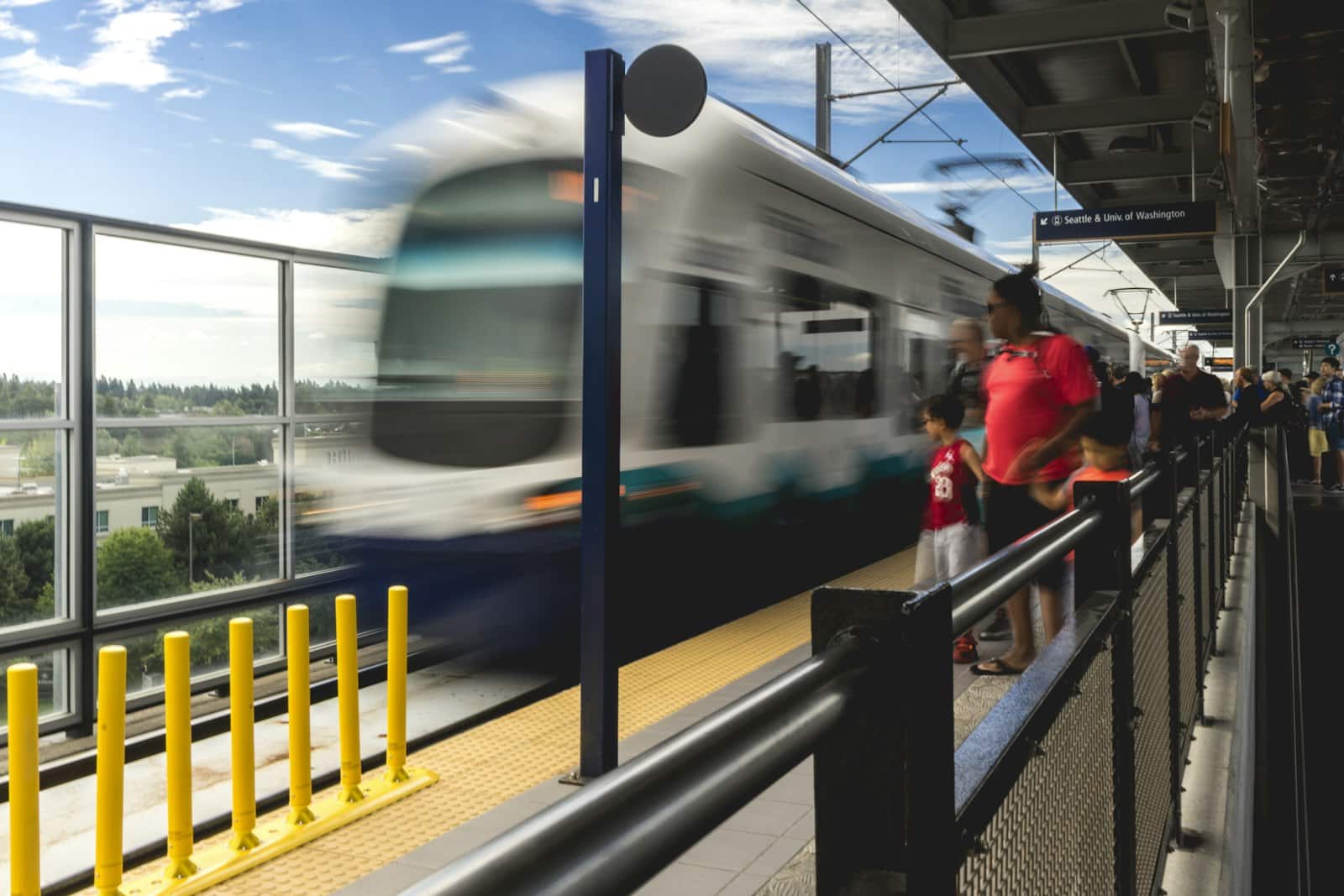
Transit is about the same shape, and much busier. Metro Transit’s light rail is two lines and 37 stations, with the Blue Line to the airport, and it carried about 12.8 million riders last year, roughly 38,600 on a weekday; Northstar commuter rail ended in January 2026. Link light rail runs 63 miles with 51 stations and, by Sound Transit’s counts reported this fall, carries more than 160,000 boardings a day, about four times the light rail riders. Since March 28, 2026 the 2 Line crosses Lake Washington, connecting Seattle with Mercer Island, Bellevue and Redmond, and extensions to West Seattle and Ballard are planned for the 2030s (we have opinions about Ballard’s). Link runs from downtown to Sea-Tac Airport, the way the Blue Line runs to MSP. If you’ve never lived without a car and want to try, buy within a 15-minute walk of a Link station: Capitol Hill, the U District, Roosevelt, Northgate, Columbia City, Beacon Hill or downtown Bellevue and Redmond on the Eastside. Plenty of our Capitol Hill clients use their cars less than once a week. Outside those corridors, you’ll want a car, and most households here have one. Bike commuting is bigger here than you’d guess for a rainy city, though the hills do what the cold does there.
If you’ll drive across the lake, I-90 is free and SR 520 is tolled in both directions: as of October 2026, up to $4.90 at weekday rush hour with a Good To Go pass and $6.90 if they mail you the bill. If you’ve used the E-ZPass lanes on 35W or 394, the idea is familiar, but the transponder won’t work here. Good To Go is Washington’s toll pass, and it also covers the SR 99 tunnel under downtown and the express lanes on I-405. The time change is two hours. Your 9 a.m. call with the Minneapolis office is now at 7.
If you’re transferring with Amazon, Microsoft, Boeing or another big employer, you already know the address. If you’re coming without a job, here’s the straight version. The two metros are about the same size (2.0 million jobs in the Twin Cities, 2.1 million here) and built differently. The Twin Cities run on health care, a deep bench of Fortune 500 headquarters (Target, UnitedHealth, 3M, General Mills, Best Buy, U.S. Bancorp) and more manufacturing than most people expect: manufacturing is 10% of Twin Cities jobs against 8% here, and education and health care is 20% against about 15%. Seattle runs on software. Information is 1.2% of Twin Cities jobs and 6.2% of Seattle’s (Bureau of Labor Statistics, September 2026). Seattle’s job market tilts hard toward a few very large tech employers that have had a rough few years of their own. By our count, King and Snohomish counties added about 42,000 tech jobs from late 2019 to August 2022, then lost about 29,000 of them by early 2025. (We dug into what that’s doing to Eastside home prices in this post.) Where Twin Cities experience lands here: health care (UW Medicine, Swedish, Providence, Seattle Children’s and the big hospital systems, which will look familiar after Allina, Fairview and the Mayo orbit), medical devices (a smaller cluster, mostly around Bothell), retail and consumer (Costco, Starbucks, Nordstrom, REI, Amazon’s retail side), aerospace (Boeing, Blue Origin in Kent), and the finance and professional firms that serve all of it. The unemployment rate in September was 4.5% in the Twin Cities and 4.9% in Seattle. My advice for everyone else is the same: get the offer letter before you sign a purchase agreement, and if you’re consulting, read the B&O paragraph above twice.
For schools, if you’re used to Minneapolis Public Schools plus a ring of strong suburban districts (Edina, Wayzata, Minnetonka, Eden Prairie), Seattle is similar in shape. Seattle Public Schools assigns by address, and the Eastside cities have their own districts (Bellevue, Lake Washington for Kirkland and Redmond, Mercer Island, Issaquah and Northshore). Boundaries don’t follow neighborhood names, so check the district’s boundary lookup for the exact address before you offer.
A lot of families moving here rule out Seattle Public Schools on reputation alone and head straight for the Eastside, the way Twin Cities families head for Edina or Wayzata. I think that’s often a mistake, and we wrote about why Seattle’s schools are better than their reputation. If you’re buying for the long haul, our post on Seattle’s sleeper schools covers the ones we think will improve the most.
Driver’s license. State law gives you 30 days after you move to get a Washington driver’s license, and you need it before you can register your car here.
Car registration. New residents also have 30 days to register their vehicles in Washington. No emissions test in either state. In King County the bill includes Sound Transit and transit fees, so expect a number that looks a lot like Minnesota’s value-based tabs.
Register to vote. Washington votes entirely by mail, so register at your new address and the ballot comes to you. Then cancel your Minnesota registration.
Stop Minnesota withholding. Tell your employer the day you move. If you keep a Twin Cities employer and work remotely from here, make sure payroll codes you as a Washington employee.
Good To Go pass. If you’ll cross SR 520, use the SR 99 tunnel or the express toll lanes on 405, set up a Good To Go account before your first trip. Pay-by-mail costs $2 more per crossing on 520.
Fall maintenance. Gutters and roof moss are an annual thing here, the way the furnace service and the sprinkler blowout were there. Gutter cleaning runs about $200 to $500 and roof moss removal about $500 to $800 from Seattle companies. Sell the snowblower before you leave; it’s worth more there.
Minneapolis prices are up 2.8% on the year, homes are selling in under a month, and if you bought before 2022 your mortgage rate is probably low enough that the rent covers the payment. Plenty of people in your spot keep the house, especially the ones who think they might come back.
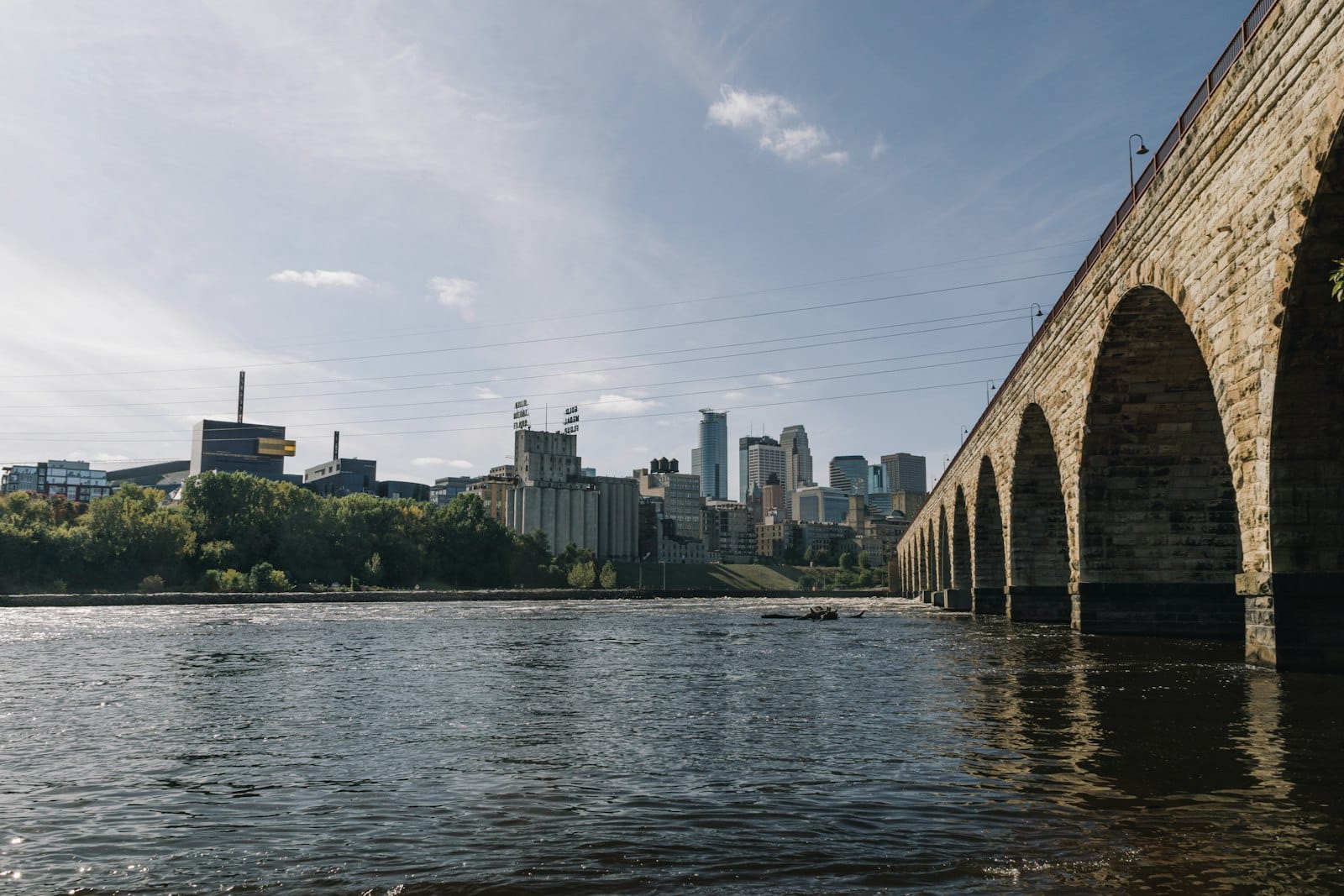
Before you do, here’s what keeping it means. The homestead market value exclusion applies to the home you live in, so once you rent it out the exclusion goes away and the property’s class rate changes, and the bill goes up. Minneapolis also requires a rental license before you can rent a house, so there’s a city process to get through before a tenant moves in. Rent from a Minnesota house is Minnesota-source income, so you’ll file a nonresident Minnesota return every year at Minnesota rates. Then the federal piece: the capital gains exclusion on your home sale requires that you lived there two of the last five years, so you have roughly three years after moving out before that window closes. And you’ll be managing a property 1,650 miles away through Minnesota winters, which is a different proposition than managing one in a mild climate: a frozen pipe in a vacant house between tenants is the thing that keeps long-distance landlords up at night. None of that makes it a bad idea. It means you should run the numbers with a CPA before you decide.
If you sell, timing is easier than for most of our readers. Minneapolis homes are taking about 27 days to sell and Seattle homes about 19, so you can run the two almost in parallel. Offers contingent on selling another house are still hard to win on Seattle houses that are drawing multiple offers. Most people in your spot either sell first and rent here for a bit, or line up a bridge loan with a lender who does them. Condos are the exception: King County had 7 months of condo inventory in October, so a condo buyer has more room to negotiate. (Our guide to the main loan types is a decent primer before you call a lender.) Minnesota’s deed tax and Washington’s real estate excise tax are both paid by the seller by custom, so neither comes up when you buy here.
Buy or rent here? If you know where you’ll work and you’ve spent real time in a couple of neighborhoods, I think buying soon makes sense, because buyers have more room now than they did in 2025. If you don’t know the neighborhoods yet, rent for six months to a year, through a winter, and see whether the gray bothers you more than the cold did. If this is your first old house, our list of first-time buyer mistakes is worth a read even if it isn’t your first house.
Yes, by a lot on housing. The median home in Seattle sold for about $864,000 over the three months ending in October 2026, versus about $360,000 in Minneapolis, about two and a half times as much, and Seattle costs $539 per square foot against $227. Rents are about $700 a month higher. Washington has no income tax, which offsets some of it for working households, and homeowners insurance runs about $2,850 a year less.
Not on wages. Minnesota taxes them at 5.35% to 9.85%. Washington does tax long-term capital gains over $278,000 a year at 7%, with real estate exempt, and a 9.9% tax on household income over $1 million starts in 2028. Both states have an estate tax that starts at $3 million.
The rate is lower in Seattle and the bill is higher. Minneapolis’s median effective rate is about 1.30% after the homestead exclusion, about $4,700 a year on the median house. Seattle’s is about 0.98% of full market value with no exclusion, and the typical house pays about $8,400 a year because the house costs two and a half times as much.
Not anymore. Washington repealed its Torrens system in 2022, and every registered parcel was withdrawn to recorded title on July 1, 2023. All Washington property is abstract-style recorded title backed by title insurance, so the preliminary title report is the document to read before you buy.
It rains often, not hard. Seattle averages about 39 inches a year on about 156 days, most of it light drizzle from October through May; Minneapolis averages about 32 inches on 119 days, a lot of it as snow. Seattle’s summers are dry, with an average July high of 77°F. The adjustment is the gray: about 2,170 hours of sun a year against Minneapolis’s roughly 2,710.
A little. Seattle averages about 6 inches a year against Minneapolis’s 51, and because the city is built on hills it closes for a day or two when it comes. January is much warmer: the average low is 37.7°F in Seattle and 8.8°F in Minneapolis, and hard freezes are rare. The ski areas at Snoqualmie Pass are about an hour from the city.
For Linden Hills, start with Madison Park or Montlake: old houses a short walk from a lake and a small village of shops. For Uptown, look at Capitol Hill, which is dense and walkable with a mix of old houses and new apartments and most of the city’s nightlife.
Bigger and busier. Metro Transit’s light rail is two lines and 37 stations with about 38,600 weekday riders. Link light rail runs 63 miles with 51 stations, carries more than 160,000 boardings a day, goes to the airport, and since March 2026 crosses Lake Washington to Bellevue and Redmond. Commutes average 30 minutes here against 24 in the Twin Cities.
Maybe. Rents cover an older mortgage, and homes there are selling fast if you change your mind. But a rental loses the homestead market value exclusion, Minneapolis requires a rental license, Minnesota taxes the rent at its regular rates, and after roughly three years as a rental you can lose the federal home sale exclusion. Run the numbers with a CPA first.
If you’re planning a scouting trip, tell us when you’ll be in town and what you’re curious about. We’ll set up a learning tour across the neighborhoods that fit, with real cost numbers on the houses you see.
Coming from somewhere else? Start with our guide to moving to Seattle, which covers who moves here and what to expect wherever you’re coming from.
Disclaimer: This article is general information, not legal, tax or financial advice. Tax rules, ballot measures and market numbers change, and costs vary by house. Talk with your own CPA, attorney, inspector and contractor before making decisions.