Moving to Seattle from Miami: What to Know (2026 Guide)
- Ryan Palardy,
- November 18, 2026



The median house costs about 30% more, the rent is a little less, the price per square foot is about the same, and the income tax line doesn’t change, because neither state has one. The median home in the City of Miami sold for about $665k over the three months ending in October 2026, at $553 per square foot, and took 109 days to sell. In Seattle it was about $864k, at $539 per square foot, in 19 days. Average asking rent is $2,243 in Miami and $2,090 in Seattle. Florida and Washington both skip the wage tax; Washington adds a tax on large capital gains and on estates over $3 million, and a higher sales tax (10.55% against 7%). What likely goes down: property tax (Miami’s millage runs about 2%, Seattle’s effective rate is about 0.98%) and homeowners insurance, because nothing here has a hurricane deductible. The weather trade is heat, humidity and hurricane season for rain, gray and a January that averages 38 degrees instead of 61. The houses are a similar age to Miami’s, wood instead of concrete block, and built to shed rain rather than wind.
This guide covers all of South Florida, not just the city. In the most recent IRS migration data (tax filings from 2022 to 2023), about 810 people moved from Miami-Dade, Broward and Palm Beach counties to King County, and about 710 went the other way. Miami-Dade sends more people here than it takes back (411 in, 264 out); Broward runs slightly the other direction. Redfin’s search data says the same thing from the Miami side: Seattle is the sixth biggest source of people looking to move into Miami, behind New York, Washington, Boston, Chicago and Los Angeles. If you’re one of the 810, you’re probably moving for a job in tech or health care, for family, or because you’ve decided you’re done with August and with the insurance renewal letter. This guide is for you.
Coming up for a scouting trip? We’ll take you through five to eight homes across a few neighborhoods in one afternoon, with real repair costs on every house you see. It’s called a learning tour, and it’s the fastest way I know to figure out where you’d actually want to live.
| Category | Miami | Seattle |
|---|---|---|
| Median sale price, all homes, city | $664,538 (3 months ending Oct 2026) | $864,399 (3 months ending Oct 2026) |
| Median price per square foot | $553 | $539 |
| Median days on market | 109 | 19 |
| Typical rent | $2,243 average asking rent (Nov 2026) | $2,090 average asking rent (Nov 2026) |
| Property tax | About 20 mills (2%) in the City of Miami on assessed value, less a homestead exemption of up to $50,000; Save Our Homes caps increases at 3% a year until the house sells. About $12,000 a year on the median house for a new buyer | About 0.98% of a new market value every year, no cap, no homestead exemption. About $8,400 on the typical Seattle house |
| Transfer taxes | Documentary stamp tax: 60 cents per $100 on a single-family home in Miami-Dade (70 cents elsewhere in Florida), plus 35 cents per $100 on the mortgage | Real estate excise tax, graduated, paid by the seller. No tax on the loan |
| Sales tax | 7% | 10.55% |
| State income tax | None | None for most households. 9.9% on household income over $1M starting in 2028 |
| State capital gains tax | None | 7% on long-term gains over the annual deduction ($278,000 for 2025), 9.9% over $1M. Home sales are exempt |
| State estate tax | None | 10% to 20% on the part of an estate over $3M |
| Homeowners insurance | About $2,845 a year (Florida statewide average; coastal Miami-Dade quotes with wind and flood run well above it) | About $1,690 a year |
| Annual rainfall | About 67 inches | About 39 inches |
Sources: home prices, price per square foot and days on market from Redfin’s Miami and Seattle housing market pages (all home types, three months ending October 2026, read November 17, 2026). Rents are average apartment asking rents from Apartments.com, November 2026. Miami millage from the Miami-Dade Property Appraiser’s 2025 millage table (City of Miami, 20.018 mills); homestead exemption and Save Our Homes from the Florida Department of Revenue. Seattle property tax bills from our NWMLS pull of Seattle house sales, October 2025 to September 2026 (5,717 sales). Doc stamp rates from Florida Statutes 201.02 and the Department of Revenue. Insurance from NerdWallet’s 2026 averages for a policy with $400,000 of dwelling coverage (NerdWallet publishes a statewide figure for Florida and a city figure for Seattle). Capital gains and estate tax from the Tax Foundation. Rainfall from NOAA’s 1991 to 2020 climate normals.
So the median Seattle home costs about 30% more than the median Miami home, and a little less per square foot. That second number surprises people, and it’s the one to use when you’re comparing a Brickell condo with a house: Miami’s median is pulled down by condos, and the per-foot price of a detached house in Coral Gables or Coconut Grove is already in Seattle territory. If you’re shopping for a detached house here, figure on more like $993k: that was the median for detached Seattle houses that sold from July through September (our own pull of NWMLS data, 1,162 sales). The median across all of King County was $851,250 in October, per the NWMLS. A budget that bought a 1,900-square-foot 1950s house on a 7,500-foot lot in Miami Shores buys about the same square footage here, built in 1940, with a basement and a steeper driveway. If you’re coming from Kendall, Hialeah or western Broward, the gap is bigger; from the Gables, the Grove, Key Biscayne or Miami Beach, it may not be a gap at all.
Rent is where this move is unusual. Seattle’s average asking rent is about $150 a month less than Miami’s. We don’t get to write that sentence often. If you don’t know the neighborhoods yet, renting for six months to a year before you buy is cheap insurance here, and I’d do it through a winter, for reasons that will be obvious by the weather section.
The other shock is speed, and it runs the opposite way from what you’re used to. Miami homes are taking about 109 days to sell. Seattle homes are taking 19, and Redfin counts two offers on the average one. You’re used to a market where you can go back for a second look, write an offer with a 15-day inspection period and negotiate repairs after. On the right Seattle house you usually don’t get that, which is a big reason we do the homework (inspection notes, repair costs, comps) before you’re standing in the living room. That said, Seattle buyers have more choice than they did a year ago: King County had 33% more listings in October than the year before, and Seattle prices are down 2.3% over the past year. Miami’s are up 3.8%, which helps if you’re selling.
You’re one of the few people reading these guides who doesn’t get a raise from the move. Florida has no income tax, and neither does Washington, so the first line of the comparison is a wash. The rest of it isn’t, and some of it goes your way.
Miami’s property tax is high by the number and low by the bill, depending on how long you’ve owned. The City of Miami’s total millage for 2025 is 20.018 mills, about 2% of assessed value, once you add the county, the school district, the city and the small districts. Florida knocks up to $50,000 off that value for a homestead, and Save Our Homes holds the assessed value to 3% growth a year until the house sells. So a new buyer of the $665k median house pays about $12,000 a year, and a neighbor who bought in 2012 pays a fraction of that. Washington works differently. State law requires every county to revalue every property every year, there’s no homestead exemption and no cap on your house’s number, and Seattle’s effective rate is about 0.98%. The typical Seattle house that sold over the past year carried a bill of about $8,400. If you bought in Miami recently, your bill goes down here even though the house costs more. If you’ve had a homestead for fifteen years, compare your current bill, not the rate. (Washington limits how fast each taxing district’s total levy can grow, so bills don’t track values one for one. But nothing freezes your house’s number the way Save Our Homes does.)
Florida taxes neither. Washington taxes long-term capital gains at 7% above an annual deduction ($278,000 for 2025, adjusted each year for inflation), and 9.9% on gains over $1 million. Real estate is exempt. Stock isn’t, so if you’re carrying a big position, talk to your CPA about timing before you establish Washington residency, not after. In March 2026, Washington also passed a 9.9% tax on household income above $1 million, starting with tax year 2028, and voters kept it in November 2026 by rejecting Initiative 645. If your household earns under $1 million a year, it doesn’t touch you. The estate tax is the one that catches people. For deaths on or after July 1, 2026, the first $3 million is excluded and the rate on the rest runs from 10% to 20%. A paid-down Seattle house plus retirement accounts gets to $3 million faster than people expect, so update your estate plan when you move.
Seattle’s sales tax is 10.55%, against 7% in Miami, and you’ll notice it on the car, the furniture and the appliances, which is to say right after you move. Neither state taxes groceries.
Florida charges documentary stamp tax on the deed (60 cents per $100 on a single-family home in Miami-Dade, 70 cents elsewhere) and on the mortgage (35 cents per $100), so a $665k purchase with a $530k loan carries roughly $5,800 in stamps before title and recording. Washington has no tax on your loan, and the real estate excise tax on the deed is paid by the seller by custom, so when you buy here it isn’t on your side of the ledger. It will be when you sell here someday; ask us what it runs on your price range.
Washington has no income tax, but it does have a business and occupation (B&O) tax, charged on gross receipts rather than profit. If you’re a contractor or consultant earning $12,000 or more a year, the Department of Revenue expects you to register and file. A small business credit wipes out the tax for a lot of solo operators, but you still have to register to get it. Seattle also requires its own business license, and starting in 2026 Seattle’s own B&O tax doesn’t kick in until $2 million in revenue. Worth a call to a Washington CPA early.
| If you liked | Start with | Why |
|---|---|---|
| Coconut Grove | Madison Park or Leschi | Old houses under big trees on the water’s edge, a small village of shops, and a short drive downtown |
| Coral Gables | Laurelhurst or Mercer Island | Planned, leafy, expensive, with a university next door and its own rules about what you can do to the house |
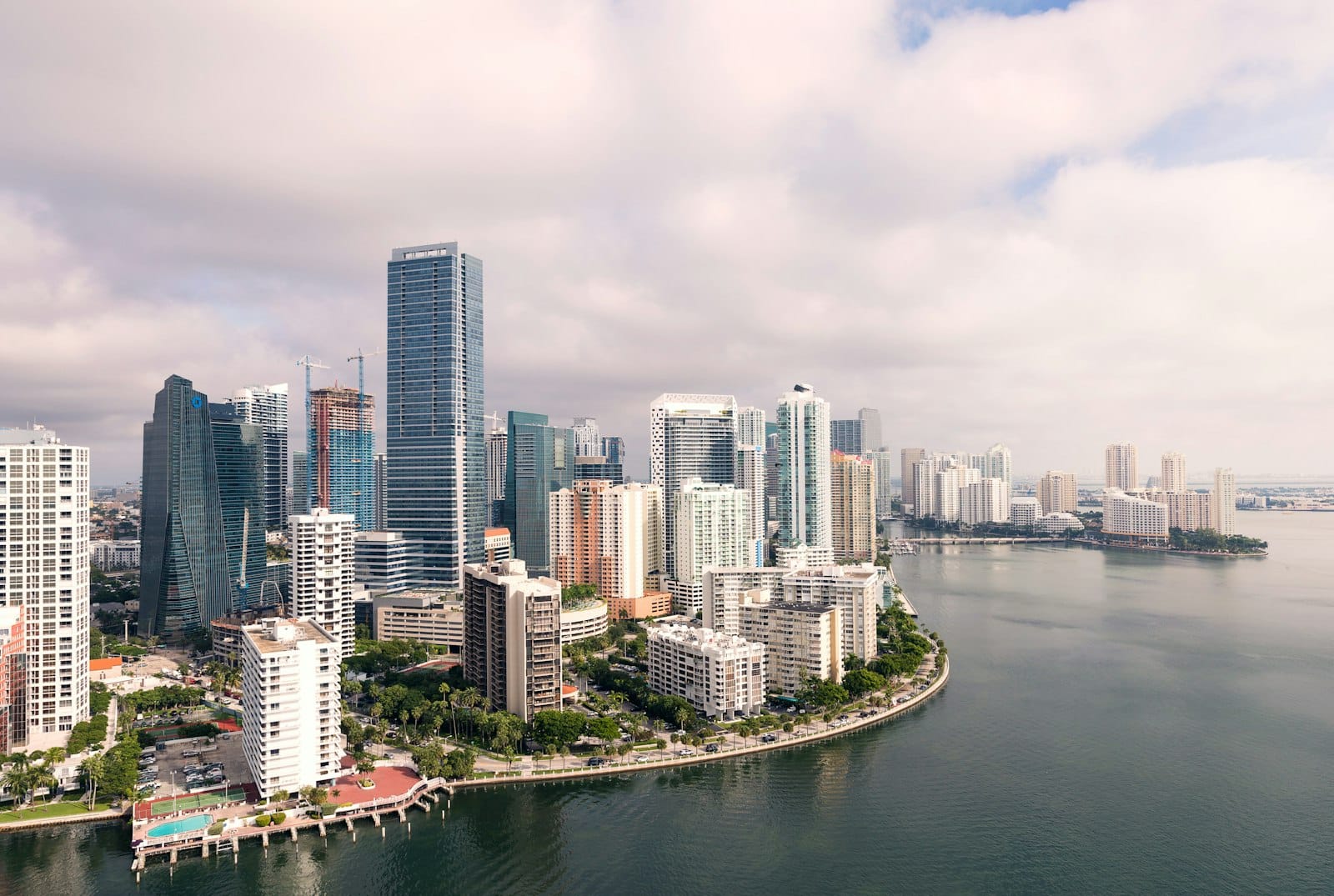
| Brickell | Belltown or South Lake Union | Towers, a waterfront, and a walk to the office, minus the bank headquarters |
| Wynwood or the Design District | Capitol Hill (Pike/Pine) or Georgetown | Former warehouses turned into galleries, bars and restaurants, with murals on the walls |
| Little Havana | Columbia City or Beacon Hill | Older bungalows close to downtown, a main street where the food is the point, and prices below the city median |
| Miami Shores or El Portal | Ravenna or Wedgwood | 1920s to 1950s houses on quiet streets, a village feel, and a 15-minute drive to the center |
| Key Biscayne | Bainbridge Island | An island with its own small-town life, a boat ride from the city, and a lot of people who commute from it |
| Miami Beach | Alki, in West Seattle | A beach promenade across the water from the skyline, condos and bungalows, and a bridge between you and downtown |
| Kendall or Pinecrest | Shoreline or Bellevue | Established suburbs with good schools, ranch houses on big lots, and a drive to everything |
| Doral | Redmond or Kent | Built around employers and the airport, newer houses and townhomes, and a lot of weekday traffic |
| Aventura | Kirkland or downtown Bellevue | Condo towers, a mall, a marina, and a short drive to the office parks |
| Weston or Pembroke Pines | Sammamish or Issaquah | Master-planned, highly rated schools, 1990s to 2010s houses, and a real commute |
| Fort Lauderdale | Tacoma | The second city 30 miles down the road, with its own waterfront, its own downtown revival and lower prices |
| Boca Raton or West Palm Beach | Kirkland or Edmonds | A walkable waterfront downtown an hour from the big city, with prices that have caught up to it |
| Homestead | Auburn or Puyallup | The far edge of the metro, where the subdivisions meet the farms, at the lowest prices in the region |
One warning: Seattle neighborhoods change block to block, partly because of the hills and partly because of the age of the houses. You know a version of that from the Grove and the Gables. In the western suburbs you don’t. There are almost no gated communities here, no HOA on most houses, and no guarantee the house next door was built in the same decade as yours. That’s why we start new clients with a learning tour before anyone writes an offer.

This is the section I’d read twice. The median home in the City of Miami was built in 1984, per the Census Bureau’s 2024 American Community Survey, and Seattle’s all-housing median is 1981, so the ages look alike on paper. The houses don’t. Among the detached houses that sold in Seattle from July through September 2026, the median one was built in 1945, about 39% were built before 1940, and 72% before 1960 (our NWMLS pull, 1,162 sales). If your house is concrete block with a stucco skin on a slab, a barrel-tile or shingle roof rated for hurricane winds, impact glass or shutters, central air that runs ten months a year and no basement because the water table is two feet down, almost everything about a Seattle house will be new to you: a wood frame, wood siding, a basement or a crawl space, a gas furnace instead of an air handler, and in some houses the oil tank that used to heat the place, buried in the yard. (Our decade-by-decade guide to Seattle homes covers what each era tends to have.) New construction exists, but it’s mostly townhouses in the city and single-family in the far suburbs, and it carries a premium.

The problems come from the water, which you’d expect, but it’s a different kind of water. In Miami you worry about wind, storm surge, the roof’s age for insurance, termites, the flat roof that ponds, and the 40-year recertification. Here the house fights damp for nine months: rot at the sill, moss on the roof, a wet crawl space, drainage that counts for more than insulation, and a side sewer line that’s older than the Interstate system. Here’s what the usual suspects cost, from our construction company’s billed jobs where we have them and current Seattle contractor pricing where we don’t:
| What older Seattle houses often need | What it usually costs |
|---|---|
| Side sewer (the pipe from the house to the street) | Spot repair $1.95k to $8k. Full replacement $10k to $24k (trenchless $4.25k to $15.5k) |
| Knob-and-tube wiring | Whole-house rewire $25k to $35k. Targeted replacement $4.5k to $12k |
| Buried heating oil tank | Decommission in place about $700 to $5k. Full removal $5k to $15k, before any soil cleanup |
| Earthquake retrofit (bolting and bracing a crawl space or unfinished basement) | About $5k to $12k |
| Air conditioning with a ductless heat pump | One zone $3.5k to $6k. Whole-house multi-zone systems ran about $27k and $41k on two of our remodels |
| New asphalt roof | $19k to $26k on our jobs |
| 200-amp electrical panel | $3k to $6k |
None of these is a reason to skip an old house. They’re reasons to read the inspection for dollars. Get the sewer scoped on video on every house. Ask whether the house ever heated with oil. Look at drainage around the foundation and in the crawl space, because that’s where Seattle’s rain shows up first. A Seattle home inspection will flag most of this, and we price the big items on the spot when we tour, because that’s the number that should move your offer. There is no four-point inspection here and no wind mitigation report, because the insurers don’t ask for them.
Air conditioning is the one you’ll notice. About 53% of Seattle-area homes had it in 2021, per the Census Bureau’s American Housing Survey, and most of the older houses on your tour won’t. You can live without it most years, because the average July high is 77°F, the humidity is low and the nights cool off, and a ductless heat pump fixes it for the two hot weeks a year. Pools are rare here, and the ones that exist are a maintenance project with a three-month season. What you get to stop doing: putting up shutters, replacing the roof on the insurer’s schedule, and watching the cone. Homeowners insurance here averages about $1,690 against Florida’s $2,845 statewide average, and the Florida number is for a $400,000 policy with no wind or flood premium in it, so your real savings are probably larger than that gap. Flood insurance is mostly a conversation for houses near the water or the Duwamish; most Seattle houses sit on a hill.
Earthquakes are the trade for hurricanes. Besides local faults like the Seattle Fault, the region sits near the Cascadia Subduction Zone offshore, which can produce a very large, long-shaking quake. Seattle’s older wood houses often aren’t bolted to their foundations, and the retrofit is in the table above. Earthquake coverage is something you add to your homeowners policy or buy separately, and the deductible typically runs 10% to 25% of the coverage on the house, according to the Washington Insurance Commissioner. Get the quote before you close and decide with real numbers. The difference from what you’re used to: there’s no season, no forecast and no evacuation order. You prepare once and then you don’t think about it.
Here’s the number nobody from Miami believes: Miami gets a lot more rain than Seattle. Miami International averages about 67 inches a year; Sea-Tac averages about 39. The difference is how it falls. Miami gets its 67 inches in afternoon downpours between May and October. Seattle gets its 39 as drizzle between October and May, on about 156 days against Miami’s 141, and almost none of it falls in summer. Nobody here carries an umbrella because it’s rarely raining hard enough to need one.

| Normal year | Miami | Seattle |
|---|---|---|
| Rain | 67.4 inches | 39.3 inches |
| Days with measurable rain | About 141 | About 156 |
| Average July high | 90.6°F | 77.4°F |
| Average January low | 61.0°F | 37.7°F |
| Hurricane season | June 1 to November 30 | None |
| Sunshine | About 3,150 hours a year (71% of possible) | About 2,170 hours a year (49% of possible) |
| Daylight on December 21, 2026 | 10 hours 32 minutes | 8 hours 26 minutes |
Sources: NOAA 1991 to 2020 climate normals (Miami International Airport; Sea-Tac Airport for Seattle; sunshine tables are NOAA’s 1961 to 1990 series). Daylight from sunrise-sunset.org.
Summer is the trade you’re making, and it’s a good one. The average July high here is 77 degrees, 13 degrees cooler than Miami’s, with low humidity, and from July through September it almost never rains. In a normal year Seattle doesn’t hit 100 at all. In late June the sun doesn’t set until after 9 p.m. You can walk the dog at noon in August. Your yard is green without a sprinkler system, and if the lawn goes brown in late summer, it comes back with the October rain. There is no hurricane season, no cone of uncertainty and no week in September spent deciding whether to leave. The thing we watch in late summer is wildfire smoke drifting in from the Cascades or British Columbia, which gives us a bad week or two in some years and none in others.
Winter is the adjustment, and it’s a bigger one for you than for most of our readers. Around the solstice, Seattle gets about eight and a half hours of daylight, two hours less than Miami, and plenty of those hours are gray. The average January low is 38 degrees, 23 degrees colder than yours, and Seattle gets about 980 fewer hours of sun a year than Miami does. The cold isn’t the problem; it rarely freezes hard and snow is a few inches most winters. The dark is the problem. A good lamp, a vitamin D habit and a winter trip somewhere sunny do a lot of work here. Rain jackets are not optional, and you’ll stop carrying an umbrella within a month.
What you won’t miss: July, August, September, the humidity, the mosquitoes, and the insurance renewal. What you will: January, the ocean being warm enough to swim in, and being able to plan anything outdoors more than two days out.
The average commute in the Miami metro is 30.2 minutes. In the Seattle metro it’s 30.0 (Census Reporter, ACS 2024). Call it the same. The map is different, though. South Florida is a flat grid 100 miles long and 15 miles wide, pinned between the Everglades and the ocean, with I-95 and the Turnpike running the length of it. Seattle is squeezed between Puget Sound and Lake Washington, with two freeways running north and south and two bridges across the lake, so one stalled car on I-5 is everyone’s problem, and there’s no Turnpike to bail out onto. The hills are the other thing: South Florida is flat, and some Seattle streets are steeper than parking garage ramps.
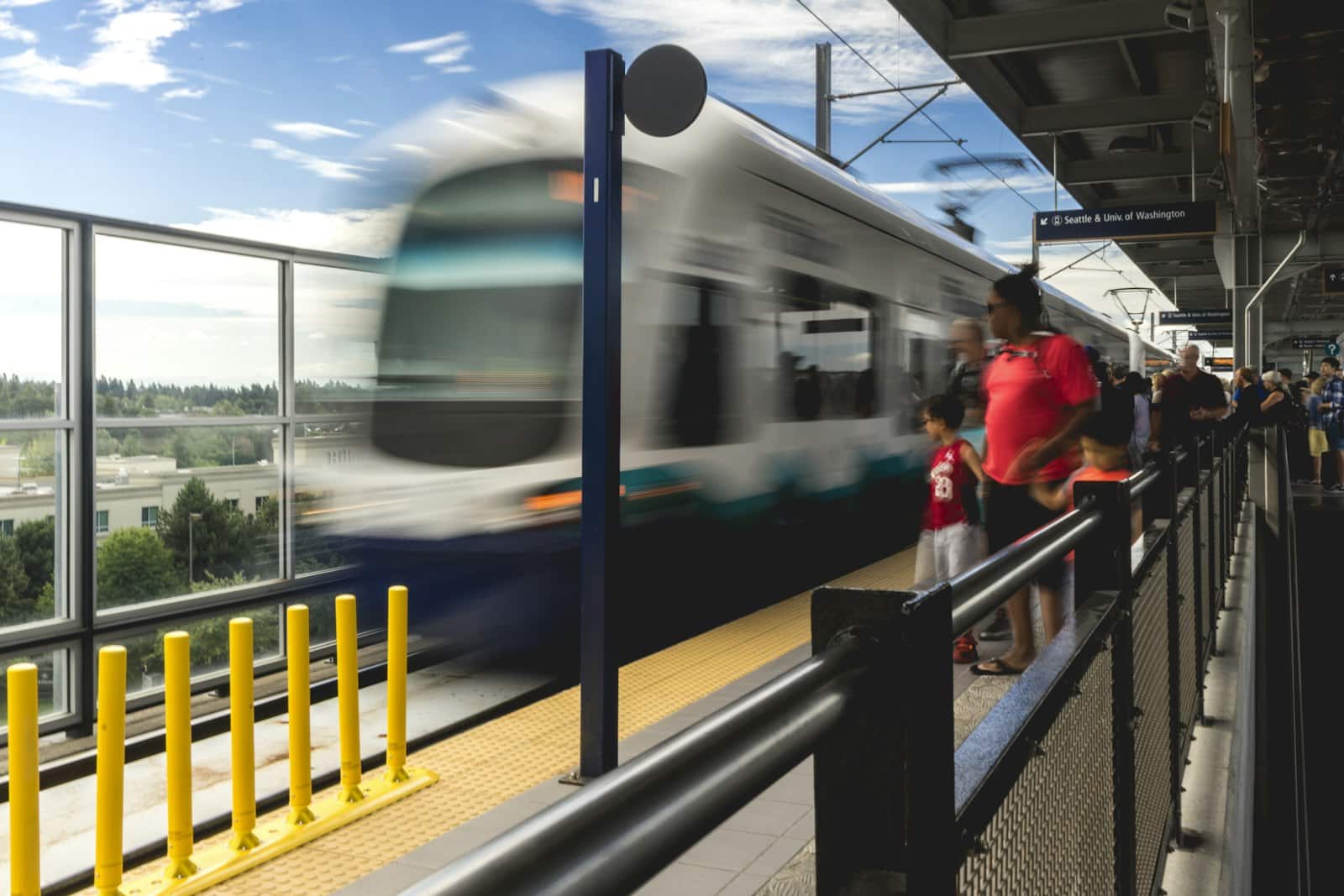
Transit is where Seattle pulls ahead. Metrorail is 24 miles and 23 stations with the Orange Line to the airport, and it carried about 15 million riders last year, roughly 50,000 on a weekday. Link light rail runs 63 miles with 51 stations and, by Sound Transit’s counts reported this fall, carries more than 160,000 boardings a day, every few minutes, all day. Since March 28, 2026 the 2 Line crosses Lake Washington, connecting Seattle with Mercer Island, Bellevue and Redmond, and extensions to West Seattle and Ballard are planned for the 2030s (we have opinions about Ballard’s). Link runs from downtown to Sea-Tac Airport, the way the Orange Line runs to MIA. There’s no Brightline equivalent; Amtrak to Portland is a pleasant three and a half hours, not a fast one. If you’ve never lived without a car and want to try, buy within a 15-minute walk of a Link station: Capitol Hill, the U District, Roosevelt, Northgate, Columbia City, Beacon Hill or downtown Bellevue and Redmond on the Eastside. Plenty of our Capitol Hill clients use their cars less than once a week. Outside those corridors, you’ll want a car, and most households here have one.
If you’ll drive across the lake, I-90 is free and SR 520 is tolled in both directions: as of October 2026, up to $4.90 at weekday rush hour with a Good To Go pass and $6.90 if they mail you the bill. If you’ve used SunPass on the Turnpike or the 95 Express lanes, the idea is familiar, but the transponder won’t work here. Good To Go is Washington’s toll pass, and it also covers the SR 99 tunnel under downtown and the express lanes on I-405. The time change is three hours. Your 9 a.m. call with the Miami office is now at 6, and the East Coast markets open at 6:30.
If you’re transferring with Amazon, Microsoft, Boeing or another big employer, you already know the address. If you’re coming without a job, here’s the straight version. Miami’s job market is bigger than Seattle’s, about 3.0 million jobs to 2.1 million, and it runs on trade and logistics through the port and the airport, tourism, health care and finance; leisure and hospitality alone is 11% of Miami jobs against 10% here, and finance is 7% against about 5%. Seattle’s runs on software. Information is 1.7% of Miami jobs and 6.2% of Seattle’s (Bureau of Labor Statistics, October 2026 for Miami and September for Seattle). Seattle’s job market tilts hard toward a few very large tech employers that have had a rough few years of their own. By our count, King and Snohomish counties added about 42,000 tech jobs from late 2019 to August 2022, then lost about 29,000 of them by early 2025. (We dug into what that’s doing to Eastside home prices in this post.) Where Miami experience lands here: logistics and trade (the Port of Seattle and Port of Tacoma, Amazon’s operations side), health care (UW Medicine, Swedish, Providence, Seattle Children’s and the big hospital systems), hospitality (smaller here, and seasonal), construction, and the professional firms that serve the tech companies. Miami’s unemployment rate in October was 3.2%; Seattle’s in September was 4.9%, so you’re moving to the softer market. My advice for everyone else is the same: get the offer letter before you sign a purchase agreement, and if you’re consulting, read the B&O paragraph above twice.
For schools, if you’re used to Miami-Dade County Public Schools (one district, the whole county, with magnets and choice built in), Seattle is smaller and more fragmented. Seattle Public Schools assigns by address, and the Eastside cities have their own districts (Bellevue, Lake Washington for Kirkland and Redmond, Mercer Island, Issaquah and Northshore). Boundaries don’t follow neighborhood names, so check the district’s boundary lookup for the exact address before you offer.
A lot of families moving here rule out Seattle Public Schools on reputation alone and head straight for the Eastside, the way Miami families head for Pinecrest or Weston. I think that’s often a mistake, and we wrote about why Seattle’s schools are better than their reputation. If you’re buying for the long haul, our post on Seattle’s sleeper schools covers the ones we think will improve the most.
Driver’s license. State law gives you 30 days after you move to get a Washington driver’s license, and you need it before you can register your car here.
Car registration. New residents also have 30 days to register their vehicles in Washington. No emissions test here either (Washington ended its program in 2020). In King County the bill includes Sound Transit and transit fees, so expect a number that’s higher than your Florida renewal.
Register to vote. Washington votes entirely by mail, so register at your new address and the ballot comes to you. Then cancel your Florida registration.
Decide about the Florida homestead. If you keep the Miami house, tell the property appraiser whether it’s still your homestead. You can’t claim a Florida homestead on a house you don’t live in, and renting it out ends the exemption and the Save Our Homes cap. Florida checks.
Good To Go pass. If you’ll cross SR 520, use the SR 99 tunnel or the express toll lanes on 405, set up a Good To Go account before your first trip. Pay-by-mail costs $2 more per crossing on 520.
Fall maintenance. Gutters and roof moss are an annual thing here, the way the shutters and the roof inspection were there. Gutter cleaning runs about $200 to $500 and roof moss removal about $500 to $800 from Seattle companies.
Miami prices are up 3.8% on the year, rents are among the highest in the country, and if you bought before 2022 your mortgage rate is probably low enough that the rent covers the payment. Plenty of people in your spot keep the house, especially the ones who think they might come back.
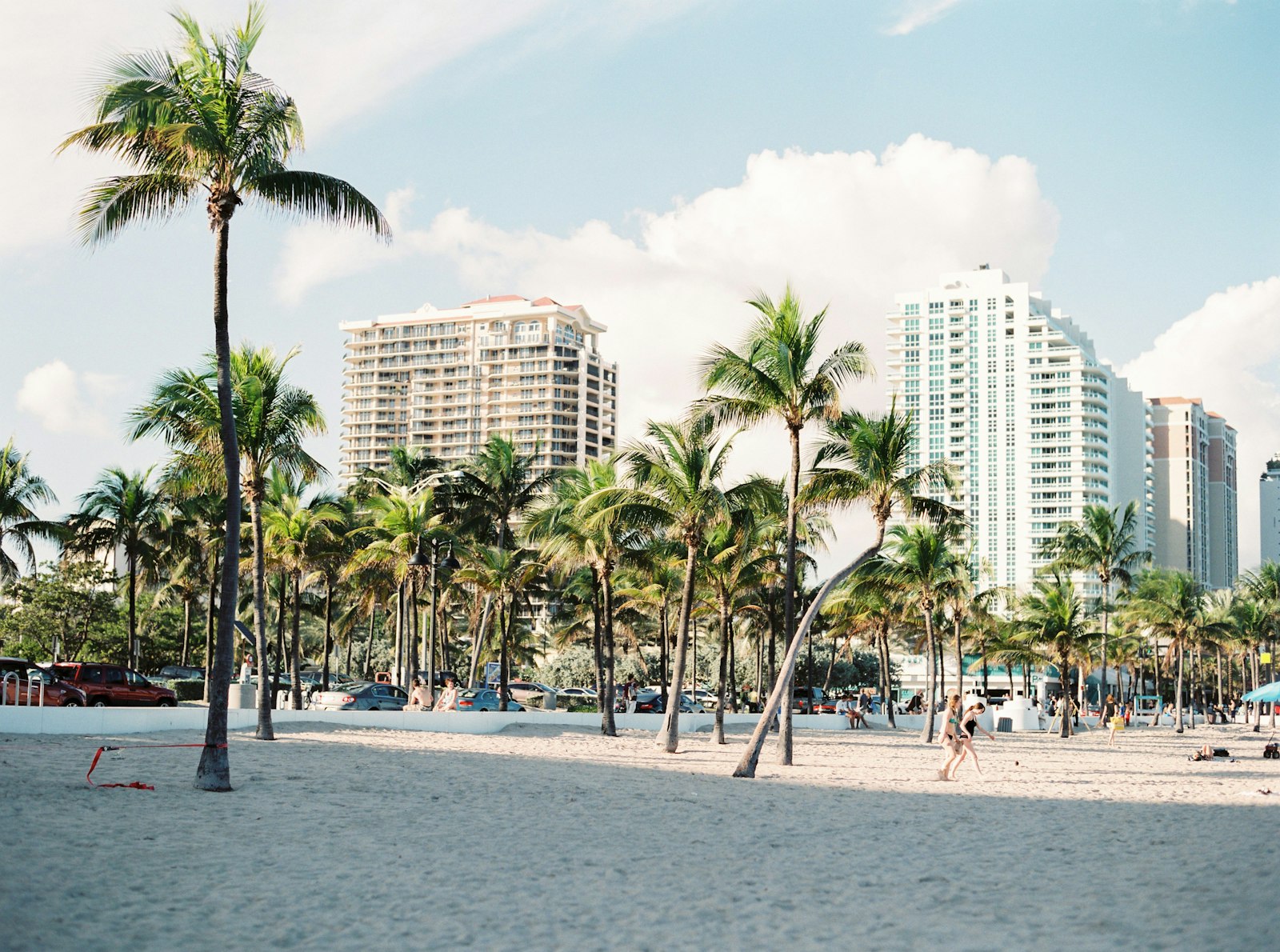
Before you do, here’s what keeping it means. The first thing you lose is the homestead. Save Our Homes applies to the home you live in, and once you rent it out the cap comes off and the exemption goes away: the assessed value resets toward market value and the bill on a long-held house can double or more. Insurance changes too, because a landlord policy on a Miami house is pricier than a homeowner’s policy, and the wind and flood coverage don’t get cheaper. There’s no Florida income tax on the rent, which helps, and no Washington tax either. Then the federal piece: the capital gains exclusion on your home sale requires that you lived there two of the last five years, so you have roughly three years after moving out before that window closes. And you’ll be managing a property 3,300 miles away through hurricane seasons, in a market where homes are taking 109 days to sell, so if you ever need to get out quickly, you won’t. None of that makes it a bad idea. It means you should run the numbers with a CPA before you decide, and the first number is the property tax bill without the homestead.
If you sell, timing matters more than usual. Miami homes are taking about 109 days to sell and Seattle homes about 19, so your sale will take a lot longer than your Seattle purchase. Offers contingent on selling another house are hard to win on Seattle houses that are drawing multiple offers. Most people in your spot either sell first and rent here for a bit, or line up a bridge loan with a lender who does them. Condos are the exception: King County had 7 months of condo inventory in October, so a condo buyer has more room to negotiate. (Our guide to the main loan types is a decent primer before you call a lender.) If what you’re selling is a condo, the reserve and inspection rules Florida added after Surfside are part of your buyer’s math now, and the days-on-market number for condos is worse than the citywide one.
Buy or rent here? If you know where you’ll work and you’ve spent real time in a couple of neighborhoods, I think buying soon makes sense, because buyers have more room now than they did in 2025. If you don’t know the neighborhoods yet, rent for six months to a year, through a winter, and see whether the dark bothers you before you commit. Since the rent here is a little less than what you’re paying now, that’s a cheaper experiment than usual. If this is your first old house, our list of first-time buyer mistakes is worth a read even if it isn’t your first house.
For buying a home, yes, by about 30%: the median Seattle home sold for about $864,000 over the three months ending in October 2026, versus about $665,000 in the City of Miami. Per square foot they’re about the same ($539 in Seattle, $553 in Miami), and Seattle’s average asking rent is about $150 a month lower. Neither state has an income tax; Washington’s sales tax is higher and its property tax bills are usually lower for a recent buyer.
Not on wages, same as Florida. Washington does tax long-term capital gains over $278,000 a year at 7%, with real estate exempt, and a 9.9% tax on household income over $1 million starts in 2028. It also has an estate tax on estates over $3 million, which Florida doesn’t.
For a recent buyer, Miami. The City of Miami’s total millage is about 20 mills, so a new owner of the $665,000 median house pays about $12,000 a year after the $50,000 homestead exemption. Seattle’s effective rate is about 0.98% of full market value, and the typical house pays about $8,400. Long-time Florida homesteaders protected by Save Our Homes pay much less than a new buyer, so compare your actual bill.
No. Portability only transfers to another Florida homestead, and Washington has no homestead exemption or assessment cap for property tax. Washington does have a creditor homestead exemption under RCW 6.13.030, equal to the greater of $125,000 or the county’s median single-family sale price (roughly $850,000 in King County), where Florida’s is unlimited.
It rains often, not hard, and less than in Miami. Seattle averages about 39 inches a year on about 156 days, most of it light drizzle from October through May; Miami averages about 67 inches on 141 days, mostly summer downpours. Seattle’s summers are dry, with an average July high of 77°F. The adjustment is the gray: about 2,170 hours of sun a year against Miami’s roughly 3,150.
Mild for a northern city. The average January low is 37.7°F, against 61°F in Miami. Hard freezes are rare and snow is a few inches most winters, though the city closes for a day or two when it comes. Winter days are short: about eight and a half hours of daylight at the solstice, two hours less than Miami.
For Coral Gables, start with Laurelhurst or Mercer Island: planned, leafy, expensive, with their own rules about what you can do to a house. For Coconut Grove, look at Madison Park or Leschi, old houses under big trees at the water’s edge with a small village of shops.
Bigger and busier. Metrorail is 24 miles with 23 stations and about 50,000 weekday riders. Link light rail runs 63 miles with 51 stations, carries more than 160,000 boardings a day, goes to the airport, and since March 2026 crosses Lake Washington to Bellevue and Redmond. Commutes are the same length on average: about 30 minutes in both metros.
Maybe. Rents are high and neither state taxes the income. But renting it out ends the Florida homestead exemption and the Save Our Homes cap, so the property tax bill resets toward market value, a landlord policy costs more than your homeowner’s policy, and after roughly three years as a rental you can lose the federal home sale exclusion. Run the numbers with a CPA first.
If you’re planning a scouting trip, tell us when you’ll be in town and what you’re curious about. We’ll set up a learning tour across the neighborhoods that fit, with real cost numbers on the houses you see.
Coming from somewhere else? Start with our guide to moving to Seattle, which covers who moves here and what to expect wherever you’re coming from.
Disclaimer: This article is general information, not legal, tax or financial advice. Tax rules, ballot measures and market numbers change, and costs vary by house. Talk with your own CPA, attorney, inspector and contractor before making decisions.